Oh Susanna – How Do You Decide Which Blogs To Follow?

Batten down the hatches, all my fellow east-coasters!  In spite of the fact that I bought candles on Friday and filled the bathtubs with water this morning, the Frankenstorm appears to be coming anyway. I hope you are all in a safe place with plenty of batteries and chocolate and possibly your floaties and a rowboat!

To keep your minds off whether or not your basement is likely to approximate Lake Superior by tomorrow, let’s dive in to today’s Oh Susanna question, which is one that strikes a real chord with me, and I’m guessing a lot of you will feel the same way.

Penny asks, How in the world do you decide which blogs to follow regularly??? I would love to follow everyone! I would love to comment on all posts! But, if I do that, I have no time to do what I really love, which is writing! I read lots of blogs that I only comment on randomly, so the writer never knows that I read them often. We have become so connected by the Internet that I sometimes feel rude because I can’t spend time with all my writing friends equally. Does anyone have a “qualifier” list for what blogs they will choose to best suit their goals? Do those who blog rely on comments to “keep them going”…or are you going to blog no matter what? Is anyone else as frustrated about this as I am? (I know you covered time management in one of your Oh Susanna! posts…but I think I need a refresher focusing on blogs.)

Yes, Penny!  I am definitely as frustrated as you are! 🙂

As Penny mentioned, we did discuss this a little in the Oh Susanna post on Time Management.  But I decided to post this more specific question because it’s something I think  lot of people wrestle with every day (including me! :)), and I’m very interested in hearing from everyone out there about how they handle this issue.

I think the answer partly depends on what you hope to get out of blogging.  If you’re trying to hone your craft, then you’ll read a list of blogs that focus on craft and you might not need to comment unless you have a question.  This is a very different picture from that of someone who is trying to build a platform and will have to visit and comment on many blogs regularly in hopes of encouraging them all to follow back.

If you, like me, blog for community – for the connection, the interaction, the discussion, the feeling of being part of a group of like-minded people, the friendship – there’s really no limit to how much time you CAN put in, which is where the problem lies.  And from the way Penny asked the question, I think this is at least partially what she’s talking about.

This is a knotty problem, because we do develop friendships.  There is a large group of people out there who I am very fond of even though technically I’ve never met them in real life :)!  I feel guilty if a day goes by when they post and I don’t have time to read, or I read but don’t have time to comment.  I worry they’ll feel slighted and think bad thoughts about me!

But let’s face it: there are only so many hours in the day.  And most of us here have things to do besides blog 🙂

Just for fun, let’s take a quick survey:

#1

#2

#3

I’m very interested to see how these turn out!  And I have a feeling the results may be a very informational part of this post for all of us.  I hope a lot of people will respond.

If it helps to share concrete information, I’ll tell you what I do: (and I will admit straight out that I DO NOT have the answer!)

The blogs I follow regularly belong, as a general rule, to writers, illustrators, teachers, librarians, and a few agents, editors, book reviewers, and mom bloggers – at least, those are the blogs I read with commitment.  (I confess there are a couple funny ones I read sometimes that don’t fit into any of those categories :))  These are the people I share common ground with, the blogs where many of my interests lie, that also intersect with what I have time for.  (I would love to read blogs about horses and dogs and a few other things, but I simply don’t have time, so for me blogging centers in a more professional area.)

I like having new posts delivered straight to my inbox, even though it fills up, because then I’m sure to see them.  Anyone whose blog does not include an email option is likely to get sporadic reading from me because I read so many that I tend to forget about some without the reminder.

I try to carve out a chunk of time at the approximate beginning, middle, and end of my work day to read and comment on blogs, but it is rarely that neat… reading and commenting on blogs feels deliciously like being productive at moments when the writing isn’t going well which makes it a nearly irresistible distraction 🙂

I read an average of 30-40 blogs per weekday (fewer on weekends – I’m trying to cut back :))  I comment on an average of 20-25 per day, maybe a little more.  Chances are high that if you ever see comments from me (and you have an email option for delivery :)) I’m reading your blog all the time – every post.

As for comments on my own blog, they are very important to me.  They let me know that I’m not just shouting into the abyss – that I hopefully provide something enjoyable maybe sometimes even valuable on some level.  And I genuinely like hearing everyone’s thoughts on everything.

Truthfully I feel like the amount of blogging I do is both insufficient and far too much.

Wouldn’t it be great if we could agree on some sort of system?  So that we could spend a little more time on our actual work without worrying that our friends are feeling neglected and unloved?  Maybe an “I’m-Up-To-My-Eyeballs-But-I-Took-The-Time-To-Come-Over-Here-So-You’d-Know-I-Still-Love-You-Even-Though-I’m-Not-Reading-Or-Commenting-Today” button? 🙂

What works for one may not work for another, but it sure would be helpful to hear from you all about how you manage.  How do you decide who to read?  How much is enough?  Please share!!!

(And remember!  Only 2 days until the Halloweensie Contest!  Rules HERE!)

Oh Susanna – When Is It Time To Give Up And Self-Publish?

Happy Columbus Day!

In fourteen-hundred and ninety-two
Columbus sailed the ocean blue
and thank goodness he did or we’d have work and school today 🙂

I hope everyone is lounging around in their pajamas after a lovely sleep-in 🙂

(I’m not.  I get up at 5:30 regardless of Columbus and I’m going to muck out that spotted pony’s stall… but hanging out in a barn is actually my idea of a good time :))

In any case, get comfy because it’s Oh Susanna day, and today’s question, which comes to us from Saba, is one I think a lot of people may be interested in.  She asks, “When is it time to throw in the traditional publishing towel and self-publish?

This question saddens me a little.  The fact that, for many, self-publishing is still seen as the road to take when you’ve given up all hope of “real” publishing is depressing.

I may be in the minority, but I’d like to change that attitude.

It’s true that many self-published books are sub-standard.  They are poorly written on every level from sentence structure to basic story.  They contain formatting and editing errors which make them less pleasurable to read.  The covers are often less attractive.  Their authors have sometimes been more concerned with being published then with taking the time to make sure their work is actually publishable.

But.

I have read plenty of traditionally published books that weren’t very good – even from highly regarded best-selling authors.  And I’m sure I’m not the only one who has found tons of typos and editing errors while reading traditionally published books.  Traditional books aren’t perfect.  Although they are generally held to some sort of standard of quality because they are produced by a publishing house, that still doesn’t guarantee you’re going to like them or that they’re going to be what you consider good.

I’m sure when you talk about throwing in the towel and going with self-publishing you don’t intend to produce an inferior piece of work.  I’m sure you would do everything in your power to make it the very best it could be.  It’s a different route to publishing – not necessarily better of worse, and not necessarily a question of giving up.

The face of self-publishing is changing.  Many authors are aware of the need to up the quality of self-published books so that they can compete with traditional books on a more level footing.  And many authors are starting to choose self-publishing.  There is much more creative control.  There is no one with whom you have to share any profit you might make.  There is a wider range of what’s acceptable to publish because you don’t have to fit neatly into where you can be shelved and you’re not as focused on a bottom line.

So instead of thinking of self-publishing as a last resort, I’d say think about the kind of publishing experience you want to have.

If you want to hand your story over to an editor, let her help you rework it the way she feels it will work best/be most salable, let someone else choose an illustrator, jacket copy, cover art because you trust their judgment and prefer to focus on writing new stories while they handle publication, then by all means submit to traditional publishers.  There is also, still, a prestige, or validation, that comes with being accepted by a publishing house, and perhaps that appeals to you.  Certainly, traditional publishing will take care of printing, sending out review copies, and distribution, all of which may be things you don’t feel qualified or able to do.  They also foot the up-front bill.  There are lots of upsides to traditional publishing 🙂

On the other hand, if you like the idea of maintaining complete creative control, if you want to bring your vision to life exactly as you’ve imagined it, if you’re excited about searching for the perfect illustrator, if you look forward to the challenge of finding a printer etc. and feel like you have the time, energy and know-how (or the motivation to learn), if what you write is a little outside the box of what flies in traditional publishing, and if you don’t want to share profits with anyone, then maybe self-publishing is a good choice for you.

If you’re working with a manuscript that has never been sent out, you have only your judgment (or if you’re lucky, a critique partner’s or group’s opinion) to evaluate the strength of your story.

If you’re working with a manuscript that has made the publishing house rounds, though, you might really want to evaluate your ms with a critical eye before deciding on self-publishing.  Why has it been turned down?

If there are serious problems with basic elements like spelling, grammar, punctuation, or story structure, your manuscript is probably not going to fly well as a self-published book either.  Likewise, if you write in rhyme and the story was turned down because of serious problems with rhyme and meter, you will not be putting your best foot forward.  You will put a lot of time, effort, and money into producing something that was turned down for good reason.  Your efforts might be better spent in learning to improve your craft and writing some new stories.  Remember, your name is going on the cover.

If your story hasn’t sold because the topic is very tired (there are an awful lot of bedtime books out there, for example, so to make one shine you really have to have a new twist) your self-published story may have a hard time garnering attention and standing out from the extensive list of the tried and true.

But if you’ve written a story you love, if it’s written well, if it really works on many levels and has been passed on by publishing houses for no concrete reason other than it “doesn’t suit their needs at this time” or competes with other titles on their current lists, or if you’ve written a book of children’s poetry or something else which is valuable but a very hard sell to traditional publishers, or if your picture book works fantastically at 40 pages, then self-publishing might be a great choice for you.

I hope this will help lots of writers out there to see self-publishing as a positive choice rather than as a last resort.  And I would recommend a look at the mini self-publishing series from June for some real-life stories from authors who chose this path and produced really wonderful, quality books.  (It will also give you an idea of how much is involved with self-publishing – it’s not really a throwing in the towel kind of job! :))  Please see SNOW GAMES (which kind of falls between traditional and self-publishing because it had to pass editorial review, but it also had to be presented ready to go in finished format with art), GATOR’S GANG, SHOW ME HOWLUCY SNIGGLEFRITZ and MEG THE EGG.

And I would very much love other writers – traditionally, self- and not-yet-published, to chime in with their thoughts on this question.  Is there a time when you should self-publish because you’ve given up hope of traditional publication?  Does self-publishing mean you’ve thrown in the towel?  What do you see as pros and cons of self-publishing?

Thanks for a very thought-provoking question, Saba.  I hope my answer and whatever gets added in the comment section are helpful to you!

Happy Columbus Day, everyone 🙂

Oh Susanna – If It’s Been Posted On My Blog, Can I Still Submit To Publishers? And The August Pitch Pick Winner!

Happy Monday, my friends!  I hope you all had lovely, restful weekends and you’re rarin’ to go 🙂

Let’s start the high jinx and shenanigans this morning with the August Pitch Pick winner, shall we?

I must say, I’m really enjoying the new system whereby everyone gets a chance to improve their pitch.  Thanks to all the helpful reader comments, and diligent application by our steadfast pitchers, the pitches for the pitch pick are all significantly better, don’t you think?  Of course, it makes it even harder to choose a winner! 🙂

But the voters have spoken, and the winner of the August Pitch Pick is KIMBERLEY and her pitch for Saturdays With Fish!!!  Congratulations, Kimberley!  Your pitch has been sent to editor Erin Molta for a read, and you will no doubt hear from her soon 🙂  And congratulations to all who pitched – you all did an excellent job and pitched very interesting and creative stories!  Best of luck with them!

Phew!  That was a lot of excitement for first thing Monday morning!  I think a small sustaining snack is in order 🙂  Perhaps a wee nap 🙂

Alrighty then.  Everyone fortified?  Onward!

We haven’t had the chance for an Oh Susanna question for a while because the person in charge around here keeps bumping them for other things, like Short & Sweets, and contests, and other tomfoolery.  But today, we shall forge ahead with a question that has been waiting patiently since about June.

The question is, “Oh Susanna, I have a couple of poems that people have suggested would make good picture books. I’ve toyed with both of them and think they would indeed be fun PBs, but written in prose, and obviously very (though not completely) different from the poems. Do you think agents and publishers would have a problem with the fact that the manuscript is based on a poem already published on my blog, even if the ms is in prose and clearly fleshed out into a proper story?

This is a very interesting question…

It’s true that many agents and publishers do not like to accept material that has been previously published on a blog.  Their reasoning is, essentially, that if people have already seen it and read it for free, why would they now want to pay for it?  This is especially true of a work that has been published in its entirety.  (And by published, I don’t mean traditionally published, but any type of posting on the internet, or self-published, where a large number of people have had access to it.)

However, (as always :)), there are exceptions.  In the case of a longer work, like a novel, if only a small teaser or single chapter has been posted, it may give agents and editors a chance to glimpse the quality of your work and become interested without giving away the farm.  If you happen to be Amanda Hocking and self-publish and sell millions of copies, there will also probably be publishers willing to pick up your book 🙂

In a case such as you’re describing, you are probably safe for a couple reasons.

First, unless your blog has a huge readership, it’s very likely that your work has yet to be viewed by the entire English-reading population.  You can pull the posts that contain the material and no one else has to see it.

Second, you have not published them in the format a publisher would be trying to sell.  They were posted as poems but will be submitted to agents and publishers in prose.  The submitted version of the stories may be expanded or changed from the originals, so what you initially posted isn’t really the same.

Finally, if you intend them to be picture books, the stories will eventually be married to someone’s art, which will give it a whole other level and impact than the original unillustrated poem.  The publisher could well end up with something that bears little resemblance to the original post.

I think you could likely submit in this case without a problem. Just be sure to take down any posts that contain the material, or just remove that specific material from the posts if there are other things in them that you want to leave up.

I would very much love for other knowledgable readers out there to chime in on this issue, though.  Do you think this answer is right?  Or have you had specific experiences that lead you to believe otherwise?  Please share!  We may all have something to learn!

Have a wonderful day, everyone! 🙂

Oh Susanna – Is There A Difference Between Scholastic And Regular Editions Of Picture Books?

Happy Monday Everyone!

Where to start today?  Well, how about with the winner of the July Pitch Pick?

I really enjoyed the new format for the pitch pick.  I thought it was great to see how much everyone improved their pitches… although it did make it even harder to choose! 🙂  However, the votes have been cast and the winner is…

dunh duhn duhn duhn

DANA!!!!! with her pitch for CJ’s Tiger!

Congratulations, Dana!  Your pitch has been sent to editor Erin Molta for comments, and we will all be excited to see what she says 🙂

Wow!  That was a lot of excitement for first thing Monday morning.  If you’re feeling a little peaked, feel free to take a short break for a sustaining snack.  I’m offering homemade banana bread this morning, but I’m not even going to try drawing that!

OK.  All refreshed?  Let’s move on to two questions:

#1  A few people have mentioned they’re having trouble commenting on my blog the past few days.  I’m not sure what’s going on, but I tried updating to the new disqus and I’m hoping that will fix the problem.  Will you all kindly let me know if the problem is fixed or if you are still encountering difficulty?  I really want it to be as easy as possible for you to comment – I highly value everything you have to say – and I like disqus because it allows me to reply directly back to you so you know I’ve read your comments and they matter to me.  But if it continues to cause trouble I will axe it!  Thanks in advance for your help with this conundrum 🙂

#2  A few other people (who shall remain nameless but you know who you are! :)) have been plotting behind my back in hopes of getting Short & Sweets to continue past summer’s end.  I am thrilled if it has been fun and helpful to anyone, and I would be happy to continue it in some form if there is sufficient interest.  The idea was to alternate Monday posts – Oh Susanna one week, Short & Sweets the next.  I would be grateful for anyone to leave their thoughts on this matter in the comments so I can get a sense of where people stand on this.  My blog is here for you.  I want to do whatever you most enjoy and find most helpful.  So speak now 🙂  Just be forewarned, I’m not sure I can continue coming up with fun new things you’ll like… I may end up recycling with new twists to some degree…! 🙂

Alrighty!  Last but not least we have an Oh Susanna question for today.  The lovely Stacy says

I picked up some picture books at a weekend yard sale. Several were Scholastic editions. Is there a difference between a Scholastic edition and a regular edition? I’m wondering both as a parent/reader and a writer.

Great question, Stacy!  And one I can luckily answer from my own experience.  Scholastic editions, to my knowledge, have no change to original interior art or text.  The cover may be different from the original and so may the title.  As examples, Punxsutawney Phyllis was sold through Scholastic as Wake Up, Groundhog with a different cover illustration.

original Holiday House version
Scholastic version

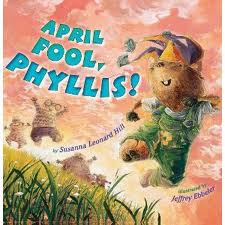
Scholastic did a focus group and determined that “Punxsutawney” was a difficult and therefore potentially off-putting word, so they chose to go with an alternate.  Likewise, April Fool, Phyllis was sold through Scholastic as The April Fools’ Treasure Hunt.

original Holiday House version
Scholastic version

There was discussion of changing the background color on the cover to blue, but in the end it stayed pink.  In both cases, however, all the interior illustrations are the same as in the original versions and there is no change to the text.  The only other difference is in the quality of paper and binding used.  Scholastic versions, in an effort to be affordable to as many kids as possible, are mostly (if not completely) produced in paperback and may sometimes be a little less sturdy.

If you’re on a budget but still want to increase your library, Scholastic is a wonderful option!

I hope that answers your question, Stacy!  Please feel free to ask for clarification if you have further queries 🙂

And I will look forward to hearing from you all about whether the comments are working better/properly and what your thoughts are on attempting to continue Short & Sweets!

Have a lovely day 🙂

Oh Susanna – Is It Okay To Use Sentence Fragments In Picture Book Manuscripts?

On the road again
Just can’t wait to get on the road again….

Oh, sorry!  I guess it is a little early Monday morning to be subjecting you to my singing 🙂

But, like the song says, I am on the road again.  This time it’s JFK or bust.  Talk about scary traffic loops!  I’m really and truly hoping I find the right terminal.  If anyone wants to send good vibes my way, I won’t say no!

Of course I’ve been to JFK lots of times before… but always in a cab with a taxi driver who knows where he’s going!  But there’s nothing like adding a little excitement to your life, right? 🙂

Speaking of which, where is my EZ Pass?  Seriously, the whole point of an EZ Pass is EASE!  Back when I had the Dogmobile, it was easy.  It stuck right to the windshield by the rearview mirror.  When I switched to Princess Blue Kitty, the EZ Pass came with me, but the stick-on thingies went with the Dogmobile, so now my EZ Pass is supposed to be in the glove compartment, but I have to remember to take it out and hold it up to the windshield.  And sometimes it falls down in the cracks somewhere… and searching for it makes for perilous driving… talk about excitement…  It must be here somewhere… And you must be able to get replacement stick-on thingies…

Anyway, whilst I’m driving through confounding traffic patterns and searching for my EZ Pass, you all can read the answer to today’s Oh Susanna question, another one from Darshana – she should probably get double billing on Oh Susanna since she’s always so full of helpful questions 🙂  Which reminds me, if anyone has any questions, please send them along – I’m nearly out!

Today Darshana is wondering whether it’s okay to use sentence fragments in picture books (and I happen to know Robyn was wondering this too, so I’m assuming maybe a lot of people are in the same state of wonderment :))  Here is her exact question:

Recently I was typing out Mostly Monsterly by Tammi Sauer so I could study the text.
In a few places there were sentence fragments posing as sentences.
Example: 
“And pet kittens. And bake.”
I understand why this was done in the finished book. However, when submitting a MS should a pb author use correct grammar all the time, or can the author take artistic license to make the story more alive?

This is a very good question.  Because as Darshana so cleverly pointed out with an example, there are LOTS of instances where sentence fragments are used in picture books.

The answer is fairly straightforward.  In general, you should be as correct as possible.  Your grammar should be correct.  Your spelling should be correct.  Your word usage should be correct.  Your manuscripts should be presented in as professionally written a way as you are capable of.

HOWEVER, judiciously used, for a specific purpose, sentence fragments can be acceptable, as can sentences beginning with “and” or “but” (normally big no-nos).  It must be for the sake of effect, rhythm, or voice, though.  It has to feel right.  And it can’t be every single sentence.  It may also be best not to use one right up front to start your story, lest the editor reading it think you don’t know how to construct a sentence.

The best advice I can give you is to read lots of picture books (always a good practice anyway) and see when and how sentence fragments are used in traditionally published books.  This will give you a feel for what’s acceptable.

This question also brings to mind a related one – about proper language.  If you are familiar with Junie B. Jones, you will know that Junie speaks in a way that is supposed to sound childlike and five-year-oldish.  Personally, I have never heard a five year old speak that way – none of mine did – but I get the point.  My kids enjoyed the stories, but when I read them aloud, I always corrected the grammar.  I just couldn’t read them aloud as they were printed.  Clearly, this is something that doesn’t bother lots and lots of people, and clearly didn’t bother the editor who bought the book, so my point is, to some degree, it’s a matter of voice and personal taste.  It is also one of the things that separates one writer’s style from another’s.  Barbara Park is comfortable writing that way and has enjoyed a great deal of success with Junie (and for the record, I think her stories are appealing, as is Junie, and kids really like them – I just personally stumble over that language issue a bit).  But I think what makes it work for her is the fact that she’s telling good stories.  I can’t think of an instance where incorrect language is used in picture books, though, except perhaps occasionally in an illustrated note that is supposed to look as though a child wrote it.

Darshana, I do hope that answers your question.  If not, please feel free to ask for further clarification in the comments.  And as always, I would be glad to have anyone with knowledge and expertise in this area add their two cents – this is a collaborative effort to help all of us be better educated and prepared to do a better job with our writing – so comment away!

Now, I guess I’d better find that flingin’-flangin’ EZ Pass.  There’s a toll booth coming up!

Have a great day, everyone 🙂

On the road again
Just can’t wait to get on the road again….

Oh Susanna – What’s The Difference Between A Query Letter And A Cover Letter And When To Use Which?

Good Morning Everyone!

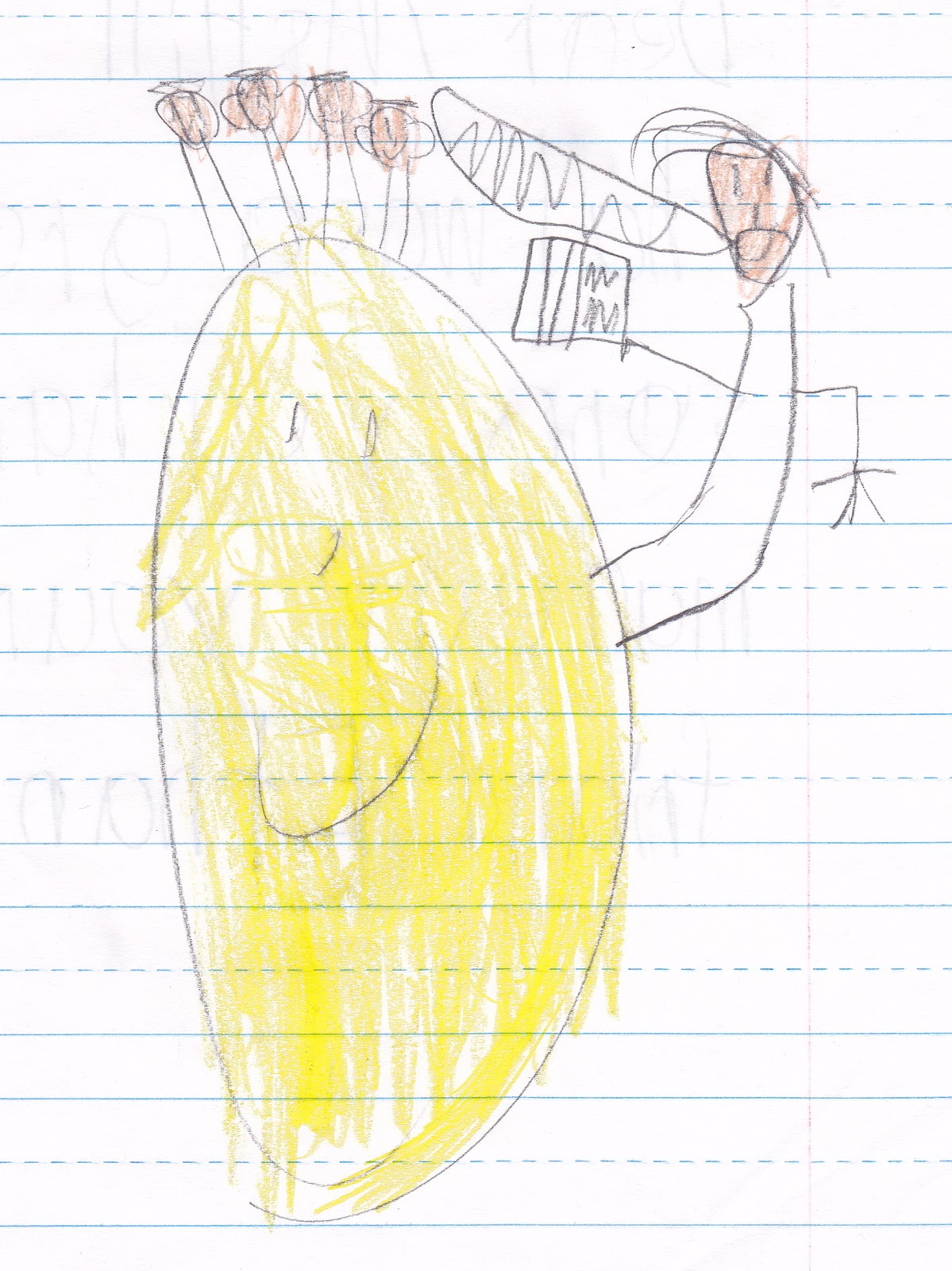
There were many posts last week about how much trouble you can get in posting pictures on your blog.  I will probably have to go through all my posts and delete tons, but meanwhile, I’m a bit afeared, so for today’s eye candy I will include something which has nothing to do with anything but whichI know I’m allowed to use, a lovely portrait of me reading to a first grade class, drawn by an artistic member of the young audience:

You will note my face, apparently covered by blond hair – I should have shaved:)
Phyllis talking from my unusually constructed arm from which I am also reading
and the enraptured audience of 4 behind me 🙂

Anyhoo, I hope you all had wonderful weekends!  I am so behind after being away all last week that this may end up being my shortest post ever!  Are you ready?  I might not even stop to draw breath 🙂

What with all the special events going on lately, we haven’t had an Oh Susanna day in a while, and poor Darshana has been patiently waiting for the answers to her questions so let’s dive right in, shall we?

Darshana asked:

Q1) What is the difference between a query letter and a cover letter for a picture book manuscript? 

Q2) Which do you use when submitting a PB manuscript to an editor?

Q3) Which do you use when submitting a PB manuscript to an agent?

Darshana’s 3 questions are so closely related that I included them all, and I’m betting she’s not the only one wondering about this topic, because it’s tricky and kind of splitting hairs.

The basic answer is very simple: a cover letter accompanies a manuscript, a query letter does not.

A cover letter is so named because it covers a manuscript.  It would include that a manuscript is enclosed.

Otherwise, both letters should include the following:

  • The basic facts about the manuscript: title, word length, genre, intended age range (e.g. Hillbilly Bob is a 400 word picture book for ages 3-7.)
  • What makes your manuscript stand out from previously published competitors and why it’s a great fit for this particular editor/house (e.g. there are few if any picture books about… or, this book about apples will fit beautifully into the kindergarten curriculum…)
  • Your publication history or relevant background and, if appropriate, anything that made you uniquely qualified to write this particular book.  (This would probably be more applicable in the case of non-fiction, e.g. if you wrote a book about space travel and you were an astronaut.)
  • A mention of other enclosures or attachments such as your resume, or a bibliography if your submission is non-fiction
  • Whether or not it’s a simultaneous submission
  • Your contact information
  • Anything else requested in that specific agent’s/editor’s/house’s submission guidelines.

(For works that aren’t picture books, a sample outline or a chapter synopsis might also accompany a cover letter, but that does not pertain to picture books as a general rule :))

A cover letter should supply the basics, but not much more.  You don’t want an agent or editor getting so bogged down in the cover that they never get to the actual manuscript!

A query letter is essentially the same thing, it just invites the editor or agent to request the manuscript from you if it sounds like something they might be interested in reading.

As to when you would use one or the other, most agents and editors are clear about what they want.  Their guidelines will say, send full manuscript for picture books (that means you’ll need a cover letter) or accepts queries or queries only (that means a query letter.)

Some houses that are closed to unagented/unsolicited submissions are still open to queries, so that is your chance to sell your idea and get the editor to request it.

No matter what, query or cover is a place where you can use that pitch you’ve worked on in Would You Read It Wednesdays to hook either editor or agent.  It’s no different from your manuscript in that respect – grab their attention and don’t let go!

I hope that answers your question, Darshana.  If not, please feel free to ask for clarification on anything in the comments.  And if any of you highly experience readers out there have anything to add, I’d be grateful for any extra information or clarification you can add!

Have a great day, everyone!  Hopefully I’ll see you all around the blogosphere as I play catch-up to all your wonderful posts etc! 🙂

Oh Susanna – What Vocabulary Is Developmentally Appropriate In A Picture Book? and Straight From The Editor #8

Good Monday Everyone!

Right this very second, while you guys are sipping your coffee, dunking your donuts, and/or eating your Wheaties, I am racing driving sedately along the road to Boston to look at colleges!  Very exciting 🙂

No doubt my GPS and I will bicker incessantly.  We have a love/hate relationship.  (She needs a name, by the way, my GPS.  My husband’s GPS is named Edna, so that’s taken.  All other suggestions will be entertained :))

The idea of navigating traffic in an unfamiliar city fills me with terror, but hopefully we’ll muddle through without causing any major incidents 🙂  I hope while we’re in Boston I’ll get to see Jack, Kack, Lack, Mack, Nack, Oack, Pack and Quack (and I hope you all know to whom I am referring! :))

Many of you missed my earliest posts when I still had the dogmobile – my 2002 Toyota Sienna which I totally loved but which, at 10 years old with over 200,000 miles and A LOT of wear and tear, had to be replaced in October.  So now we drive in style with Princess Blue Kitty who is a Subaru Outback – so sporty 🙂  She is called Princess because she’s so beautiful, and Blue because she’s so blue – indigo blue pearl is her official color – and Kitty because she purrs like a very large cat 🙂  I’m just telling you this so you’ll recognize me should I happen to pass you on the way 🙂

Alrighty then.  I’m driving, you’re reading Straight From The Editor followed by Oh Susanna 🙂

You will recall that the May Pitch Pick was won by Elizabeth with her pitch for Magnificent.  Here, once again, is the pitch:

Working Title: Magnificent
Age/Genre: Picture Book (ages 4-8)
The Pitch:  When the synchronized swimming Savanna Belles lose their watering hole to drought, the troop of elephant calves decide ballet is the perfect way to make them feel magnificent once again. Facing the challenges of trunk-tickling ants, loss of weightlessness, and the scarcity of tutus, can the girls tame the doubtful roars, hisses and cackles of the their wild friends, proving that they really can be magnificent ballerinas? Follow the tutued journey of these silly mammals as they sashay, leap and plié their way into even the wildest of hearts.

And here are Erin’s comments:

This is very cute. My only suggestion is to trim it a bit and make it simpler.
Here’s what I would do to make it more to the point.
When the synchronized swimming Savanna Belles lose their watering hole to drought, the troop of elephant calves decide ballet is the perfect way to make them feel magnificent once again. Facing the challenges of trunk-tickling ants, the scarcity of tutus, and gravity, can the girls tame the doubtful roars, hisses, and cackles of their wild friends? Follow the tutued journey of these silly mammals as they sashay, leap, and plié their way into even the wildest of hearts.

Very helpful, no?  Also proof that Elizabeth did a good job and has a good idea 🙂

Now then, onto today’s Oh Susanna question.

Pam asks the following:

As a teacher, I love reading books with lots of descriptive language and low frequency words.  This is important when I’m doing a lesson to expand vocabulary with words that 3s & 4s don’t hear every day.  But as a writer, how can I know if I’m writing a developmentally appropriate book?

This is a good question, Pam.

One of the difficult things about writing picture books is that you’re writing for two audiences – both your child listener and your adult reader – something that is true of no other genre.

But this is also one of the best things about writing picture books.  You’re not depending solely on a child’s existing vocabulary or knowledge of the world – there is an adult reader to explain and clarify.

In addition, if done well, the illustrations can really help with understanding.

This puts you, as a writer, in the wonderful position of being able to expand a child’s world.

That said, when you’re writing for the under-eights, you’re not going to write, “Perhaps the sentiments contained in the following pages, are not yet sufficiently fashionable to procure them general favour; a long habit of not thinking a thing wrong gives it a superficial appearance of being right, and raises at first a formidable outcry in defence of custom.” (from Common Sense by Thomas Paine) in a child’s picture book 🙂

Developmental appropriateness is a combination of concept, sentence length, and vocabulary.

Your concept must be one a child can relate to – getting a new sibling, wanting her own room, fighting with a best friend, being afraid of thunderstorms, wishing his first tooth would fall out, losing a pet.  Or, if you choose something a little more beyond their range of experience, like living under the sea (as in Rainbow Fish or The Pout-Pout Fish), it still works if you connect with their emotional experience (not wanting to share, feeling sulky).  Concepts like violence or adultery would obviously not be developmentally appropriate! 🙂

While your sentences should vary somewhat in terms of length and structure, for the most part they should be short enough for the child to understand easily and for the adult to read aloud without gasping for air 🙂

As far as vocabulary, you have a unique opportunity to introduce new words.  As long as there aren’t too many unfamiliar words and as long as they fit neatly into the context and are explained by the situation and illustrations (at least to some degree), you can count on your adult reader to supply any remaining clarification necessary.  For example, in Can’t Sleep Without Sheep, I used the word “chaos.”  This is a word that many children don’t know.  But it’s clear from the story that things are getting way out of hand, and one look at the picture shows animals stampeding, wood splintering and flying, clouds of dust, etc… which clearly indicates an utter lack of order and organization.  Most kids get it.  But when I’m reading, I usually ask them if they know what chaos means.  If they say no, I ask if they can guess from the story and pictures.  If they still can’t, then I explain it.  Any child who didn’t know the word has now been exposed to it.

As I said, you don’t want too many unfamiliar words in one picture book.  A handful is okay.  After that it’s possible that you’re writing at too high a level to be comfortable for this age.  But I am firmly of the opinion that as a writer you should not talk down to children, and that you should introduce appropriate new vocabulary.  As you mentioned, it is an opportunity for learning.

I hope that answers your question, at least partially!  If not, please ask for clarification in the comments!  And I also hope that all our talented readers who have knowledge and experience in this area will chime in with their thoughts.

Have a great day, everyone, and please forgive me if I am a bad commenter today.  I will try my best to catch up when I get home.  I will be reading, probably at the end of the day, but I cannot for the life of me figure out how to comment off my phone and besides those letters are so tiny! 🙂

Oh Susanna – How Much Drama In A MS? And Time For Summer Fun!

Holy swiss cheese, Batman!  You would not believe this weekend!

I could spin the whole story out, but that would be too long to post 🙂  Suffice to say, my brother fell off his bike in a race and shattered his femur, and Jemma is SERIOUSLY in the doghouse – she has taken BAD DOG to an unprecedented level!

My brother, thankfully, should be okay after some recovery time.  He’s very fit and a very mind-over-matter type of guy.  He’ll probably be back at work in 3 days 🙂  Jem will be forgiven eventually because she didn’t do permanent damage – though not for lack of trying.  You won’t believe it after Friday’s Perfect Picture Book, but she actually caught a fawn.  I’ve had dogs my whole adult life and that’s never happened before.  I’ve never seen anything so little! – I thought it was a cat! – I didn’t know fawns started out so incredibly small!   I made her drop it.  You probably heard me shrieking at her in California, New Zealand, Canada, Australia, and Europe!  And she didn’t hurt it – just scared it – she’s not that much bigger.  But really.  I was completely traumatized by the whole experience and if you think Jemma is going anywhere off a leash for a Very Long Time you are sorely mistaken!

So here I am, rattled and scattered, trying to write a coherent post.  If I don’t pull it off, you’ll know why! 🙂

Onward!

Today’s Oh Susanna question relates back somewhat to this post (please scroll down past Cori) where I showed the before and after versions of Freight Train Trip.  I mentioned that the editor had commented that the original version wasn’t dramatic enough, and Stacy wondered whether there was any kind of test for drama in a manuscript.

That is an interesting question.

First of all, how much drama is necessary in a manuscript is subjective.  Some editors, (and some readers) like more, and some like less.  In this day and age it seems that the general rule of thumb is that more is better, and yet there are still, sometimes, beautiful, quieter books published too.

How much drama is also dictated by age.  If you’re writing board books, there may be enough drama in searching for baby’s belly button.  For a YA novel the fate of the world as we know it might be at stake.

In addition, how you achieve drama is specific to the story.  In some manuscripts there is dramatic tension brought on by the situation, as in Freight Train where the two trains are approaching each other on the same track and there’s going to be trouble if the switchman doesn’t look up from his newspaper.  In other manuscripts, the drama comes from the emotional stakes for the main character, as in Not Yet, Rose where Rose isn’t sure if she wants a brother, a sister, or no baby at all because, although she doesn’t quite know how, she senses that her whole world is about to change.

I wish I could say that there was some kind of simple test for drama, but if there is, I don’t know it 🙂  The closest I can come might be this:  something has to happen – something real, something important, preferably something that a young reader can relate to either on an excitement/adventure/adrenaline level as in the Freight Train example, or on an emotional “I know exactly how that feels!” level.  I guess even better if you can manage both 🙂  This actually comes down more to your story problem or conflict.  If you’ve got a good one, you’ll have drama.

I hope some of the very talented writers in our readership will chime in with their knowledge and advice on this subject!

Now, on to those announcements I mentioned Friday.  I know you’ve been squirming in your seats with anticipation 🙂

Here’s the deal.

I’ve thought long and hard about this, and I still have mixed feelings, and if enough of you express extreme unhappiness I’ll try to rethink it, but I think I’m going to put Perfect Picture Books on hiatus from June 22 – August 31.  I know summer is a time when lots of people have more time to read, but I’m hoping everyone can make use of the 700+ Picture Books that are already posted, and read and prepare a whole new bunch for the fall.

I have an EXTREMELY busy summer coming up (can you say college visiting? :)) and Perfect Picture Books is a huge time commitment.  I already know there will be a lot of Fridays when I won’t be at my computer.  And I seriously can’t bear the idea of coming back from somewhere and having 60 books to add to the list while simultaneously trying to vacuum up the dog hair that has collected in my absence 🙂  Taking a break will hopefully give me time to catch up with the ones that still have to go up (I had a glitch last week where a lot that were uploaded didn’t save/disappeared and I have to redo them all) and also hopefully give me and the lovely Darshana time to streamline it a bit so it’s easier to search and easier to update in the future.  You may feel free to share you thoughts… I can take it 🙂

However, I certainly don’t want to leave us with nothing!  So I have another hair-brained scheme in mind (and you know what happened last time… Phyllis went all over the world :))

Are you ready?

Instead of PPBFs, for the 8 weeks from July 5 – August 24 we will have Summer Short & Sweets!!!  (Badge forthcoming from Loni after finals are over! :))

Summer Short & Sweets will post each Friday (in place of PPBF) with a fun writing prompt/challenge that you can do in 5 minutes or less.  You will post your response here.  Other people’s responses may inspire you and jumpstart your creativity!  For each Short & Sweet prompt that you do, you will receive a point.  Your points will add up, and at the end, there will be prizes available depending on how many points you’ve accumulated!  We will culminate our summer of fun with a Summer or Back To School Writing Contest on August 31, and you may well be able to use some of the ideas you’ve generated during the series.  For those of you in 12×12, Summer Shorts may help you stay on track! 🙂

I think it will be a fun way to keep the creativity flowing as we chase our kids around playgrounds, keep them out of poison ivy, slather them with sunscreen, take them camping, keep them out of trouble in the pool or ocean, tour the US on college visits, or go to work… whatever we happen to be doing 🙂  I really really hope you guys will think it’s fun too!  (You’d probably better let me know in the comments in case I’m barking up the wrong tree!)  But the fun part is, we’ll all be doing it together, and everything will be VERY SHORT – seriously, 5 minutes.  Maybe less if you think faster than I do.  Which would not be hard at this point.  Since I have yet to attain my usual level of perkiness this morning after not enough sleep.  How many times did I use the word “fun” in the last 2 paragraphs?

I think it’s time for more coffee!

Happy Monday Everyone 🙂  And please chime in with your thoughts about drama, PPBF, and Summer Shorts! 🙂

Oh Susanna – Are There Taboo Subjects In Picture Books?

OK.  Twitter?

Here’s the problem:

I could spend ALL DAY there!!!

Seriously!

Everybody posts all these awesome links to fascinating, must-read articles and blogs and photos and etc. etc. etc. and no sooner am I done with one there are 20 more I’m dying to check out.

How do y’all get any work done?

Twitter is the Anti-Work!

Clearly there are going to have to be some strict ground rules or there’s going to be some world-class time-frittering going on over here 🙂

So which one of you self-disciplined types is going to lay the rules out for me?

And enforce them?! 🙂

Alrighty then.  Now that that’s out of the way, I hope you all had wonderful Mother’s Days however you may have celebrated!  I spent mine like this:

(Well, not really, but I would have if I could have :))

I hope you’re all as excited as I am about the Birthday Contest coming up at the end of this week!!!

And I must apologize in advance if I’m a little behind in visiting you all this week.  I have three days of back-to-back school visits, so my time will be limited.  But be assured that even if I don’t have time to comment I will be reading!  (I am abysmal at trying to comment from my phone… whilst driving… and trying to listen to my GPS… also the police frown on such multitasking and it is of course illegal so I would never do it… even if I was coordinated enough. :))

So stop encouraging me to break the law and let’s get onto today’s Oh Susanna question.

I have actually chosen two questions which I will address together because I think they are related.

First is Saba’s question:  Are there any subjects that are considered taboo in the picture book industry that children’s writers should stay away from?

And second is Catherine’s question (which I’m paraphrasing slightly): [In my story] Cheeku the Cheeky Chinese Chicken… I took out the chef because someone said kids can’t think about chickens going to be killed… The motivation for Cheeku to run away was so as not to be eaten. I had to change it to he didn’t want to be cooped up forever, but although it’s fun, it has no story as such. Do you think i should put the chef stuff back in?

These are interesting and related questions, I think.

Saba, I’m sure you aren’t referring to things like graphic violence, murder, torture, what I will refer to as “adult topics”, and things of that nature.  I don’t think any of us would ever consider writing a picture book about a subject that was so obviously inappropriate for children.  I think what you might mean is what I would call sensitive topics.  For example, is it appropriate to write a picture book about a family with same sex parents, or a picture book about war, death, or serious illness?

And that is a question that I think different people might give you different answers for.  Some would say those topics should be avoided – that they’re not appropriate.

But I think most would say that picture books are badly needed on those topics, because children who are experiencing those situations have just as much need (possibly more) to explore their feelings and feel validated, understood, comforted, and reassured as children who read books about being scared of the dark or getting a new sibling.

One glance at the Perfect Picture Book list will show you that there ARE picture books about war, poverty, illiteracy, death, illness, disability, non-traditional families, slavery, and a host of other sensitive and difficult topics.

To a large degree, I don’t think it’s the topic that is the issue, but more how it’s addressed.  Pretty much any topic – even a story about bears – can be written so it’s not appropriate for the picture book audience.  But by the same token, pretty much any topic can be written about in a sensitive and careful way so that it is not only appropriate, but valuable for this age.  For example, a book like Beatrice’s Goat most certainly addresses poverty, but in a way that is very palatable to children and filled with hope.

It all depends on how it’s written.

This is not to say that every book is appropriate for every child.  What’s right for one family may not be right for another.  Parents, teachers, and librarians must use their discretion.  While a book about a child losing his mother (as a very powerful example, I would cite the picture book The Scar by Charlotte Moundlic) might be terribly upsetting to many children, it might be just exactly what a boy or girl who has just lost a parent might need to hear to feel that they are understood in their grief and loneliness, that others have gone through this, and to help give voice to their emotions.  And while some families might welcome a book that addresses where babies come from in a very exact way (for example, Where Did I Come From? by Peter Mayle) others families might prefer to preserve the mystery a little 🙂

As writers, we want to reach all children, the ones that struggle with the hard things as well as the “every day” things (and I put “every day” in quotes because nothing feels every day to a person who is going through it, but as adults we know that there are some experiences that are normal and common for childhood and others you hope no child will ever have to bear, yet some of them do.)

Catherine’s question about her manuscript I think ties into this discussion.  Is it appropriate to write about a chicken who is afraid of being eaten?  I think it can be if it’s done right.  If there is humor, if the emphasis is more on the escape then the reality of being eaten, if it ends happily, and if there is a level at which it relates to common childhood experience – perhaps having to do something you don’t want to do, or needing to find a better way to do something, or finding your place in the world – then I think it can work.  There are certainly a host of fairy tales where some pretty scary stuff goes down if you think about it too carefully (Red Riding Hood, anyone?!) but that hasn’t stopped parents from reading them or children from enjoying them.  And anyone who has seen Disney’s Little Mermaid has seen the chef singing “les poissons, les poissons” merrily preparing to cook Sebastian the crab and I think most kids find that scene deliciously fun 🙂  So again, I think it’s all about how it’s written.  And again, depending on how it comes out, it might be a story that is not be appropriate for every child (perhaps more sensitive children would be better steering clear) and that parents, teachers and librarians might want to be selective about.

Saba and Catherine, I hope that answers your questions.  If not, please feel free to clarify or ask follow-ups in the comments!

Everyone else, Saba, Catherine and I are all VERY interested in your thoughts on this matter.  Are there subjects that are taboo in picture books?  Or that should be?  Should a writer stay away from the topic of a chicken who is afraid of being eaten?

I will look forward to your thoughts!  Especially if you have first-hand experience with having a story turned down by traditional publishers only because of topic.

Have a wonderful day! 🙂

April Pitch Pick and Oh Susanna – Can I Acquire Illustrations To Help An Editor Understand My Intent?

Good Monday, everyone!  (Doesn’t that sound like something Shakespeare would say?)

I don’t know about you, but I’m feeling the need for an extra dose of cuteness this morning, since things have not been going according to plan of late, so how about this?

and this…

…and this

Ah!

I feel much better now!  You?

I could do this all day, but that would probably not be considered productive 🙂

Now then, I hope you’re all going to take note of how efficient and brief I am today, so that I can get to work finishing my gakawful mss for NaPiBoWriWee.  Ready?  GO!

First, it’s time for the April Pitch Pick.

Here’s the refresher:

#1 Delores

Working Title:  Dustin The Dragon
Age/Genre:  Early PB (3-6)
The Pitch:  April’s room is VERY dusty but what can you expect when a dust breathing dragon lives in your closet?  Too bad April’s mom doesn’t believe in dragons, that is, not until Dustin catches a cold.

#2 Rebecca C

Working Title:  Broomstick Rodeo
Age/Genre:  Picture Book (4-7)
The Pitch:  The Thistlegulch Sisters have thirteen trophies between them and they’re determined to win another. They practice for the rodeo until they’re chapped under their chaps and have calluses on their warts. But when a buckin’ broomstick charges towards their youngest sister, Myrna, they realize there are more important things in life than winning trophies.

#3 Kirsten

Working Title:  Out Of This World Opposites
Age/Genre: Non-Fiction PB for ages 5+
The Pitch:  Space is a place of opposites. Burning stars and icy comets. Roaring rockets and silent stillness. An ancient universe and newborn planets. Everyday scientists discover something old, new, near, far, wet, dry, dark or light as they learn more about the cosmos. Come along and explore our amazing universe.

#4 Anna

Working Title:  A Bug Who Needs A Hug
Age/Genre: Picture Books (ages 2-7)
The Pitch:  A Bug Who Needs A Hug is about a fuzzy little bug that goes out into the forest looking for someone to hug. The vivid and colorful illustrations in the book emphasize the importance of friendship and leave a positive message for children at the end of the story.

Please vote below for your favorite by Wednesday May 9 at 11:59 PM EDT:

The winner’s pitch will go to editor Erin Molta for helpful comments 🙂

Now then, today’s Oh Susanna question comes to us from Tracy and actually has a couple of layers to address.

Here is her question:

My children’s book manuscript (early reader) is one where the characters are kids who also happen to be food. (You may remember this from my Would You Read It pitch in October). There’s Pizza, Juice Box, Cake, Waffle, Cereal, Bratwurst (he’s a bully), Lemon Chiffon (fashionista with an attitude), Cinnamon, and Apple. I’m working with a book coach who is suggesting that I grab pictures of food to include with the MS so that an editor understands that this is not a joke and takes my submission seriously. I looked online and I don’t like any of the illustrations and while I still need to look in magazines, those images will not have arms and legs and look like kids. My question is: I’d like to sent out a tweet or blog post request to illustrators in my online community and ask if anyone wanted to make some rough sketches. I can’t promise or offer any compensation or even promise that those comps would be used in final production. Is it fair to ask illustrators to help?

In answer to the main question, “Is it fair to ask illustrators to help?” I would say, yes, it is fair to ask as long as you are up front with potential illustrators about what the project is and exactly what is involved.  I think you might have a hard time getting anyone to do it, though.  If an illustrator is going to work for you, she/he should be paid for their talent, expertise, and time – it’s not professional to ask them to work for free.  If by helping you out their work is going to be seen by an editor, potentially opening some doors for them, that might be enough payment for some, or it might help reduce the payment for others.  But I think if you want someone to provide you with the kind of custom illustrations that are going to help  you sell your work, you should offer to pay them something.  It can be work-for-hire, you can make an agreement as to who owns the rights, but I think you should at least offer some payment.  (Please see Oh Susanna – How Do You Find And Pay For Illustrators? for a further discussion of getting illustrations.)

That said, your question raises some other questions for me:

First, why wouldn’t an editor take your work seriously in the first place?  If you’ve done a good job writing your story, it should be clear that you’ve personified food as characters.  Your dialogue and story problem should help make it clear that the food characters are children.  Editors have good imaginations.  They read picture book and early reader manuscripts all the time and they are accustomed to visualizing what illustrations would be like.  If your story is strong, the editor shouldn’t need visual cues.  If it’s not strong enough, visual cues won’t save it.

In addition, unless you are a professional illustrator yourself, I think you’ll find that most editors react negatively to an author sending art with their manuscript.  To my knowledge, editors want to read your manuscript and envision the type of art they think would suit it, and then choose the illustrator themselves.

I’m not a book coach, but I’m not really sure what you would accomplish by following this suggestion.

I think you would be better off writing the best story you can write, trusting your editor’s intelligence and judgment, and letting your submission stand on it’s own merit.  If you feel your story is strong but it’s still not clear, put a brief explanation in your cover letter.

I would really like to hear from readers, though, as to what they think about this issue.  Do you agree with the book coach, or with me, or do you think something else all together?  Collectively, there is a lot of experience with submission in this readership, so please share your thoughts to help Tracy out with her dilemma!

Have a great day, everyone!