Tuesday Debut – Presenting Laura Renauld!


Welcome to another thrilling edition of Tuesday Debut!

I hope you’re enjoying these interviews as much as I am!  I love getting to see our authors’ unique stories as well as getting to see the areas where their experiences overlap.  Fiction and nonfiction. Large publishing houses and small.  Art notes or back matter for some, none for others.  A terrific array of different marketing and promotion ideas they’ve come up with.  But everyone draws strength and inspiration from their work, lives, and families.  Everyone discovers that even published authors have to vacuum and do the dishes 🙂 And no one seems quite sure exactly how they know when a manuscript is ready to submit, or to have gone into signing a contract with much idea of what the norm is.  Thankfully, by sharing their experiences here, these generous authors are helping all of us to be better prepared for what lies ahead, as well as showing us some tools that worked for them that may help us get there!

So without further ado, I’m delighted to introduce today’s debut author, Laura Renauld, and her book, PORCUPINE’S PIE!

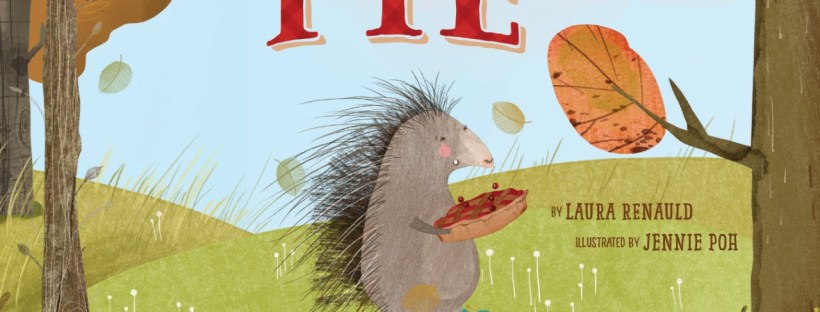
PORCUPINE’S PIE
by Laura Renauld
illustrated by Jennie Poh
Beaming Books
October 9, 2018
Fiction
4-8

thumbnail_PorcupinesPie_COV copy

Synopsis:

Porcupine can’t wait to share Fall Feast with her woodland friends, so when everyone she greets is unable to bake their specialty due to a missing ingredient, Porcupine generously offers staples from her pantry. When Porcupine discovers that she, too, is missing a key ingredient, the friends all work together to create a new Fall Feast tradition.


SUSANNA: Thank you so much for joining us today, Laura!  I know I speak for everyone when I say we can’t wait to hear about your journey to publication!  Where did the idea for this book come from?

LAURA: I have been an enthusiastic participant in Tara Lazar’s Picture Book Idea Month (now Storystorm) since 2011. I highly recommend this to writers at any point in their career. During the month of January, Tara offers daily guest posts that are intended to stimulate new ideas, with the goal of collecting 30 ideas in 30 days. Check it out here!

I was inspired by Tammi Sauer’s post during PiBoIdMo 2014, which challenged writers to frame a story as a How-To Book. My brainstorming that day included this jot in my notebook: “How to make porcupine pie (or a pie for a porcupine)”. Even though it did not evolve into a How-To Book, that was the humble beginning of PORCUPINE’S PIE!


SUSANNA: How long did it take you to write this book?

LAURA: This story took shape rather quickly. Four days after my initial idea, I brainstormed plots using a basic template that helped me think through the main character’s problem, obstacles, and solution. I came up with two possible angles and I drafted one of them that same day.


SUSANNA: Did you go through many revisions?

LAURA: As I look back at my timeline, I can’t believe that I did this, but I revised it twice and then sent it off to Rate Your Story only three days later! (I do not move that quickly with my manuscripts anymore! I write them, I let them sit, I revise them, I bring them to my critique groups, I revise some more. Repeat, repeat, repeat!) I got a good rating, though. 3: Good story! Get a critique or two and polish before submitting. This gave me confidence that I was on the right track, so I kept revising. Something in the judge’s comments caused me to shift the plot in a significant way. And that is the version that clicked.


SUSANNA: When did you know your manuscript was ready for submission?

LAURA: I still have a really hard time knowing when a manuscript is ready to submit! Sometimes, if I’ve gotten positive feedback from writing partners and I feel it’s the best it can be, I just go for it.


SUSANNA: When and how did you submit?

LAURA: At the time, I was unagented so I was open to a variety of submission opportunities. I submitted PORCUPINE’S PIE for the first time in February 2015 to an editor who spoke at the Fall 2014 SCBWI conference I attended. And then… crickets. I never did receive a response.

I set the manuscript aside for several months before sharing it with my critique group. I revised a couple more times in 2015 and then I didn’t touch it again until submitting it to the first annual Sparkhouse Family (now Beaming Books) Picture Book Contest in November 2016. And I won! I’d like to give a shout-out to Sub It Club, which posts an awesome contest calendar. That is where I heard about this opportunity.

Fun Fact: I tweaked my fall-themed story so that I could enter a pared-down version of it in Susanna’s 2016 Valentine-y contest!


SUSANNA: And all this time I thought the picture book came from the Valentiny Contest entry!  I guess it was the other way around!


SUSANNA: When did you get “the call”?  (Best moment ever! 🙂 )

LAURA: Just over a month after I submitted my story to the contest, I received the email from Sparkhouse Family that I had won and they would like to publish my book!


SUSANNA: That must have been so amazing!  How did you celebrate signing your contract?  (If you care to share 🙂 )

LAURA: With lots of hugs and phone calls. 🙂
thumbnail_IMG_9578 2

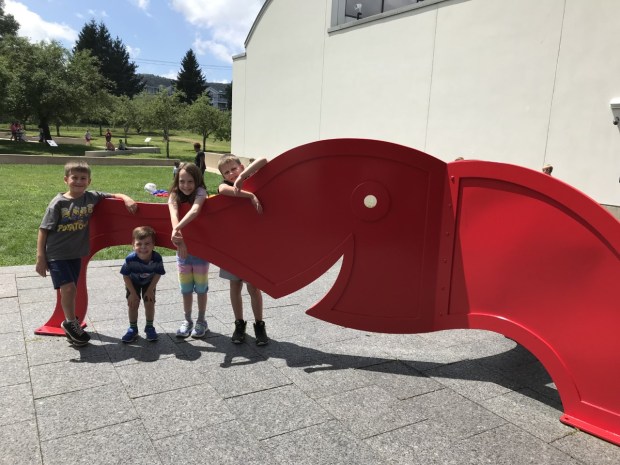
A family trip to the Eric Carle Museum of Picture Book Art this summer. Laura’s boys (on the edges) and her niece and nephew are her inspirations!


SUSANNA: Was the contract what you expected in terms of advance, royalty percentage, publication timeline, author copies etc.?

 
LAURA: I didn’t know what to expect with the contract. I relied heavily on SCBWI’s THE BOOK to negotiate a few contractual changes.


SUSANNA: Are you able to share any of the contract details?  It is clear from all our Tuesday Debut Authors’ answers to this question that most of us had no idea what to expect, so any light you can shed on specifics will be welcome so that when our readers get to their first contracts they will have some idea what to expect!


LAURA: Beaming Books is a small publisher. They hold an annual writing contest to generate interest and excitement for their house and brand. This is a clever way to encourage submissions during a certain period of time and to entice writers with prize money. Porcupine’s Pie won the first annual contest which offered a $5000 prize. It turned out that the prize money was actually my advance. And really, the biggest prize I was hoping for was to have my story published. The royalty ranges from 5%-7% as the number of copies sold increases. One thing that I did not know going into a book contract was that the listed royalty is split between author and illustrator. So if you are an author/illustrator, you’ll get the full 10% standard royalty. But if you are just an author, like me, you’ll receive 5% and your illustrator will receive 5%.

SUSANNA: Did you receive author copies?

LAURA: Yes, I received 10.

SUSANNA: Do you know what your initial hard cover print run is?

LAURA: The initial print run is 3,000 copies.


SUSANNA: Thank you so much for being willing to provide such detail, Laura!  I know readers will be grateful for it!


SUSANNA: Tell us about the editorial process…

 
LAURA: Only minor revisions were made during the editorial process, mainly to align the text and the illustrations. For example, I originally had Porcupine wearing a shawl, but the illustration of a shawl full of quills looked awkward, so boots were suggested instead. And Porcupine looks good in her little blue boots!


SUSANNA: Tell us about your experience of the illustration process…


LAURA: I was pleasantly surprised when my editor asked me for styles of art that I like. I just happen to keep a Pinterest board of Illustrators I Admire, so I was able to share my tastes easily. When my editor informed me that Jennie Poh would be doing the illustrations, I was thrilled. I saw sketches of the woodland characters and was given a chance to comment. Then the cover was revealed, along with an internal spread in Fall 2017. Finally, I got to see a digital proof in May of this year. After a few more back-and-forths, the final digital proof arrived.

Jennie’s art is warm and whimsical. I love the color palette Jennie chose and Porcupine’s cozy den feels so inviting. The characters were friends in my text, but Jennie’s illustrations made those relationships believable.
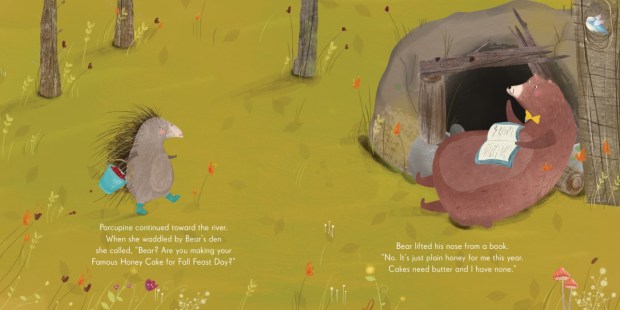
thumbnail_PorcupinesPie_INT

interior spread from PORCUPINE’S PIE

SUSANNA: Did you get to see advance reviews from Kirkus, SLJ, etc?

LAURA: Foreword Reviews published a review of Porcupine’s Pie in their Sept./Oct. issue. It was a bit surreal!


SUSANNA: How long did it take from offer to having the first copy in your hand?

LAURA: 21 months. Fun fact: That’s about how long an elephant mama carries her baby before it is born!


SUSANNA: What kind of marketing and promotion has your publisher done for this book?

LAURA: My publisher purchased ad space in Foreword Reviews in the form of an author interview to complement the review in the same issue. They also plan to promote my book on the Beaming Books blog.


SUSANNA: Describe any marketing/promotion you did for this book.

LAURA: Before my book launched, I promoted it with a ‘Preorder Campaign’ where those who preordered would get a signed bookplate and be entered to win a pie-making kit. I also planned a launch party with children’s activities and a blog tour, stopping at various kidlit and mommy blogs. I decided not to invest in a book trailer, but I did have bookmarks and stickers printed. I also canvassed the neighborhood with launch party invitations!


SUSANNA: How long was it between the time you started writing seriously and the time you sold your first picture book?

 
LAURA: I started writing a bit and taking some kidlit workshops about ten years before PORCUPINE’S PIE won the Beaming Books Picture Book Contest. But it wasn’t until I joined SCBWI in 2011 and made writing a priority during the few hours my kids were in preschool that I really began to improve my craft. It was energizing to see my own progress and humbling to realize I should never have submitted to agents when I did! From my conversations with other writers, five to ten years to land a book contract is not unusual.


SUSANNA: Anything else you’d like to share about your book’s journey from inspiration to publication?

 
LAURA: If you have an idea for back matter that was not submitted with the original manuscript, pitch it to the editor! PORCUPINE’S PIE is a story with food at its core so it made sense to add a recipe at the end. I made a lot of trial pies, had friends and family taste test them, then created my recipe. And my editor ate it up! 🙂
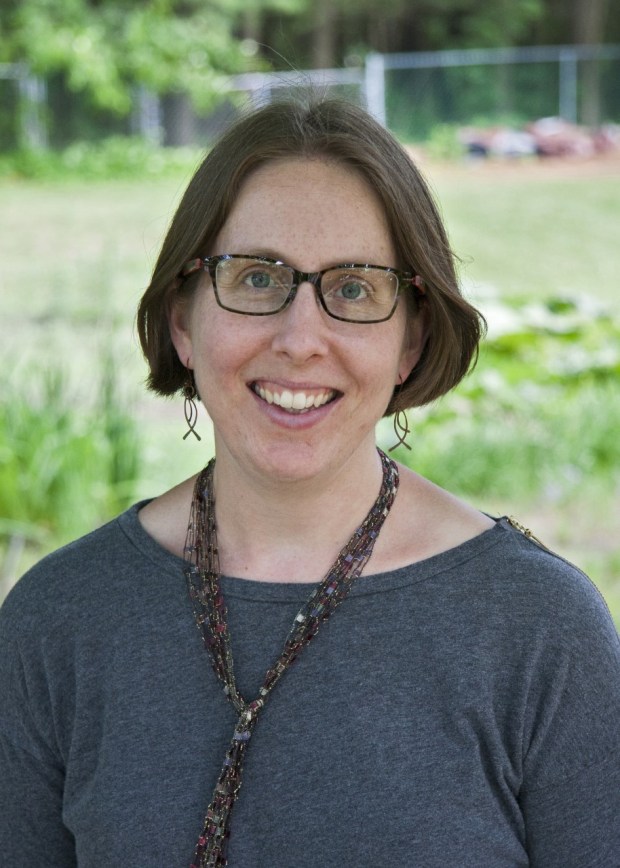
 

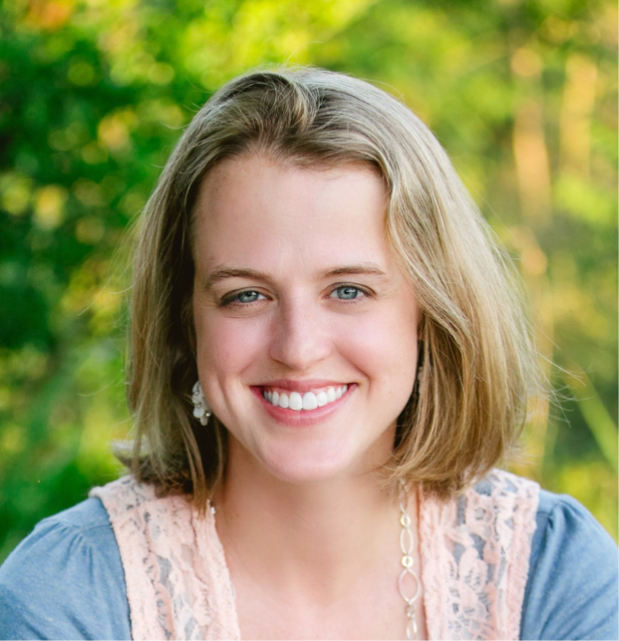
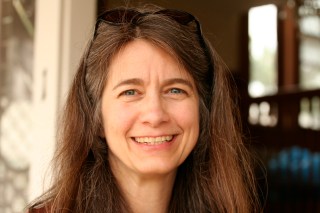
Laura Renauld


Find Laura on the web at laurarenauld.comand on social media:

Twitter – @laura_renauld

Facebook – @kidlitlaura

Instagram – @laurarenauld


Thank you so much for a wonderful and very informative interview, Laura!  On behalf of all our readers, I appreciate you including Storystorm and Sub It Club, the specific details of your contract, author copies and print run, and your excellent advice about back matter.  So helpful!

Readers, you may purchase Laura’s book at:

Indiebound
Amazon
Barnes&Noble

We can help our debut authors successfully launch their careers by:

– purchasing their books

– recommending their books to friends and family

– recommending their books to our children’s teachers and librarians

– recommending their books to our local libraries and bookstores

– sharing their books on social media

– reviewing their books on Goodreads, Amazon, Barnes&Noble, and other sites where people go to learn about books.

Thank you all for stopping by to read today!  Have a lovely, inspiration-filled Tuesday!  Maybe today is the day you’ll write your debut picture book 🙂


Missed any previous Tuesday Debuts?  Check them out!

Christy Mihaly – Hey! Hey! Hay! A Tale of Bales And The Machines That Make Them

Jessie Oliveros – The Remember Balloons

Beth Anderson – An Inconvenient Alphabet: Ben Franklin And Noah Webster’s Spelling Revolution

Hannah Holt – The Diamond And The Boy

Tuesday Debut – Presenting Hannah Holt!

Welcome to the October 2nd edition of Tuesday Debut, everyone!

Not only do we have a fabulous new author and debut picture book to enjoy today, this particular author did some research into advances, royalties, and rights last year which she has very kindly shared with us below.  After last week’s questions, I know you’ll all find it interesting!

So without further ado, put your hands together for Hannah Holt and her debut picture book, The Diamond And The Boy!

The Diamond and the Boy
written by Hannah Holt
illustrated by Jay Fleck
Balzer+Bray, October 2, 2018
Nonfiction, ages 4-8


DiamondMan Final cover

Told in a unique dual-narrative format, The Diamond and the Boy follows the stories of both natural diamond creation and the life of H. Tracy Hall, the inventor of a revolutionary diamond-making machine.


SUSANNA: Thank you so much for joining us today, Hannah!  We are thrilled to have you here and so excited to hear all about your amazing book!  Where did the idea for this book come from?

HANNAH: Tracy Hall was my grandfather. The idea to write his biography was simple enough, but how to tell the story eluded me for years. I took the story in a dozen different directions before landing on the dual narrative with graphite.


SUSANNA: How long did it take you to write this book?

HANNAH: About five years.


SUSANNA: Did you go through many revisions?

HANNAH: Yes, about eighty.

SUSANNA: I am noticing a trend here, folks!  Last week, Beth told us her book had undergone 91 revisions.  It sounded like a LOT, but Hannah is giving her a run for her money!


SUSANNA: When did you know your manuscript was ready for submission?

HANNAH: When it was accepted for publication!
Kidding (sort of). I still struggle with knowing when my stories are “ready.”

I worked on this story for years. I had it professionally critiqued. The story won an award—and I still had to completely rewrite it before it was accepted for publication. A story can always be made better. However, every so often, you have to try the market. Sometimes you just have to let go and submit.

Yes, edit it and revise it. Rest it and rework it. Critique it and tweak it…and then send it out!


SUSANNA: When and how did you submit?

HANNAH: I wanted an agent, so I mostly submitted to them.

I sent in small batches of 5-8 at a time. When a rejection came in, I would send another query out. I was working towards a goal of 100 rejections in a year.

I didn’t quite make that goal because I signed with my agent, Laura Biagi, and we were fortunate to have The Diamond & the Boy picked up quickly.

Laura was actually my second agent. My first agent, Danielle Smith, is no longer working in the industry.

While working with Danielle, I received no rejections. None. My stories went out and nothing came back. After we parted ways, I set my rejection goal to take back control of my career.

If you aren’t getting rejected, you probably aren’t progressing towards publication.

Rejects are good! They are proof you are working.

Hannah and Zephyr

Hannah hard at work with her supervisor and neck-warmer, Zephyr 🙂


SUSANNA: When did you get “the call”?  (Best moment ever! 🙂 )

HANNAH: I spoke with my editor before I had an official offer.

Laura and I received interest from multiple houses for The Diamond & the Boy. My agent arranged phone calls with the interested editors, so I could hear their editorial ideas. Kristin Rens had a fantastic vision for the story, so I accepted the offer from Balzer+Bray.


SUSANNA: How did you celebrate signing your contract?

HANNAH: I signed my contract, and then finished washing the dishes.

Okay, later in the day, I went to dinner with my husband, but it’s funny how normal duties of life didn’t disappear just because a book contract is signed.


SUSANNA: Was the contract what you expected in terms of advance, royalty percentage, publication timeline, author copies etc.?

HANNAH: My advance was larger than expected, probably because of the interest from multiple houses. It still didn’t make me rich. I’ve sold more than this book, but I’m not living off my income from picture books.

I didn’t know what to expect in other areas, so I deferred to my agent’s judgment on those items. (Hurrah, for agents!)


SUSANNA: Readers of this series have expressed a strong interest in knowing a little more about the specifics of contracts.  As it happens, Hannah conducted a poll last year to gather information on that topic and she was kind enough to provide a graph and summary explanation which I hope everyone will find helpful.  Even though I’m sticking it smack in the middle of her interview 🙂

HANNAH:

I asked about advances as part of my children’s author survey last year. I had over 100 published picture book authors participate. The most common advance range for smaller houses is $1,000-$5,000. The most common advance range at Big 5 houses is $5,000-$10,000. However, I’ve attached an image to show you the spread. My debut advance was higher than average, but I had interest from multiple houses. That drove the offer up quite a bit.

My agent at the time was aggressive about pursuing international rights, so she only sold North American rights. I’ve spoken with editors about this. It’s more common for picture books to sell world rights because the words and illustrations are often created by different person. It can be easier to sell as a package. One editor I talked to said picture books at her house are about 2/3rds world rights. This same editor said it’s more common for novelists to retain world rights.

Q1 Large House vs small house advance

graph copyright Hannah Holt 2017


SUSANNA:  Thank you so much for sharing that, Hannah.  I think I can speak for all our readers when I say it is extremely helpful!


SUSANNA: Tell us about the editorial process…

HANNAH: I was fortunate to talk to my editor before accepting the offer, so there weren’t any big surprises.

I had pitched the book as a dual narrative meet-in-the-middle story, and Kristin wanted a side-by-side telling. I fully supported this switch and working with Balzer+Bray was a delight. Kristin kept me in the loop for everything from copy editing to the progress on the illustrations.


SUSANNA: Tell us about your experience of the illustration process…

HANNAH: I was involved from the very beginning.

My editor suggested four possible illustrators, and Jay Fleck was my top pick. Fortunately, he accepted the offer from my publisher. Yay!

My editor kept me in the loop as illustrations progressed. I saw sketches, and at some point, my editor asked if I would help supply research material. Of course, I was happy to help, and we went through a few rounds of sketches and tweaks.

I never spoke directly with the illustrator, and I tried to leave Jay as much stylistic freedom as possible in my notes while keeping the story technically accurate. I’m very happy with the result. The final artwork is stunning!

SUSANNA: Very cool that your editor sought your input on who the illustrator would be!


SUSANNA: Did you include art notes in your manuscript?  If so, can you share an example?

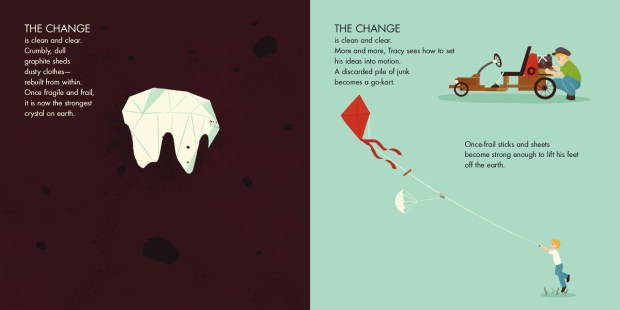
HANNAH: I only had one illustration note in the text for The Diamond & the Boy. It was describing something vaguely enough that I thought the illustrator might need some help:

“Once-frail sticks and sheets

become strong enough to lift his feet

off the earth. (illo note: huge kite)”

The resulting illustration looks like this:

The Change page


SUSANNA: Did you get to see advance reviews from Kirkus, SLJ, etc?

HANNAH: The Diamond and the Boy has had two trade reviews so far: Booklist (a STAR!) and Kirkus. I saw both reviews before they were made public and fortunately both were favorable.


SUSANNA: How long did it take from offer to having the first copy in your hand?

HANNAH: About two years.


SUSANNA: What kind of marketing and promotion has your publisher done for this book?

HANNAH: My publisher sent my book out for trade reviews and awards. They’ve brought The Diamond & the Boy to major book conferences, like Texas ALA. They’ve also had a digital copy available on Edelweiss+ and sent me several Folded & Gathered copies.

I won’t be going on a publisher sponsored book tour or anything fancy like that, but I’m happy with the level of support I’ve received.


SUSANNA: Describe any marketing/promotion you did for this book.

HANNAH: I helped organize a picture book debut group with about 50 members. We recently ran a group giveaway for educators with over 1,600 entries. It’s much easier to market with friends. I highly recommend that approach.

I’m also writing blog posts (like this! Thanks, Susanna!), putting together a classroom guide, and recording videos for science experiments correlated with my book.

When focusing on promotional material, I try to spend time rather than money. Like I said earlier, writing books hasn’t made me rich.


SUSANNA: How long was it between the time you started writing seriously and the time you sold your first picture book?

HANNAH: Ten years.

In the last decade, I’ve watched many friends sign with agents and publishing houses. Some friends have become quite successful. Others have left the business. I’ve also seen books hit bestseller lists and then eventually go out of print.

Through all this, I’ve learned that quick success isn’t necessarily the path to happiness. Becoming “published” is not the end-all, be-all that budding authors sometimes think it is. It’s important to know what you want and not become distracted by the siren call of every opportunity.

Market trends come and go, but stories don’t expire. There is no deadline for success. Through it all, keep chasing your own dreams!

SUSANNA: That is excellent advice, Hannah!  Thank you so much for sharing your experience with us today.  We all really appreciate it and wish you the best of success with this book and all the books to follow!  Readers, if you have any questions for Hannah, I’m sure she’ll answer if she has time!

HannahHolt_small

Hannah Holt is a children’s author with an engineering degree. Her books, The Diamond & The Boy (2018, Balzer+Bray) and A Father’s Love (2019, Philomel) weave together her love of language and science. She lives in Oregon with her husband, four children, and a very patient cat named Zephyr. She and her family enjoy reading, hiking, and eating chocolate chip cookies. You can find her on Twitter and at her website: HannahHolt.com

You may purchase her book at:

Indiebound
Amazon
Barnes&Noble

We can help our debut authors successfully launch their careers by purchasing their books, recommending their books to friends and family, our children’s teachers and librarians, and our local libraries and bookstores, by sharing their books on social media, and by reviewing their books on Goodreads, Amazon, Barnes&Noble, and other sites where people go to learn about books.

Thank you all for stopping by to read today!  Have a lovely, inspiration-filled Tuesday!  Maybe today is the day you’ll write your debut picture book 🙂


Missed any previous Tuesday Debuts?  Check them out!

Christy Mihaly – Hey! Hey! Hay! A Tale of Bales And The Machines That Make Them

Jessie Oliveros – The Remember Balloons

Beth Anderson – An Inconvenient Alphabet: Ben Franklin And Noah Webster’s Spelling Revolution

Tuesday Debut – Presenting Beth Anderson!

Welcome, Everyone!

It’s the friendly, Tuesday writer’s club coffee hour here on Blueberry Hill!

Take off your shoes, tuck yourself into a comfy chair, wrap your hands around a nice hot mug of coffee or tea, and let’s settle in for a cozy chat with today’s Tuesday Debut-ess!

(What do you think?  Is debut-ess an improvement on debutee or is debutee better?  I’m still trying to think up a good word 🙂 )

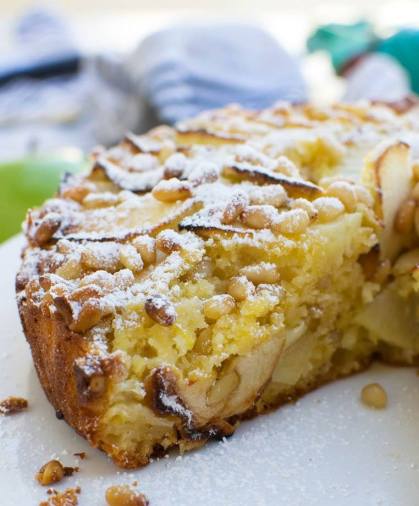
While you’re thinking on that, coffee cake anyone?

apple cake

Photo and recipe from ScrummyLane


Before we get started, I want to take this opportunity to invite you all to evaluate the information you’re getting from these Tuesday Debut posts.  As you read, please think about whether you’re getting all the information you hoped for from the weekly posts.  Do you have burning questions we’re not addressing?  Specific things you’re dying to know about the publication process? If there are questions you’d like to see included in future Tuesday Debuts, please share them with me in the comments or email me!  It is easy to make changes and I definitely want to make improvements if there are any you can see to be made.  I want this series to be as helpful to everyone as possible!

Now, it is my extreme pleasure to introduce today’s Tuesday Debut author, the lovely and talented Beth Anderson and her wonderful book:

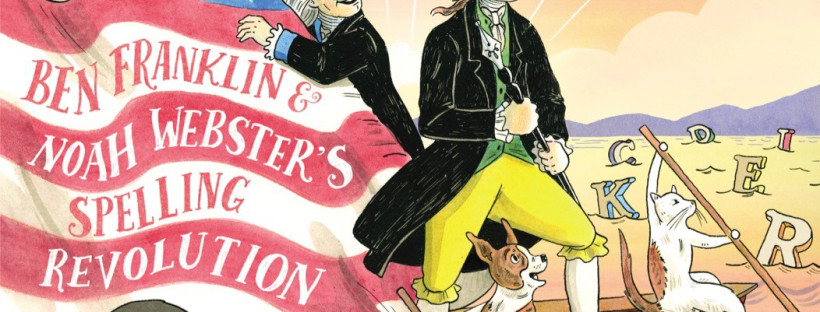
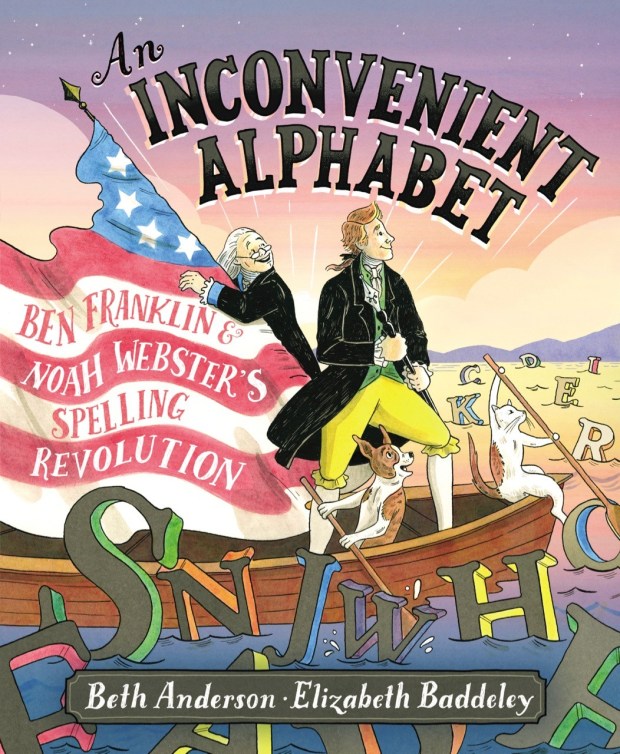
AN INCONVENIENT ALPHABET: BEN FRANKLIN AND NOAH WEBSTER’S SPELLING REVOLUTION
by Beth Anderson
illustrated by Elizabeth Baddeley
Paula Wiseman Books/Simon & Schuster, 9/25/18
Narrative Nonfiction, age 4-8

Beth1

Brand new Educator’s Guide available HERE

Do you ever wish English was eez-ee-yer to spell? Ben Franklin and Noah Webster did!


SUSANNA: Thank you so much for joining us today, Beth!  We are all so glad of the opportunity to learn from your experience!  I’m chuckling because entirely by coincidence, the book I posted for PPBF a few days ago was Noah Webster And His Words by Jeri Chase Ferris – a nice companion to your book!  Where did the idea for this book come from?

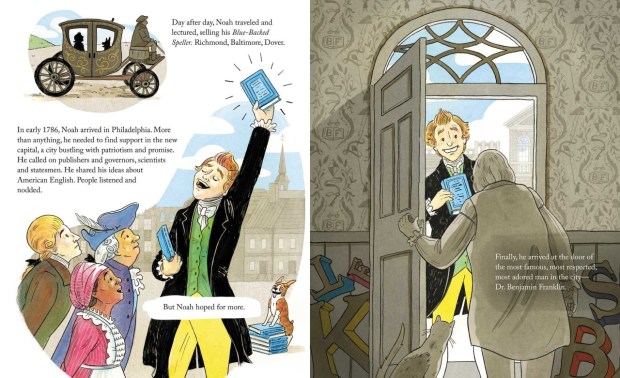
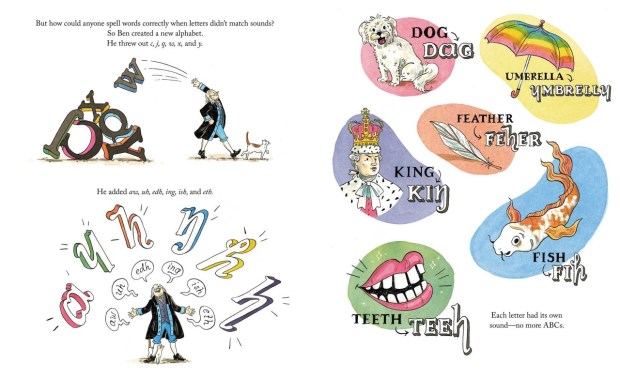
BETH: Ben Franklin had me at “ish.” When I saw a news blurb item about how he wanted to change the English alphabet, including six new letters (one of which was “ish”), I was immediately interested. As a linguistics major, reading specialist, and English teacher, how could I resist? When I read further, his quote, “Those people spell best who do not know how to spell,” hit me. The kids! They’re sounding words out. So sensible. Just what Franklin wanted. His quirky humor went straight to my heart. From there, I had to dig in and find the story. (For more on the inspiration, see this post. )


SUSANNA: How long did it take you to write this book?

BETH: After the initial exploration confirms that a topic has potential, I research for a few weeks, organize ideas, then start drafting. AN INCONVENIENT ALPHABET took about six months to reach “ready” for an editor critique. (I was working on a couple other manuscripts in various stages at the time, as well.) After the critique, I revised for another month and a half. It involved more research, some “reframing,” and tightening.


SUSANNA: Did you go through many revisions?

BETH: My revision process has changed as I’ve learned more and more about how to shape a story. AN INCONVENIENT ALPHABET went through about 40 revisions. An earlier manuscript, which will be my second picture book, had 91 revisions. Part of the difference is the story itself. But much of what accounts for far fewer revisions with “Alpha” is that I did a lot more organizing of information and brainstorming of possible structures and “vital idea” before I wrote. Also, I made many more changes with each revision as I’m not only fine tuning sentences, but looking at structure, conflict, characterization, etc. I think the key to making revisions that matter is to go beyond the sentence level where you keep reworking the same “story,” and, instead, push yourself to experiment with structure and holistic level changes. Finding just the right thread to make a story marketable and being able to reframe it that way is an ongoing challenge!

(There’s more on revising this manuscript HERE. )


SUSANNA: When did you know your manuscript was ready for submission?

BETH: Probably like most of us, I often think a manuscript is ready before it really is. We write the story we love and revise it until it’s just right, but often fail to see the big picture, or the marketing picture, or the irresistible premise picture—all things editors see. That’s why critique groups are so important. (Not your kids, or spouse, or neighbor.) That’s also (just one reason) why an agent is so valuable. A good agent has “editor eyes.” All these people help us see a story in different ways and can tug on the reins when we want to go ahead and submit before its ready.

With this manuscript, after I had taken it through many revisions, various critique groups over and over, and past my agent several times, I purchased an editor critique. With that, I took each piece of feedback and made sure I had applied it to the entire story. Then, when feedback came back with tiny tweaks, and the story itself got a genuine “yes!” it told me that the manuscript was ready to sub.


Beth3


SUSANNA: When and how did you submit?

BETH: At a writing retreat, I purchased editor critiques on several manuscripts. My agent, the wonderful Stephanie Fretwell-Hill, advised which manuscripts fit which editors. After the retreat, I worked with Sylvie Frank’s feedback to revise AN INCONVENIENT ALPHABET, and then we sent it to her on a 30-day exclusive submission. Ta-da! She loved it. (Note: Sylvie said that acquiring a manuscript in that way is rare for her.)

That all sounds so easy, right? Well, there was a lengthy process leading up to that. If you’re interested in how I got to that point, HERE’s more.


SUSANNA: When did you get “the call”?  How did you celebrate signing your contract?  (If you care to share 🙂 )

BETH: To be honest, the thrill of both the news of the offer and the signing of the contract were tempered by sad events. The contrast of emotions served to remind me of what’s truly important and that life is a balance. My joy settled inside, nestled with gratitude, encouragement, and anticipation of the new adventure.

SUSANNA:  I’m so sorry that what should have been a joyous occasion was tempered by sadness, Beth.  But you are right.  It does help us keep perspective.


SUSANNA: Was the contract what you expected in terms of advance, royalty percentage, publication timeline, author copies etc.?


BETH: Mostly, I didn’t know what to expect! This too is a learning process. I asked some questions of my agent to better understand it all and am so glad that I had her to lead me through it and do the negotiations.


SUSANNA: Tell us about the editorial process and your experience with the illustration process…

BETH: There were few revisions to make for the editor since I had already revised per her feedback. She got an illustrator on board very quickly – the amazing Elizabeth Baddeley! About 3-4 months after the contract was signed we had sketches. That’s an exciting moment! Copy edits came soon after. I made a few tweaks to the text here and there. I was kept in the loop throughout, and the process was smooth and comfortable. The editor’s vision never conflicted with mine, but rather enhanced everything that I had envisioned.

As a rookie, I was wishing I had more knowledge of the editorial process, what to expect when, etc. Here’s how I would explain the process:

Imagine the editor drives up to your house in a limo and invites you to go for a ride. You sit up front and chat along the way. You know the destination, but don’t know the route. So you spend much time looking out the window, wondering, asking a question now and then. Along the way, you pick up other people – the illustrator, art director, etc. But…there’s that limo barrier between the front and back. You can’t talk to the people back there, but the editor can, and once in a while relays a bit of what’s going on. You ooh and ahh at landmarks along the way, feel a festive spirit permeate the vehicle, and, finally, after a long trip, you arrive at the book!

As I work on more manuscripts, I see that each one is a bit different. So…basically, sit back and enjoy the ride!

Beth2


SUSANNA: Did you get to see advance reviews from Kirkus, SLJ, etc? What was that like?

BETH: Seeing the advance reviews from Kirkus and SLJ was a joyful moment – a bit of relief combined with anticipation at getting the book in the hands of kids.


SUSANNA: How long did it take from offer to having the first copy in your hand?

BETH: 2 years


SUSANNA: Describe any marketing/promotion you did for this book.

BETH: I’m really only beginning this aspect of the book and learning as I go. I have lots of lists!! Here’s what I’ve done so far:

  • scheduled a release party at a local Barnes and Noble,
  • requested F&Gs be sent to a number of bloggers in hopes that they will want to review AN INCONVENIENT ALPHABET and have been lucky enough to receive invitations for interviews from friends within the kidlit world.
  • postcards, bookmarks, additional business cards
  • contacted bookstores in the area about opportunities such as local author signing days and festivals, as well as school visits they coordinate. (I don’t think this book is the best for story times with toddlers.)
  • planned activities for events
  • completed authors pages on Amazon, Goodreads, etc., SCBWI opportunities
  • added pages to my website
  • blog posts for my own site on my writer’s journey and process
  • created Pinterest boards related to the book
  • working on a presentation for schools and paperwork associated with that


SUSANNA: What is your publisher doing to market and promote your book?

BETH: I’ve been assigned a publicist and am copying her on any plans I make so she can coordinate books being available. She will arrange signings I request when I travel and send F&Gs to people I’ve requested. I’ll work with her on any conferences, but at this point have none scheduled. The publisher has sent copies to reviewers and created an educator’s guide.


SUSANNA: How long was it between the time you started writing seriously and the time you sold your first picture book?

BETH: I made the decision to jump into writing for children in the fall of 2013. In the beginning of 2016, I signed with an agent, and in September 2016, I had my first offer.


SUSANNA: Anything else you’d like to share about your book’s journey from inspiration to publication?

BETH: I think each book has lessons to teach us as writers. As I got to know the characters in AN INCONVENIENT ALPHABET, Ben Franklin’s philosophy of letting your ideas “take their chance in the world” really struck a chord with me. In contrast, Noah Webster wanted to force his ideas on people. One approach is stressful, the other not. One approach considers you know best, the other accepts that maybe you don’t. One approach lets rejections quash the spirit, the other takes them in stride.

So, do your best, and put those manuscripts out there. Let your ideas “take their chance in the world!” 🙂

Beth4

photo credit Tina Wood

Beth Anderson, a former English as a Second Language teacher, has always marveled at the power of books. Armed with linguistics and reading degrees, a fascination with language, and penchant for untold tales, she strives for accidental learning in the midst of a great story. Beth lives in Colorado where she laughs, wonders, thinks, and questions; and hopes to inspire kids to do the same.

website and social media links

https://bethandersonwriter.com/

https://www.facebook.com/beth.anderson.33671748?fref=ts%2F

https://twitter.com/@BAndersonWriter/

https://www.pinterest.com/bandersonwriter/

An Educator’s Guide is available HERE.

Beth, thank you again so much for being with us today, and readers, thank you for stopping by to read.  If you have questions for Beth I’m sure she will do her best to answer if she has time.

I think it’s interesting that the interviews from both Jessie last week and Beth this week showed how much writing is but one piece in the puzzle of life.  It’s so easy as an unpublished writer (or even a published writer hoping for another sale) to think that if you can get published, everything will be perfect!  There is no denying that getting published is wonderful!  It is the dream.  It is what we all work so hard for.  But for Jessie it came with a new baby, and for Beth it came with sadness in her life.  Both things put publication in perspective.  Jessie’s book was drawn from her life experience of having a grandfather with Alzheimers, and Beth was able to write her book because of her background as a teacher and her knowledge of and interest in linguistics.  So if you’re looking for inspiration, you may, like Dorothy in the Wizard of Oz, have no need to look any further than your own back yard. You may find it right there in your life.

Whether you’re published yet or not, write for the joy of writing and enjoy the process and the journey.  It’s hard work, but we do it because we love it, and I think most of us would agree that there aren’t many occupations that can rival making up stories, or sharing the wonders of the nonfiction world with kids 🙂

Happy Tuesday! 🙂 and don’t forget to let me know if there are questions you want answered in future posts!

Missed any Tuesday Debuts?  Check them out!

Christy Mihaly – Hey! Hey! Hay! A Tale of Bales And The Machines That Make Them

Jessie Oliveros – The Remember Balloons

Tuesday Debut – Presenting Jessie Oliveros!

TOO TOOTLE TOOT-TOOT TOOT TOOOOOOOT!

(Try to imagine that was royal trumpets! 🙂 )

(It’s pretty lucky we are all creative types who are good at imagining things 🙂 )

But trumpets!!!

Because it’s time for another Tuesday Debut – the thrilling new series where you get the inside scoop on how pre-published picture book writers became Published Picture Book AUTHORS!

What could be better?!

After dipping our toe into the Tuesday Debut experience a month ago with Christy Mihaly, we are now going full steam ahead with a new debut every Tuesday for the next 9 weeks (minus a week or two while Halloweensie is running and pre-empting all regular programming on this blog)!

And let me take this opportunity to say that if YOU have a debut picture book coming out and you’d like to be center stage here, sing out!  If the date’s free it’s yours!

Alrighty!

Let’s have a round of applause for today’s lovely debutee (is that a word? n. one who debuts? Let’s make it a word!  Pronounce it day-bew-tay – it sounds more accomplished and French that way 🙂 )

ANYway! Queen of the Day – Jessie Oliveros!!!  (clapclapclapclapclap!!!!!)

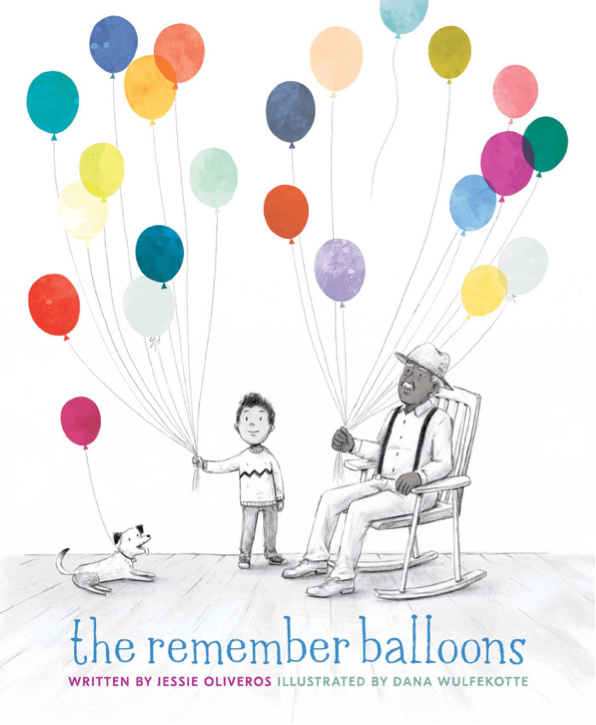
THE REMEMBER BALLOONS
Written by Jessie Oliveros
Illustrated by Dana Wulfekotte
Simon and Schuster Books for Young Readers
August 28, 2018
Fiction
Ages 5-9

Jessie1
James and Grandpa keep their memories in balloons, and James loves to hear all of Grandpa’s stories. When Grandpa’s balloons begin to float away, James tries to catch them—but he can’t. He must discover another way to reclaim Grandpa’s balloons.

SUSANNA: Where did the idea for this book come from?

JESSIE: THE REMEMBER BALLOONS was inspired by my paternal grandfather who has Alzheimer’s.

Jessie2

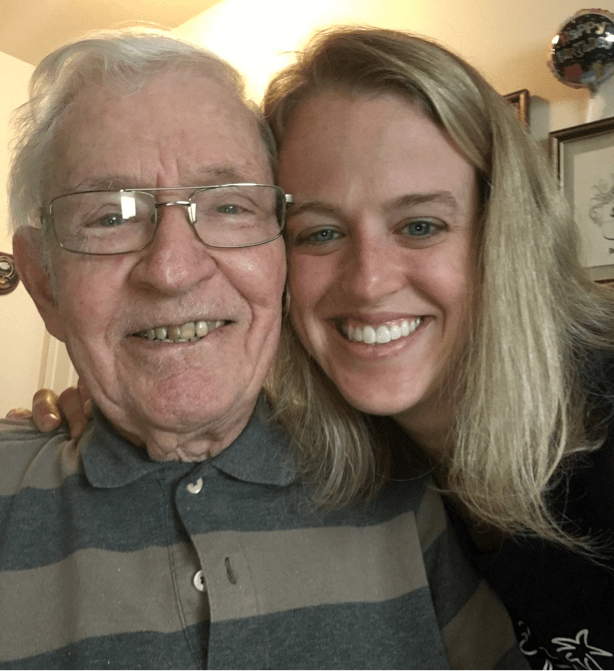
James this summer, age 92


A few summers ago, while visiting my grandparents in Kansas with my children, my thoughts turned to writing a picture book. I only knew that it would be about a boy and his grandfather suffering from Alzheimer’s. I started out writing a straight forward story. I can’t say exactly when the metaphorical angle came to me. I knew balloons would be an accessible idea for children. And, when I was visiting my grandparents, I had recorded some of their histories on a voice recorder. This made their memories more of a tangible thing for me, I think. Plus, there was that act of capturing their memories before they were no longer with us. All of these things came together, and the THE REMEMBER BALLOONS was born.


(Also, one of my favorite methods of idea-seeking is to mash two unlikely ideas together, which I think my brain did out of habit when I thought of balloons while also contemplating memories.)

SUSANNA: How long did it take you to write this book?

JESSIE: Once the idea of the memory balloons came to me, this story flowed fairly quickly. I had a cohesive draft in an afternoon. I definitely cannot say that about all of my picture book manuscripts! When I get an idea, I typically let it form in my mind for awhile before writing anything down. Sometimes it takes a ridiculous amount of drafts to make it a cohesive story. And that’s before any real revisions!


SUSANNA: Did you go through many revisions?

JESSIE: THE REMEMBER BALLOONS went through my own revisions before I felt it was ready for other eyes. I sent it to a trusted critique partner and implemented her feedback. It may have been about ten revisions before my agent saw it. Once he had his hands on it, the revision process had just begun!

I advise letting a manuscript sit for awhile and coming back to it. You see things a little differently with the passage of time.

SUSANNA: When did you know your manuscript was ready for submission?

JESSIE: Well, when I send a child off to kindergarten, I know she’s ready. She’s been at home for five years and is itching to get out (even if there are some tears). I’ve dressed her in nice clothes, brushed her hair, & packed her bag and lunch. She’s ready for the world.

I guess it’s that way with your manuscript. You know you’ve done your best. It’s itching to get out. You feel it’s ready for the world. (There I go speaking in metaphors again.)

SUSANNA: When and how did you submit?

JESSIE: I submitted to about 12 agents before I found my agent. I had just finished querying a middle grade very widely, and I was a little burnt out. So, I went much slower this time. Plus, there was a bit of a personal stamp on this one which I think made me more careful with my “baby.”

I entered a Twitter Pitch contest the Friday before Christmas (#pitchmas). I pitched THE REMEMBER BALLOONS. My agent, Mike Hoogland of Dystel, Goderich, & Bourret, “liked” my pitch. I sent him my manuscript the next day. Monday, Mike contacted me via email. Tuesday we were on the phone talking representation. (BEST CHRISTMAS PRESENT EVER.) This all happened fast, but the process leading up to it was several years!

SUSANNA: When did you get “the call”?  (Best moment ever! 🙂 )
JESSIE: The manuscript was picked up about a month after we started subbing. This is quick—but I truly believe it’s all about landing on the right desk at the right time. I’ve subbed out more manuscripts since then, and it’s usually a months-long process! Fun story: I received the offer for THE REMEMBER BALLOONS the day after I brought my fourth baby home from the hospital (and we’d just closed on a house—ha!). It was a very full few days. I knew Simon and Schuster had been considering it, but I still had the surreal, heart-dropping moment when I read the email from Mike.


SUSANNA: How did you celebrate signing your contract?
JESSIE: I actually received my contract on my birthday! Ha! I didn’t do any special signing pictures or anything, but it was a bit of a dual celebration. Interesting fact: there is a delay between offer and contract signing. Mine was about two months. Offer in March. Contract in May.


SUSANNA: Was the contract what you expected in terms of advance, royalty percentage, publication timeline, author copies etc.?
JESSIE: I didn’t know what to expect! I did a lot of internet research on the terms, and I had a good agent to answer all of the questions. I would say that the terms were better than I could have hoped for for a debut author.


SUSANNA: Tell us about the editorial process…

JESSIE: I edited the manuscript with my acquiring editor, Christian, before he switched houses. He helped me hone the manuscript into what it is today. The structure of it remains close to the original. But Christian helped me dig deeper into the manuscript—most notably, he encouraged me to find James’ voice and to re-examine the silver balloon. He helped give it breath!

After that, Justin took on THE REMEMBER BALLOONS. He helped me pare it down some. We cut unnecessary phrasing as well as parts that were redundant with the illustrations.

I feel so lucky to have worked with both these editors—both great, visionary people and positive forces in children’s publishing.

SUSANNA: Can you share your experience of the illustration process?
JESSIE: When I first saw the sketches, I was very happy with the look and style. The people that Dana drew were actually very similar to how I had envisioned them as I drafted—sweet, sketchy, dreamy. I saw the sketches and art at several stages along the way. The combined visions of Lucy, the art director for THE REMEMBER BALLOONS, and Dana really superseded anything I could have ever dreamed of myself. There were a few things I suggested, tweaks really. I asked that a berry basket be added to the yellow balloon memory, for instance. I felt my input was listened to and taken seriously. But I mean, just look at the art.


Jessie3

SUSANNA: Did you get to see advance reviews from Kirkus, SLJ, etc?  What was that like?

JESSIE: The trade reviews for THE REMEMBER BALLOONS was sent to Dana and me in advance. That means we had to hold in the news of our Kirkus star before sharing it on social media! One thing I didn’t know before that I know now—your editor may send all the trade reviewers your book, but that doesn’t mean they are all going to review it.

SUSANNA: How long did it take from offer to having the first copy in your hand?

JESSIE: As I mentioned earlier, my baby was only a few days old when I received an offer. She’s 2 ½ now! I didn’t expect it to take that long, but those 2 ½ years were full. There is a lot of behind-the-scenes work going on to design and promote the book. It takes a lot of time, and I think it was worth it!


Jessie 4

SUSANNA: If your book has been out for at least one statement cycle, has it earned out yet?

JESSIE: My book just released a few weeks ago so I’m a longways off from that!
SUSANNA: Describe any marketing/promotion you did for this book.

JESSIE: I’ve used social media quite a bit to promote my book. I’ve done a few interviews like this. I’m about to have launch events in two different cities. Honestly, I think the best thing for your book is word of mouth! I had a friend tell me the other day that her friend had seen someone talking about my book on Instagram. Being that many degrees removed from it felt pretty awesome!

SUSANNA: How long was it between the time you started writing seriously and the time you sold your first picture book?

JESSIE: I started writing seriously when my son was two. 7 ½ years later I sold my picture book! That’s ten years from outset of journey to actual book.

SUSANNA: Anything else you’d like to share about your book’s journey from inspiration to publication?

JESSIE: This journey, like life, is unpredictable. It’s filled with mountains and cliffs and valleys. One thing I’ve learned (and am still learning!) is to step outside of it. Don’t let the rejections and the bad reviews cast a shadow over the things and people that give you joy.

Jessie5

My “book offer” baby today at 2 ½ years old.

Jessie6

www.jessieoliveros.com
Twitter: @JessieOliveros
Instagram: @jessieoliveros
Facebook: https://www.facebook.com/jessie.oliveros.5

That is wonderful advice, Jessie!  Many thanks for joining us today and sharing your knowledge with us.  You are the second author in a row to point out that your first sale was many years in the making.  I hope everyone feels buoyed up by the knowledge that, if you’re feeling discouraged because it’s taking you awhile to get published, this is a marathon, not a sprint for ALL of us in the picture book world.  And though it may be taking more time than we’d like to cross the finish line, at least we’re surrounded by friends all the way ❤

If you have questions for Jessie, you may ask them in the comment section and if she has time she may be able to answer 🙂

Thank you all for joining today’s debut!  And maybe there’s someone in your life who would enjoy a copy of THE REMEMBER BALLOONS… 🙂


The Tuesday Debut Debut – Presenting Christy Mihaly!

Hey, Hey, Hay!  Welcome to Tuesday Debuts!

In this new series, we’re going to get all the juicy details from first-time picture book authors about how they went from pre-published to published.  I hope it will be interesting, informative, and inspirational for all of us – published and yet-to-be-published alike.  It’s always fun to hear the story behind the story, and there is always so much we can learn from each other!  I hope you’ll get a sense of the hands-on publishing process and that the information shared here might help you in your own journey by giving you tips or even giving you inspiration from another author’s process to spark new work of your own!

So!  Without further ado…

Introducing Christy’s first picture book:

Hey, Hey, Hay! (A Tale of Bales and the Machines That Make Them)
By Christy Mihaly, illustrated by Joe Cepeda
Holiday House, August 14, 2018
Informational picture book
4-8 years

HEY, HEY, HAY! Cover
In this joyful rhyming story, a farm girl brings the reader along as she and her mother make hay. She introduces each of the machines they use to cut, dry, and bale the grass, as they “store summer in a bale.”

And now, introducing Christy!

canoe2

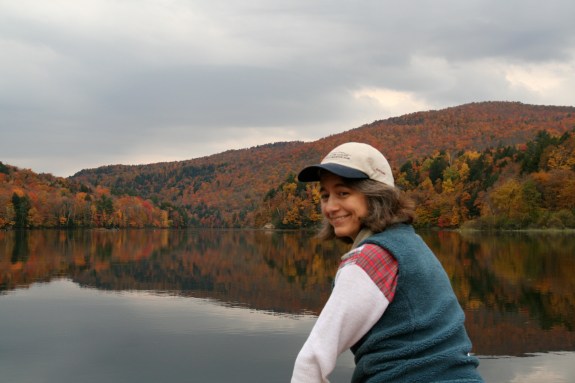
Chirsty Mihaly, debut picture book author, canoeing (which may or may not have anything to do with either haying or writing but is still beautiful and fun 🙂 )


SLH: Welcome, Christy!  Thank you so much for joining us today, and for being the guinea pig for this new series – so brave of you!  There will be extra chocolate in your Christmas stocking 🙂  Let’s start from the beginning.  Where did the idea for this book come from?

CM: The idea for this book showed up right under my nose, in the summer of 2014. I was working on a couple of picture book biographies (which are still unpublished) when my family moved to a new home surrounded by hayfields. The process of turning grass into hay was beautiful and fascinating. The scent of new-mown grass filled the air and the rhythm of the machines (mower, tedder, baler, hay!) got into my head. Then these lines started running around in my mind: “Listen and I’ll tell the tale of storing summer in a bale.”

baling

Haying in action! The inspiration for this book!

SLH: How long did it take you to write this book?

CM: I wrote the first draft—which was basically a poem—over several weeks of on-and-off writing. It was short, sweet, and rhyming. But it wasn’t very good. Revising and polishing (with some sitting and stewing) took about seven months more.

SLH: Did you go through many revisions?

CM: Yes. I began with a poem called “Haying Time.” At first it didn’t occur to me that this could constitute a book. Then, when I realized that haymaking had picture book potential, I put on my nonfiction-writer hat. I could not find another book for kids about how hay is made. I researched all about hay and hayfields and haying technology and the history of hay. I wrote a manuscript with layered text and all kinds of sidebars (Monet painted famous pictures of haystacks! In the old days, people used scythes!) and footnotes. Eventually my critique partners convinced me to simplify (thank goodness) back down to a straightforward rhyming story.

I made many changes in the words of the text. How’s this for a sample stanza of the original poem: “The baler forms it into bales/While I keep watch, in case it fails.”

Um?

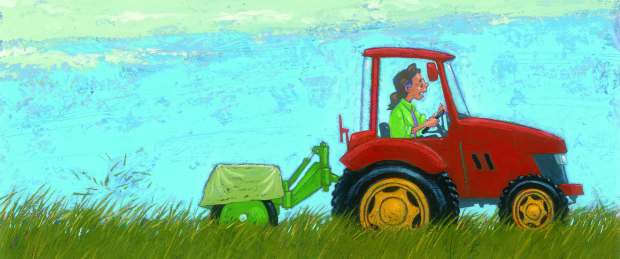
There’s one revision I’m particularly happy that I made: in the original version, the child narrator helped Dad with the haying; I changed it to helping Mom. Because many farmers are women.

HeyHay_intr_tractor

interior spread showing Farmer Mom 🙂


SLH: When did you know your manuscript was ready for submission?

CM: I had been submitting other manuscripts, so I should have known, but I was so excited to send this one out that I made the mistake of submitting it too soon. And it was rejected.

After that, I took a break from it. Then I signed up for an online writing course and brought the HAY manuscript to the class for a critique. My classmates and instructor confirmed that it had potential, and they suggested ways to make it snappier. After about 5 months of revisions, I knew it was really ready to submit.

SLH: When and how did you submit?

CM: I give credit to my writing buddies for what finally happened with HAY. At the urging of several critique partners, I applied to the Falling Leaves writing conference, which was new to me. For the editor’s one-on-one critique, I submitted a different nonfiction manuscript, which I’d been working on forever. I was accepted to the conference, and my assigned editor loved that manuscript (though it’s unpublished still). She didn’t like HAY at all—she doesn’t do rhyming books.

But! Another editor at Falling Leaves that year was Grace Maccarone, executive editor at Holiday House. I was impressed with her; she seemed calm and wise and funny. Based on what she said she was seeking (and that she liked rhyme), I thought HAY might be a good fit for her. However, (see #4 above), I needed to revise first.

I reviewed other Holiday House books and saw that many were related to farming and food. That seemed like a good sign. So about four months after meeting Grace, I emailed my revised manuscript, now called “Mower, Tedder, Baler—Hay!” to her. I mentioned that we’d met at Falling Leaves, I cited other farm-related books from Holiday House, and I crossed my fingers.

SLH: When did you get “the call”?  (Best moment ever! 🙂 )

CM: So … I have learned that this part is unusual (though remember HAY had been through prior rejections and revisions). I emailed the manuscript to Grace on a Friday. The following Monday, she emailed back. She said she thought HAY was “adorable” and that she’d share it with her colleagues at their next editorial meeting! [We interrupt this program to say how awesome is THAT?!  We all dream of a response like that, and speaking for myself, I’ve never gotten a positive reply in 3 days!  WOW! 🙂 ]

Of course, I didn’t know when that was going to be, and I was too nervous to ask, so I just waited. And waited. And waited. Two weeks later, Grace emailed again with an offer to publish the book.

dog bale

Christy’s dog, wildly excited about the book sale, pointing out a round bale in the field

SLH: How did you celebrate signing your contract?  (If you care to share 🙂 )

CM: I believe it was a quiet celebration at home. I may have been in shock.

SLH: Was the contract what you expected in terms of advance, royalty percentage, publication timeline, author copies etc.?

CM: I had no idea what to expect. I remember mostly the excitement of an offer. One thing that sticks in my mind is that it took much longer than I’d anticipated to receive the contract. The document didn’t arrive until several months after the offer (and negotiation), which I hadn’t realized was normal.

I didn’t have an agent, so I found a knowledgeable lawyer (referred by another writer I met at Falling Leaves) to help review the offer and contract—I think the cost was about $250 and it was well worth it. It was reassuring to have an experienced person evaluate the offer. She said the basics (advance, royalties, etc.) were good, and we just negotiated to improve little things like getting more author copies of the book.

Aside from SLH: for the curious, I usually get 10-20 author copies of my books, and 5% is a pretty standard royalty percentage for authors (may be different for illustrators or author/illustrators) on hard covers from traditional trade publishers although there is variation on both those things.

SLH: Tell us about the editorial process?

CM: I generally enjoy working with editors. With HAY, it was great. It was clear that Grace cared about the book as much as I did.

One editorial discussion we had was about switchel, the traditional haymakers’ drink. In the initial offer, Grace indicated that her colleagues had an issue with my use of the term switchel. They thought it was too obscure – kids wouldn’t know it. (Of course they wouldn’t! That was the point.) I argued that kids would enjoy learning this fun new word.

Eventually, in the final edits, switchel stayed. It helped that there’s a company in Brooklyn, NY, that makes and bottles switchel. We included “switchel” as a term in the book’s glossary of haymaking terms, and also added a recipe so families could make their own switchel. Win-win!

SLH: Tell us about your experience of the illustration process?

CM: About six months after we signed the contract, I went to the SCBWI conference in New York, and Grace invited me to meet her in her office on Madison Avenue. (Squeee!) She took me to lunch, where she told me she’d signed Joe Cepeda to illustrate HAY. I was excited because I knew his work – he is very well established, a great artist, and in fact had illustrated a friend’s picture book years before.

After that, there was more than a year of waiting for Joe to complete the art. When she received his illustrations, Grace worked on the layout of the book. She sent me a pdf of the first pass: scans of Joe’s paintings, with the text laid out page by page, and post-its and mark-ups with questions and notes. Woo! It was a thrill to see that. I loved the vision that Joe brought to the book. He took this little Vermont story and made it universal, painting a beautiful farm that could be in the Midwest or the west as easily as in the east. I’m especially thrilled that he portrayed my first-person narrator as a girl.

20170809_103819

Grace’s office with HAY underway

With the layout, Grace sent a mark-up of my text, with suggested revisions. After that, we had several phone conversations to go over questions. We adjusted a few lines to make the words consistent with the illustrations. Because it’s a rhyming book, those small revisions can be tricky. I provided Grace with alternatives for substitute couplets that might work, and she selected her favorite.

Then, Grace and the designers adjusted the page breaks, the end papers, the design and location of the glossary and the recipe, the dedication – all those little things that are so important in the book’s look and feel. Grace sent me updated pdf’s showing these steps. We made sure the illustrations accurately portrayed the haying process. Finally it was out of my hands and I could (try to) relax in the knowledge that our book was going to be gorgeous.

SLH: Did you get to see advance reviews from Kirkus, SLJ, etc? What was that like?

CM: Yes! Grace (and the publicity folks at Holiday House, who are also lovely) forwarded me advance copies of the Kirkus and SLJ reviews. I was really nervous about reviews, and very relieved when the reviewers “got” my book and wrote about it positively. Whew.

SLH: How long did it take from offer to having the first copy in your hand?

CM: Two years and 10 months.

Aside from SLH: I’ve had picture books come together in as short as just over a year to as long as one that’s been in process for 6 years and isn’t out yet, but I think 2 – 2.5 years is pretty average… in so far as anything in this business is average 🙂

IMG_2390

SLH: If your book has been out for at least one statement cycle, has it earned out yet?

CM: Oh, now you are making me nervous.

SLH: That was a trick question for you because your book just came out today!  I just wanted to see if you were paying attention 🙂  Get back to us in 6-12 months 🙂

SLH: Describe any marketing/promotion you did for this book.

CM: As a committed introvert, I find all of this outside my comfort zone. But because this is my first trade book I resolved to learn what I needed to learn, and do what I needed to do, to promote it. I joined the “Epic Eighteen” gang, a group of debut picture book writers and illustrators whose first books are scheduled for 2018 release (many thanks to Hannah Holt and friends). This has been an incredibly helpful source of information-sharing and support through a shared Facebook page, a mutual blog, and some in-person meetings.

Leading up to the book’s release, I sent many emails to the very helpful publicity folks at Holiday House. They answered my clueless questions and explained how this stressful process works. They sent out hundreds of advance copies to reviewers, and submitted my book to book festivals, etc. They also explained that the writer is generally responsible for the rest of the promotional tasks.

I set up a pre-order campaign with my local indie bookstore, Bear Pond Books. Folks who place advance orders online from Bear Pond receive a discount and special gift, and once the book is out I sign the books, with a personalization if requested, and Bear Pond ships them out.

I also ordered postcards, bookmarks, and bookplates (to personalize books for people that buy their own elsewhere) using art from the book. (The author pays for these.) Preparing for readings at bookstores and libraries, I developed book-specific crafts and hay-related activities to engage the kids. To practice reading my book to kids, I read an advance copy to a local first grade class (and got some helpful feedback). And I read it to my 2-year-old grandson, who is too young for the book but who loved the tractor pictures and thereafter greeted me by saying “Nana! Book! Hey, Hey, Hay!!!”

DSCF1185

Future hay-er, Christy’s grandson 🙂

I arranged with some fabulous kidlit bloggers to do interviews and posts for a blog around the release. And I scheduled a bunch of HAY events: a reading and hay activities at a farm, library story times, bookstore readings, an appearance at university book festival, another at an arts festival in a small town . . . and we’ll see how all that goes!

IMG_2237

reading to first-graders

Things I didn’t do (because you can’t do everything): a book trailer, stickers, and tattoos. Oh, and a huge launch party. I decided a small celebration is more my speed.

SLH: How long was it between the time you started writing seriously and the time you sold your first picture book?

CM: Short answer: almost four years.

More info: I started putting serious energy into writing for kids in the fall of 2011. I focused on magazine submissions, and was thrilled to see my first story published in an (unpaid) online magazine in 2012. As I learned more about the magazine market, I sent out queries and more submissions and started selling articles.

And it turned out that HAY was not my first published book, although it is my first trade book. In 2015 I began writing books for the educational market on a work-for-hire basis, and I’ve now published 7 in that market.

SLH: Anything else you’d like to share about your book’s journey from inspiration to publication?

CM: I think of myself as a nonfiction writer, so it’s ironic that HAY, a book featuring a fictional narrator, is my first published picture book. It’s informational of course (back matter!), but fiction. I’m glad that when this unexpected idea came wafting over the hayfields to find me, even though was so unlike the historical stories I thought I was meant to tell, I ran with it.

SLH:  Christy, thank you so much for kicking off our new series so fabulously!  I know I speak for all of us when I wish you the very best with your book!  For those who would like to support Christy, please shop for her book at your favorite bookseller, make sure your local library has a copy (you can request they get one if they don’t already have it), read her book and post reviews on GoodReads and any online bookstore you frequent, or share a nice review on your blog or FB page, donate a copy to your child’s school library, consider as a gift to a young reader in your life, stand on a street corner and wave flyers, or anything else you can think of! 🙂

If you’d like to know more about Christy or be in touch with her online, you can find her here:

Website: www.christymihaly.com.Chris closeup

Twitter: @CMwriter4kids

Instagram: @Christy Mihaly

Facebook author page: https://www.facebook.com/christymihaly/

Blogging at GROG: https://groggorg.blogspot.com/

Thanks again to Christy for participating, and to all of you for reading!  If you have any questions for Christy, please use the comment section below!

P.S. We started Tuesday Debuts today even though many of us (myself included) are technically on Summer Blogcation because today is the day of Christy’s book release.  The series will continue with regularity in September.  We’re just whetting your appetite 🙂