Welcome to the last Tuesday Debut in March, everyone!
Can you believe tomorrow is April?!
I am ready, let me tell you!
In the lovely words of John Baillie, “April is the month of dreams come true.”
Let’s check in again on May 1st and see what dreams may have come true for you!
Two people’s dreams might come true right now, because it’s time to announce the winner’s of the two giveaways from last week!
The winner of a manuscript critique from author Kelly Riera is. . .
Cindy Greene!
and the winner of a Kathy Riera Zoom visit with a classroom or library group of winner’s choice is. . .
Sally Cressman!
Congratulations, Cindy and Sally! Please email me at your earliest convenience so I can get your prizes to you!
And, we have a new giveaway this week: a signed copy of The Little Red Hen Learns How To Ask For Help generously donated by today’s debut-ess, Jasmine Sears! All you have to do to put yourself in the running to be the randomly selected winner is leave a comment below by Monday April 6th at 3PM Eastern.
Title: The Little Red Hen Learns How to Ask for Help
Author: Jasmine Sears
Illustrator: Amelia Mangham
Publishing House: Electryon Press
Date of Publication: March 10, 2026
Fiction or Nonfiction: Fiction
ISBN #: 979-8896770503
age range of your book: 3-6 years old
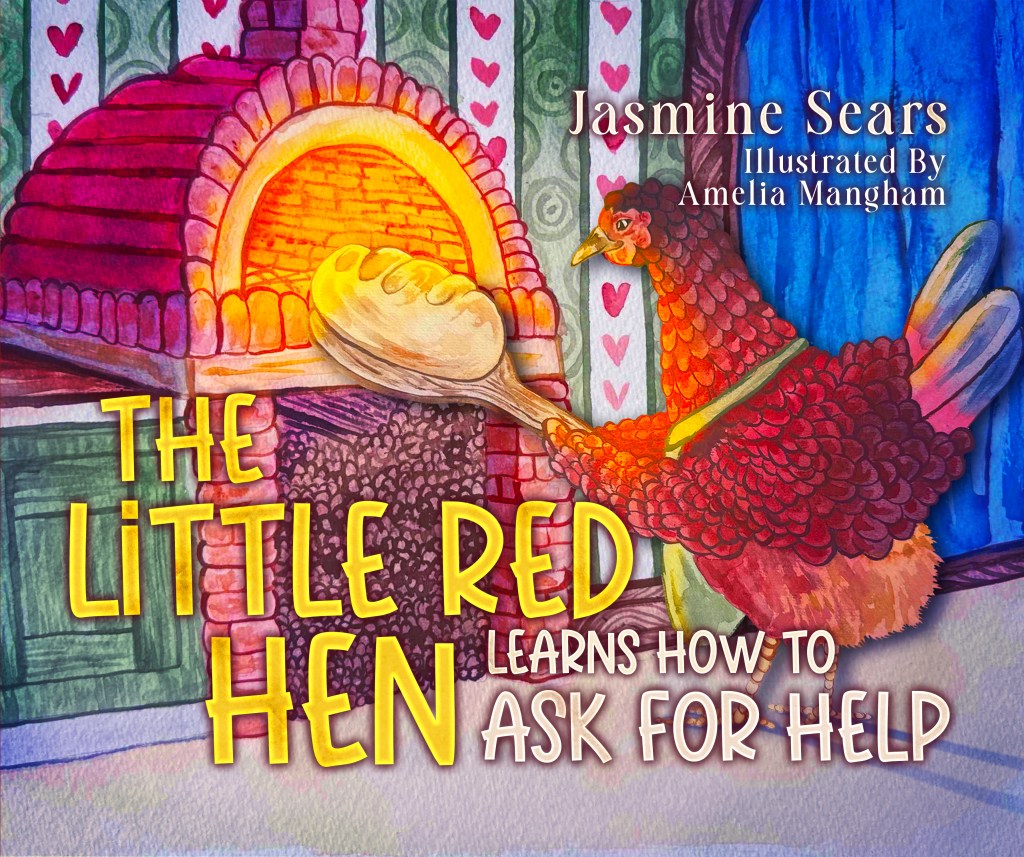
In this twist on a classic folktale, the Little Red Hen decides to bake some bread—but when she goes looking for help, all of her friends say no! As she starts a second loaf, can the Little Red Hen learn a new way to ask for help, or will she once again be stuck baking all by herself?
SUSANNA: Where did the idea for this book come from?
JASMINE: I was telling my kids fairy tales from memory, and when I tried telling them The Little Red Hen, I realized: of course no one helped her! She wasn’t using any of the best practices I’ve learned during my career! So I immediately followed up with a new version, in which the Little Red Hen asked correctly and everyone said yes. My kids loved the juxtaposition and started specifically asking for “the ‘No’ version” and “the ‘Yes’ version.”
SUSANNA: How long did it take you to write this book?
JASMINE: I didn’t sit down to write until I’d gotten really comfortable with the spoken version of this story, so my first written draft took maybe an hour.
SUSANNA: Did you go through many revisions?
JASMINE: Yes! I self-edited at first, since my original draft was essentially a transcription and a written story can (and often should) use different techniques—the Little Red Hen went from asking the animals in the same order both times, to asking the wrong animal the first time around. Then I got feedback from friends with kids in the right age range. Then I found critique swaps in the KIDLIT 411 Facebook group. I made a lot of changes in response to feedback, especially after multiple readers made comments on the same sections.
SUSANNA: When did you know your manuscript was ready for submission?
JASMINE: When I started consistently getting feedback like “I loved this part!” and “When can I buy this?” instead of “What if you did it this way instead?” I made sure to read my final version to my kids for one last round of feedback, too.
SUSANNA: Can you tell us a little about the editorial process?
JASMINE: The biggest change was that my idea of how the spreads and text would be laid out was totally wrong (did you know picture books shouldn’t have two distinct full-page illustrations on a single spread?), so some phrasing and sentence structure got modified to work within the actual layout. We also agreed on some minor text changes based on the illustrations—each animal’s dialogue tags got matched to its expression, which I thought was a nice touch that I couldn’t have done alone.
SUSANNA: What was your experience of the illustration process like?
JASMINE: I received a sketch version of the book as part of the illustration process. This let me start working earlier on those final edits I mentioned above, and I was able to catch a couple spots where I apparently should have included art notes. To be clear, the illustrator did an amazing job, but in the sketch draft, she had the horse and ox using the same inefficient tools (sickle, hand mill) in the second half of the book that the hen had used in the first half. I’d gotten so comfortable with the version of the story in my head that I didn’t realize a really important lesson—that certain people have better tools for the job—was entirely unwritten. I was able to get some reference photos of a combine harvester and an ox-driven mill passed along, and I think the final version of the artwork makes the point very clearly.
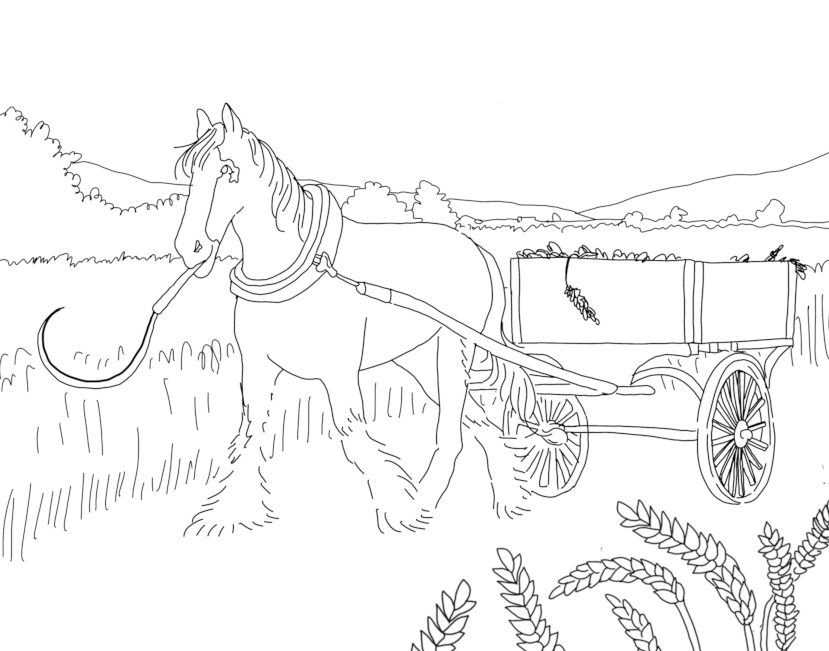
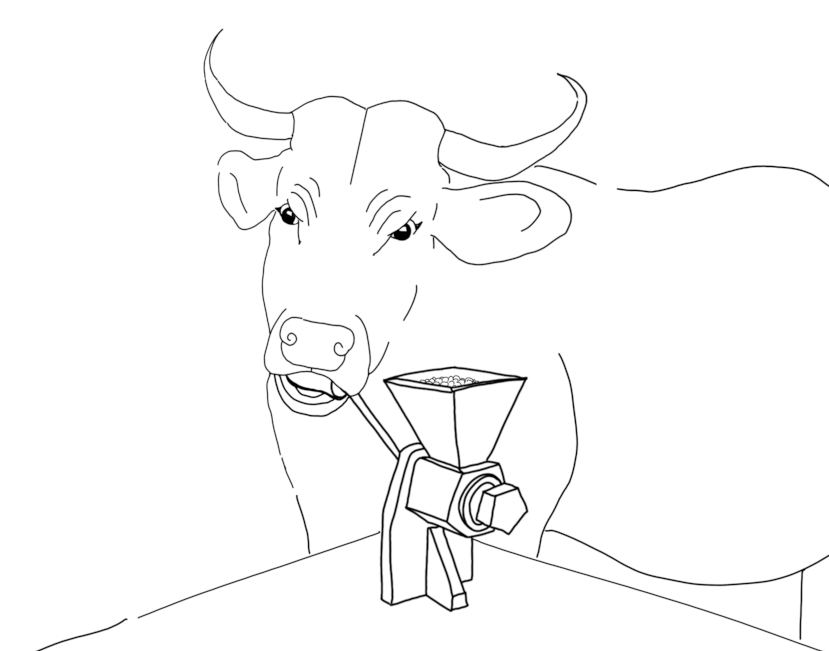
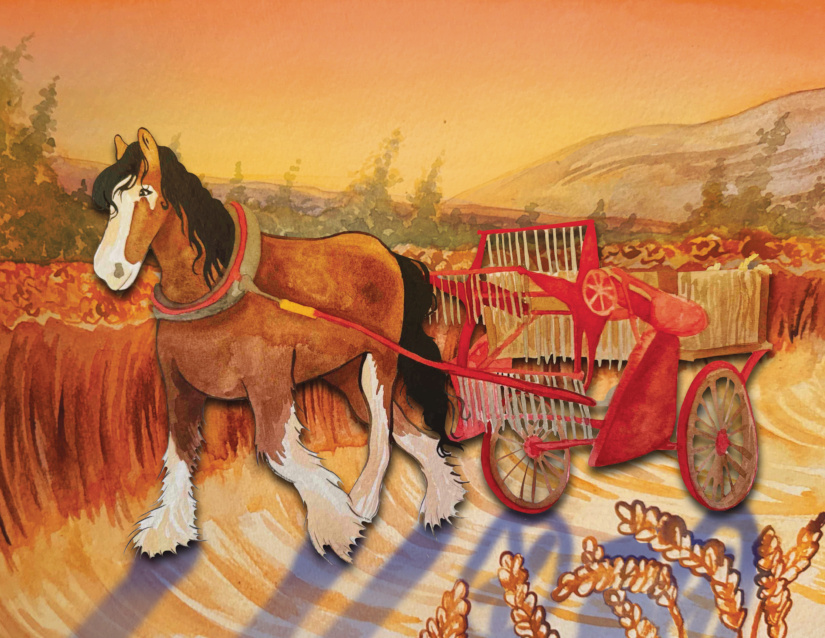
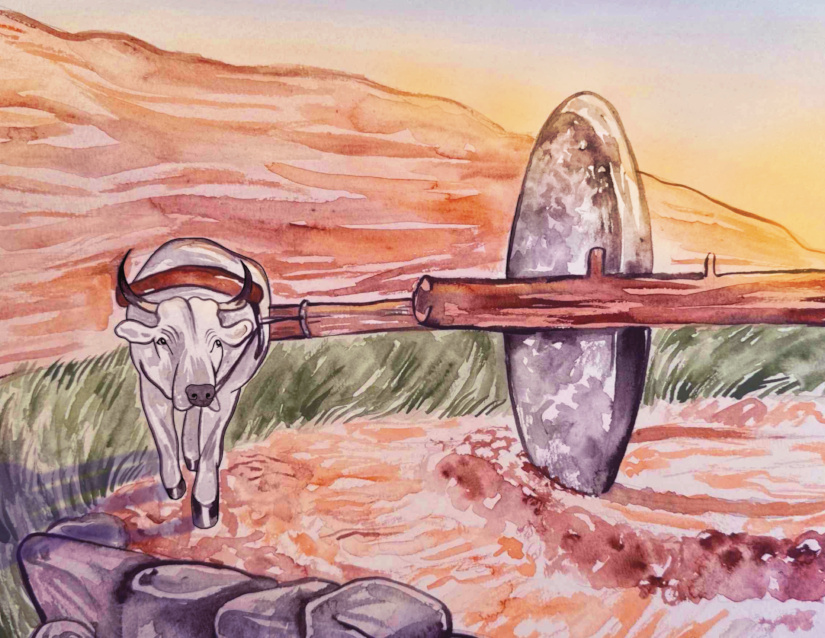
illustration copyright Amelia Mangham 2026
SUSANNA: Describe any marketing/promotion you did for this book.
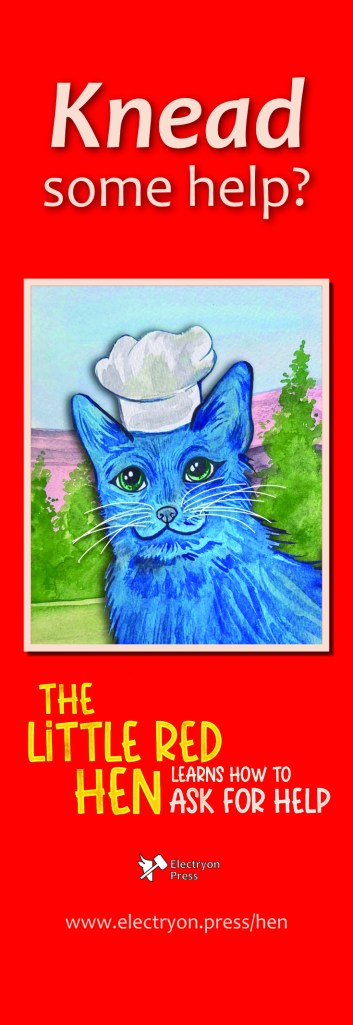
JASMINE: I contacted a bunch of bookstores asking to do a storytime or signing, I contacted some picture book blogs (Toddler Teaches Writing did a lovely post comparing my book to one of the classic Little Red Hens), and I made punny bookmarks to hand out. I’m not sure how much the blog post and bookmarks moved the needle, but I’ve gotten at least one copy sold at every bookstore I’ve been invited to!
SUSANNA: What is the most important/helpful thing you learned on your way to publication? (Or what is your most helpful piece of advice for up and coming writers?)
JASMINE: There can be big differences between what works as a spoken story and what reads well as a picture book! Don’t be afraid to make changes that really take advantage of the medium.
SUSANNA: Thank you so much for taking the time to talk with us today, Jasmine! We so appreciate the opportunity to lean from your knowledge and experience, and wish you all the best with this and future titles!
Readers, if you have questions for Jasmine, please post them in the comments below and if she has time I’m sure she’ll respond! And remember, your comment by Monday April 6th at 3PM Eastern puts you in the running to be the randomly selected winner of a signed copy of The Little Red Hen Learns How To Ask For Help by Jasmine Sears!

Author Jasmine Sears, whose favorite work snack is mixed nuts 😊
You may purchase Jasmine’s book at:
(all links below are book-specific)
Indiebound/Bookshop.org
Amazon
Barnes&Noble
We can help our debut authors successfully launch their careers by:
– purchasing their books
– recommending their books to friends and family
– recommending their books to our children’s teachers and librarians
– recommending their books to our local libraries and bookstores
– suggesting them as visiting authors at our children’s schools and our local libraries
– sharing their books on social media
– reviewing their books on Goodreads, Amazon, Barnes&Noble, and other sites where people go to learn about books.
Thank you all for stopping by to read today! Have a lovely, inspiration-filled Tuesday! Maybe today is the day you’ll write your debut picture book 😊
Missed any previous Tuesday Debuts? Check them out HERE!
 Susanna Leonard Hill