Oh Susanna – How To Explain Your Vision Of Marketing Strategy To A Publisher That Requests It?

Wow!  That was such a long title I feel like I’ve already written the post! 🙂

How is everyone this morning?  Feeling bright-eyed and bushy-tailed?  I will readily confess to “bright-eyed”, but I’m not sure I’m up for discussing the rest of that question at this hour on a Monday morning 🙂  (Who thought up that question anyway?  I have a feeling it was a member of the marmot family…

… not that I’m mentioning any names…. :))

So anyway, being as how it’s Monday, which means the first day of May is on a Tuesday when I don’t post, I wanted to take this opportunity to remind you all, so that you’ll have plenty of time to work on it, that we’re having a contest this month!!!  I’m so excited, because we haven’t had a contest since the Valentines one which was AGES ago and I miss them! 🙂  I do so hope someone will want to enter! 🙂

The contest is to write a children’s story about a very creative and/or unique birthday celebration in 300 words or less.  Poetry or prose, your choice.

Entries must be posted on your blog (or in the comment section of my contest blog post on May 19 if you don’t have a blog) between Saturday May 19 and 11:59 PM EDT Tuesday May 22.  Add your entry-specific link to the list that will go up with my special post that Saturday.  I will not post on Monday May 21 so the list will stay up.)  I’m still picking out prizes, but there will be prizes and they will be good and they will include things like a 3 pack of Perfect Picture Books, a duo of craft books, and/or a PB MS Critique by Yours Truly, or maybe something else awesome that I haven’t thought of yet… 🙂  (You are invited to suggest prizes if there’s something your little hearts especially desire :))  If there are fewer than 20 entries there will be one prize.  If there are more than 20 entries there will be 1st, 2nd, and 3rd prizes!)  Finalists will be chosen by me and my assistant judge and will be posted for you to vote on Monday May 28.  (I’m trying not to skip Would You Read It or Perfect Picture Books or overload you with extra posts, hence the wait til Monday the 28th, which I realize is Memorial Day so the voting will stay up throughout Tuesday!)
I hope we’ll have lots of enthusiastic participants!  Remember, 12 X 12ers, this can do double duty as your May MS! 🙂
I would also like to take this opportunity to announce that I’m planning on taking a stab at NaPiBoWriWee this week… anyone else a glutton for punishment feeling motivated?
Also, Phyllis had an awesome Visit to Seattle where she made friends with A-Wall (gorgeous!) and saw the Space Needle 🙂  Please hop on over to Saba’s and read all about it!  And, if all goes according to plan, there will be a post up tomorrow (Tuesday May 1) about Phyllis’s Visit to Rosalind in England! (But it’s not there yet because she’s finishing A To Z!)
Now then!  Onto today’s Oh Susanna question, which comes to us from the lovely Jen:
“Submission guidelines to Sylvan Dell Publishing request that you include an explanation for how you envision the marketing of your book.  Besides stating that your marketing strategy would consist of book signings, blog tours, using various social media, and press releases, how else would you state on a query letter how you would envision the marketing of your book? Also, I’m not sure how to go about targeting an audience for my “platform” part of marketing my book. Any suggestions?”
Well, Jen, as to the first part of your question, I think you’ve covered most of what they would be looking for.  Certainly you would want to mention book signings, blog tours, social media, and press releases.
I would also mention school and library visits if you plan to do those.
But I think they’re looking for you to go a little further than that.  The publishing world is in a state of flux these days.  No one is anxious to take too much of a risk.  If possible, they’d like to know who exactly you think is going to buy your book – in other words, where you think the market is.
Identify the themes/topics/subjects of your story and present them in terms of market.
Is your story about a new baby?  Then it will appeal to parents who are expecting a second or subsequent child, be useful to preschool teachers, and make a great gift for relatives and friends to give to new big siblings.
Is your story about a very hungry caterpillar?  Then it will be useful in preschool and early elementary curriculum units on science, insects, metamorphosis, nutrition, and basic concepts like color and food types.
Is your story about a child in a non-traditional family?  Then it will be valuable to non-traditional families where children will be helped by knowing they aren’t alone, useful in curriculum units on family or acceptance/tolerance/difference, and helpful to traditional families who want to expand their children’s understanding of what makes a family.
Think about who your book would appeal to AND think specifically about the types of books this publisher tends to publish and where they market other books on their list.  Are they a big publisher with traditional marketing, or are they a smaller publisher who might only publish books about Maine (like Down East) or who might sell their books in zoo or museum gift shops, or other types of niches?  Make sure you’re directing your helpful marketing ideas in the right area.  A niche publisher might be thrilled to know that your book will appeal to everyone who has ever spent time on Monhegan Island, but a big six publisher isn’t going to want that book unless the setting is more incidental to a story with a much broader theme and appeal, in which case you would emphasize the broader theme rather than the niche setting… if that makes sense.
As to the second part of your question, about targeting an audience for your platform, that is something I think a lot of writers struggle with.
Writers tend to gravitate toward other writers.  If you’re a writer who writes a blog, chances are high that the vast majority of your followers are other writers, and a significant portion of the blogs you follow are also writing blogs.  Many of these people may also be parents or teachers or librarians or grandparents or others who have children in their lives for whom they buy books, but they may just as easily be people who don’t have kids yet, or whose kids have grown past the picture book age, or who aren’t around kids much.  I think it’s hard, as a writer, to get a huge following of your target audience in this instance which is, bluntly put, consumers.
The easier answer is for people who write non-fiction.  In that case, you always have a topic.  You are something of an expert on that topic (because hopefully you did your research well :)) so people may seek you out and you can also look for blogs and groups who are interested in that topic and get to know people there so you can eventually spread word of your book about butterflies, Martin Luther King Jr., saving wetlands, or whatever you happen to be writing about.
But for those of us who write children’s fiction, it’s much harder.  Our target audience is two-fold: the kids we write for who, unless we write upper middle grade or YA, are most likely not online, and the parents/teachers/librarians who buy books for them and read to them and who may or may not have much time in their busy days to be online.
It is great to connect with teachers and librarians who blog, as well as with mommy bloggers out there, but it is hard to do and it takes a lot of time – time to research which blogs might fit with your personality/style/books, time to forge relationships with those blogs, and time to see if and when a review of your book might fit into those blogs’ schedules.  And it can be hard to find that kind of time and still have time to write.  It’s a work in progress for most of us, I think.
I hope that answers your questions, Jen!  If you have any follow-up questions, please ask below.  As always, I would be thrilled if readers with experience in these areas would chime in with their thoughts – please comment!  It takes a village 🙂 and that’s one of the nicest things about the writing community – we are a village! 🙂

Straight From The Editor! #7 and Oh Susanna – Board Book Length? and Resubmission To Publishers?

Greetings from the old folks’ home where some of us are a year older than we were last week 🙂

(That makes us 27 if anyone is counting… :))

My truly heartfelt thanks to all of you who took time out of your weekend to send me birthday wishes and read Eric’s Happy Birthday Author post – you are all the BEST and I feel so lucky and grateful to be part of such a wonderful group of people!  Thank you, thank you, so very much!!!

Now (lest I become overly sentimental :)) we’d best move right ahead to Straight From The Editor!

You will recall Miranda’s winning pitch:

Working Title:  Reef Stew
Age/Genre:  Rhyming Picture Book ages 4-8
The Pitch:  When a shipwreck destroys their reef, the shellfish grow selfish and every creature’s a crab.  Can Whale stir up happiness with a single piece of stony coral?  Filled with slurps, burps, and spicy sargassum, this quirky version of a classic tale will send ripples of laughter through any school of young guppies.

Here is editor Erin Molta’s comment:

I actually don’t have anything to say about this except for one thing: What you have written is lyrical and inviting and gets the point across, but if you’re pitching a rhyming picture book then it would be great to show some rhyme  — something to give an editor an idea of how you rhyme. Rhyming is not looked upon favorably, so either don’t tell them it’s rhyming because that might turn them off unnecessarily or show them example of how you rhyme.

Pretty interesting, don’t you think?  Looks like y’all picked the right winner 🙂 and I thought Erin’s comment about the rhyme was intriguing.  I hope we all learned something!

Moving right along, let’s jump on into Oh Susanna.  Today I’m actually going to answer two questions because they’re pretty short.

First, Laura asked, “In regard to Children’s Board Books –  Is there a magical number of pages required?  A minimum or maximum number (i.e. 32 pages for picture books)?” 

My answer to this question is that it depends on the publishing house/line you are writing for.  Board books have fewer spreads than picture books, as a general rule – they will not be 32 pages.  But I have seen them anywhere from 6 or 8 pages up to about 20.  So go to your local library or bookstore and look at a selection of board books.  Count the spreads/pages and make yourself a chart – for example, Little Simon’s board books tend to be about 8 spreads/16 pages.  This will help you on two levels: one, you will end up with a list of publishers who publish board books (many of them do not so it’s important to know who does), and two, you will have a good idea of the length each publisher/imprint leans toward so you can appropriately target your manuscript.

Second, Kirsten asked, “Can you ever approach a publisher more than once with the same piece. For example, if Publisher A rejects the piece, can you resubmit the same piece to Publisher A after you’ve made substantial rewrites and a substantial period of time has elapsed? Or is it “one strike and you’re out” for each manuscript?

Hmmm…. this is a bit tricky.  I would say “one strike you’re out” as a general rule.  If you’ve submitted and your manuscript has been read and passed on (that’s the euphemism for rejected :)), your work there (with that particular MS) is done and it’s time to move on to another publisher.

The exceptions to this rule would be:

1.  You submitted to Editor A at Publishing House A.  After some time and substantial rewrites that make your MS much stronger, Editor A leaves Publishing House A and is replaced by new Editor B who has never seen your MS.  If you still feel Publishing House A is a great fit for your book, you could try Editor B.  (This is not the same as resubmitting your MS to another editor in the same house.  Presumably you selected Editor A because s/he was involved with the imprint most suited to your work, so you wouldn’t resubmit to editors of other less well-suited imprints of the house just to get another editor’s eyes on your MS.  For example, you submit to the editor at Little Simon.  If she turns you down you wouldn’t turn around and resubmit to another editor at Little Simon or to an editor at Beach Lane (another S&S children’s imprint.))

2.  When you submitted to Publishing House A, they rejected your MS but indicated interest, saying they would like to see it again if you change X, Y, and Z.  In that case you could make changes and resubmit as soon as you comfortably could.

That is what I think, Kirsten, but I would be very interested to hear what some of you other experienced writers think about this subject, so please share your wisdom with all of us in the comments!

Kirsten or Laura, if you have follow up questions or anything I said wasn’t clear, please pursue it in the comments!!

Finally, in Phyllis Tour Update News, I’d like to point you all toward Kathy’s brand new blog where Phyllis visited Vermont, and Julie’s blog which posts about Phyllis’s visit to Colorado!  Please stop by when you have a second and share the love 🙂

Also, Phyllis took the liberty of posting a picture of her Kiwi Bird friend on Face Book (he arrived on Blueberry Hill all the way from New Zealand courtesy of Diane!) and Donna, being an alert sort even at the crack of dawn on a Sunday morning, immediately suggested we have a contest to decide on a name for the bird.  You all know how I can’t resist a contest, so later today (or at some point when I get around to it) when I have had my coffee and we are all feeling as alert as Donna, I will post the contest on Phyllis’s FB page and everyone can put in their 2 cents 🙂  You may put your two cents here in the comments as to what you’d like the prize for the winner to be!

Now, I’m pretty sure I’m forgetting something (you see, this is what happens when advanced age sets in :)) but since I can’t think what it is, off you all go to enjoy your Mondays.  Have a lovely day! 🙂

Oh Susanna – What Should A New Author Look For/Watch Out For In A Contract?

I am so full of happy announcements today!  I like to think I’ll be spreading joy and cheer like sunshine 🙂

I assume you all have plenty of Easter candy left over, so feel free to snack while I spread cheer 🙂

First off, I would like to announce the winner of the March Pitch Pick!  As always, all the entries were terrific, and all the entrants were so brave to put their work out there for everyone to comment on.  Thanks to you, we all learn something new each week.  It would be lovely if everyone could win, but since we have to pick one each month, the polls have spoken and this month’s winner is………

Miranda, with Reef Stew!

Congratulations, Miranda!  Your pitch has already been sent to editor Erin Molta for critique, and we will all look forward to her comments!

Next, as you may or may not remember :), I so appreciate all the work the devoted Perfect Picture Book bloggers do each week that I like to spread a little thank-you cheer by randomly selecting one person each month to win a little prize.  Bloggers get one entry for every Perfect Picture Book they post that month, so in March quite a few people got 5 entries!  In case you are wondering, this month 33 bloggers posted anywhere from 1-5 books each, resulting in 128 new books being added to the list!  I didn’t do an exact count, but we now have upwards of 450 books on the list all together.  It’s getting to be quite an impressive resource!  Hopefully, parents and teachers out there are beginning to discover it and put it to good use 🙂

But I digress… 🙂  I was announcing the March gift winner which is

… dddrrruuummm rrrooollllll…

Thank you so much, Kirsten, for your wonderful additions to the list this month, and thank you to EVERYONE who participates in PPBFs – you are all wonderful!!!

So, hmm… let me rummage around in my goody bag and see what I come up with for this month’s prize…  Kirsten, you may email me to receive your choice of one of the following:  The Giblin Guide To Writing Children’s Books, An Egg Is Quiet, or Little Bunny Foo Foo: The Real Story.

My next happy announcement is that you folks seem to like the writing contests over here – thank you so much!  Quite a lot of people voted, and the general sentiment seems to be that we should have the birthday story contest in May because April is just a little too busy.  I am happy to oblige.  I want it to be fun for everyone, not stressful :), so if more people will enter and everyone will enjoy it more in May, than May it shall be!

Next on the happy announcement list is that we should have 5 or so new Tour Posts coming from Phyllis in the upcoming week from Vermont, Pennsylvania, Georgia, Australia, and 2 from the UK… if all goes according to plan… which it doesn’t always 🙂  But do stay tuned 🙂

Also, for anyone who hasn’t seen it yet, Phyllis now has her very own Punxsutawney Phyllis Face Book Page for anyone who wants to like her!  She’s very excited and hoping to become more popular than Punxsutawney Phil, who currently has 20,885 “likes”.  Phyllis currently has 48 “likes” so she has a ways to go, but she is very optimistic 🙂  Phyllis’s page is still evolving, but she will certainly be featuring a Fun Fact Friday!

Finally, my last happy announcement for the day is that I get to babysit for my granddaughter today… which also means I will not be online much as she is 8 months old and crawling 🙂  So please forgive me if I get a little behind in blog post commenting!

Now that you are all hopefully feeling very cheerful, we shall move on to today’s Oh Susanna question.  Donna has a good one.  She asks:

What are some of the key things a new author should find in a “good” contract? The flip side to that would be what are some of “bad” things in a contract that should set off warning alarms for a new author to run for the hills?

Donna, my experience is that contracts are not all that different from publishing house to publishing house. I have dealt with 5 different houses, and they all seem to cover the same basic, standard things.  These include (but may not be limited to):

  • where the publisher has the right to publish your book (USA only, or foreign?)
  • your assurance that your work is original
  • when your manuscript is due in final form
  • the time frame the publisher agrees to publish the book in and at whose expense
  • when galleys and/or proofs will be delivered by the publisher and how much time you have to review them and make any corrections, as well as how much you can change the work without incurring cost to yourself
  • the amount of your advance and when and how it will be paid (full amount on signing, or half on signing, half on delivery of ms, etc.)
  • subsidiary rights (such as book clubs, audio, film rights etc.)
  • how many free copies the publisher will supply the author
  • when statements of account and royalties if they are due will be delivered (usually semi annually, and the publisher will supply the dates)
  • author’s right to examine publisher’s accounts
  • agreement by author not to publish competing work
  • reversion of rights and termination

I don’t think any reputable publishing house would try to hoodwink or cheat an author, but there’s no doubt that publishing is a business. The publisher is laying out the money to produce your book and they want to make sure it’s worth their while, so the contract will likely be written in their favor.  You as an author, especially a first-time author, may have to consider how hard you want to push for things.  Do you really need a bigger advance/higher royalties/to keep the audio rights etc. if by insisting on such things you may cause the publisher to withdraw their offer?  Many people do push.  Other’s (like me) tend to be more complacent.  This is a reason many authors like having an agent – it is the agent’s job to negotiate higher advances, better royalties etc.

I’m generalizing here to give you an idea of what to expect, but I think a typical advance to a new picture book author can be anywhere from $1000 – $5000 (depending on the book and the size of the publishing house and other factors), royalties of 5% on hardcover, 6% on paperback are common, publication in 12-24 months (but it can be shorter or longer), and 10-15 free copies of your book are typical.  I don’t know how frequently you can expect to get audio rights, or foreign rights, or things like that – sometimes I get them, sometimes the publisher does and I don’t have enough data to make a guess.

I’m not really sure what to tell you to be wary of –  certainly any situation where the publisher asks you to pay for things.  Many vanity publishers will do this, but it’s not something that should show up in a traditional publishing contract.  And I guess a contract that varied hugely from the generalities above might be something you’d want to look at pretty carefully.

I would recommend having someone look over your contract if you’re not familiar with publishing contracts.  I believe there are even resources in SCBWI for this, although I’m not sure.

So I hope that answers your questions somewhat, Donna, and I would be most appreciative of any readers who have knowledge or expertise in this area who would be willing to chime in in the comments!

Have a great Monday, everyone.  See you Wednesday for the next pitch – this one a picture book from Rebecca C!

So Many Surprises!!! And Oh Susanna – How Many MSS For Agent Querying?

Raise your hand if you’re happy it’s April!!!

April happens to be my favorite month.  The air is warmer and softer.  The light changes.  Nature is trying on all her new finery.  And some of my favorite people have birthdays this month 🙂

So in honor of April, I have surprises for you, my friends!  (And may I just say, I hope you all ate your Wheaties this morning because I have a lot to say – which I know you’ll find shocking since I’m normally such a model of succinctness :))

Surprise #1!

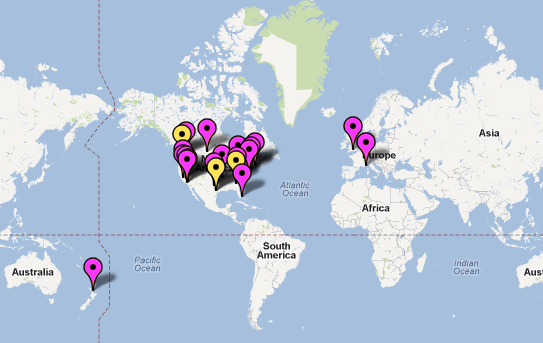
First, after much gnashing of teeth and rending of garments, I have managed the MAP OF MY DREAMS for Phyllis’s World Tour.  It is so cool that you will be amazed!  Here’s what you can do:

You can zoom out and see all the places in the world she’s been at one time, or zoom in so you can easily click on each marker.

You can change the view from map, to satellite, to hybrid, to terrain!

You can click on the individual markers and they will tell you who she visited in that spot, show a photo you can click to enlarge and clarify, give a short description of her visit, and include a link directly to the associated blog post (it says website which I couldn’t change but click on it and it will take you to the blog post.)  (Also, I could only attach one link per marker, so for a couple people who posted 2 or 3 times, I put the main post.)

And it has purple markers for the main tour and yellow markers for the school tour!

Check it out!  (The only annoying thing is the ad I can’t get rid of!)
http://www.zeemaps.com/pub?group=338173&x=-68.5547&y=20.6328&z=15

Here’s a screen shot that shows you the whole map without the ad 🙂

click HERE for interactive map

Seriously.  Is this a wonder or what???!!! 🙂  (and if anyone finds glitches, you must break it to me very gently because this took me a Very. Long. Time!)

Of course, it makes me notice all the empty areas, so if you know anyone in South America or Greenland or Turkey or such like who wants to join the tour, let me know 🙂

I know you will all want to try it out right away, but come right back, because more good stuff is coming!

In case you missed it over the weekend, Phyllis visited Rena in Alberta, Canada, (there was an enchanted castle and bull riding involved!) and one of Pam’s literacy groups in Atlanta, GA (very cute kids and Phyllis learned a lot about Dr. King, Ghandi, and Rosa Parks!)!  Pam will have more posts to come as Phyllis visits with other kids.

Surprise #2!

It’s been a while since the Valentines’ Contest, so what better way then a Fabulous Fun-Filled Contest to celebrate spring, and April, and writing for kids, and all the awesome April Birthdays (mine, my dad’s, my niece’s and my nephew’s, your friend and mine Renee’s of No Water River, and please, if anyone else celebrates this month let me know and I’ll add you to this celebrity list :))

Here are the rules:

Write a children’s story about a very creative or unique birthday celebration in 1-300 words!  (The 1 is for Cathy if she needs an extra challenge.. and Cathy? it also has to rhyme! :))

It may be prose or poetry, so those of you participating in Poetry Month can join in.  Those of you who are participating in the A To Z challenge may title it with anything you want to fit your letter of the day 🙂  Those of you who are participating in 12 X 12 will have your manuscript for the month!  And for those of you not participating in any of the above and feeling a little left out, this is your chance to be part of something far less time-consuming 🙂

Entries must be posted on your blog (or in the comment section of my contest blog post on April 21 if you don’t have a blog) between Saturday April 21 and 11:59 PM EDT Tuesday April 24.  Add your entry-specific link to the list that will go up with my special post that Saturday.  I will not post on Monday April 23 so the list will stay up.)  I’m still picking out prizes, but there will be prizes and they will be good and I will let you know when I decide what they are 🙂  (You are invited to suggest prizes if there’s something your little hearts especially desire :))  If there are fewer than 20 entries there will be one prize.  If there are more than 20 entries there will be 1st, 2nd, and 3rd prizes!  The number of entries will also determine the number of finalists that will be posted for you to vote on Monday April 30.  (I’m trying not to skip Would You Read It or Perfect Picture Books or overload you with extra posts, hence the wait til Monday the 30th!)  (And if more than 20 people comment that they have too much to do in April and won’t enter, I will move the contest to May, even though *sob, sniff* it will no longer be The Birthday Month!)

Surprise #3!

I have a very special extra post that will go up tomorrow!  (Yes, tomorrow, even though I usually don’t post on Tuesday – it was either that or stuff it into this already overly long post!)  But you’re going to want to see this one.  It is a guest post from the lovely Cori Doerrfeld in which she will share with us how she created her newest book, Little Bunny Foo Foo!  Original and published mss will be included so you can see the difference, as well as her first vision of the art and how it morphed into the final version!  It’s not often you get to see so much process, and Cori has been very kind to share, so I hope you’ll all find a little time tomorrow (or when you have a few minutes) to read it.

Now, to finish up this very long post (I always have so many things to share, and only 3 days a week to do it!) we have a quick Oh Susanna question.  (The inclusion of Oh Susanna isn’t a surprise on Monday, but the question is always a surprise, so it still counts :))

Carter asks, “How many submission-ready manuscripts should I have in my pocket before I begin querying agents?  I know which one I want to lead with, but I assume I should have a number of others for an interested agent to read when considering representation.”

I would say that, as with so many things in this business, a lot depends on the agent.  For some agents, one strong manuscript is all they need.  But I think most will want to see more, especially with picture books.  My answer would be, lead with your strongest manuscript and have 3 others waiting as back up – enough to show that you’ve got more than one story in you, and preferably a little bit of a range of your style (if you have a range of style.)  For example, if your lead manuscript is roll-on-the-floor funny, maybe one of your others should be a quieter/more thoughtful/different emotion type of story if you also write that kind of story.  However, that very much depends on your writing style – some authors produce funny, or emotional, or whatever every single time and that’s what they’re known for.  Basically, you want to have enough to show that the agent will hopefully like at least a couple.

What do the other writers out there think?  Would you recommend more than 3 back-ups?  Less?

Thank you all for sticking it out to the end of this post! 🙂  Please, have an extra donut on me!  See you tomorrow with Cori, and Wednesday with the March Pitch Pick and Delores’s Would You Read It pitch.  I hope you all have LOTS of fun with the map! 🙂

Oh Susanna – How To Organize Time For Productive Writing?

Happy Monday, my friends!  I hope you all had a lovely weekend!  And now, here we are at the start of another fun-filled week!

Phyllis and friends 🙂
Before we get to our Oh Susanna question, I’d like to take just a second to update you on Phyllis’s tour!  Our furry young friend has been VERY busy!  Some of you may have missed her Friday stop in Chico, CA with Elizabeth – if you did, hop on over HERE and don’t miss her “brains before beauty” shot – it’s not every day you see a helmeted groundhog on a bike 🙂  Phyllis also spent a day with Darshana in the Silicon Valley, where she received quite an education on micro-chips and got to wear a bunny suit!  You can see that one HERE (and as you can see above, she also got to hang out with some critters that I’m pretty sure she’s distantly related to :))  She also visited Heather in Maine, and that post will be up today or tomorrow HERE – I can’t wait to see it!  AND (yes there’s more!) she is also in the UK and visited the standing stones at Avebury this weekend with Rebecca and her 7 children.  When Rebecca’s post goes up, you will be able to find it HERE and I can’t wait to see that one either!!!

I told you our little friend was busy!

Now then, let’s have a show of hands.  How many of you are doing the A To Z Challenge?  I am tempted to join (not that Laura anyone is putting any pressure on :)) but am not sure if I can pull off the challenge and still fit my regularly scheduled events in… so I am mulling… and trying to decide if I will be the only person in the blogosphere not doing it if I wimp out elect not to… and wondering if trying to do one more thing will mean the end of what’s left of my sanity… 🙂  So please, do let me know what y’all are doing!

Without further ado, here is today’s Oh Susanna question:

O, Susanna, HELP!!  I need assistance developing a better schedule for writing, brainstorming, studying, illustrating, researching, blogging, and following blogs and links,  and of course all the usual home related obligations.  Are there any formulas for beating the distractions and staying up to date w/resources and links and staying on goal? Do you do blogging on Monday, writing on Tuesday,  research on Wednesday, go crazy on Thursday????  I’m also part of the 12×12 group – and love all the interaction and resources–but it’s almost overwhelming to keep up. Please—I need ideas!  (side note:  Ghiardelli chocolate brownies work great as a goal reward for me  🙂  
I used to have a ‘regular job’ as a principal w/ specific hours, had an office w/ a door, and everyone understood I was ‘at work.’   But now, working at home I am often  interrupted by family, friends (often very pleasant and welcome), the phone (family & business-my husband’s a pastor), the internet magnet (for research, I promise!), housecleaning (so easy to get distracted  now that my office is my home), a beautiful day begging to be explored (after all, I am my own boss), and chasing____________________ (fill in the blank with a shiny object),  etc., etc.,  
I tried a Daily Goal Chart like we used at our school.  It’s worked for maybe 2 out of 5 days. Grrrrrr—-HELP me because I’m,
Three Days Late & Dollars Short

Dear Three Days Late,

I am glad you asked this question, because I’m betting almost everyone reading this struggles with the same problem.  You can take comfort in the fact that, at the very least, you are not struggling alone! 🙂

Working on your own at home sounds like a dream come true.  What could be better than the entire day, every day, stretching before you just waiting to be filled with your words and stories?

But it’s not as easy as it seems.

You may have trouble sitting down to work until the house is clean, and before you know it, half the day is gone.  Your friends and relations may not respect your work time because it seems like a hobby, or because you can set your own schedule and work some other time, so they show up for impromptu cups of coffee or call for a long chat… and before you know it, half the day is gone.  It’s far too easy, if you hit a snag in your writing, to say, “I’ll just go to the grocery store, because I have to do that anyway…” and before you know it, the day is over and that story isn’t a word further along than it was.

As you say, distractions are myriad, and some, like blogging or online research, are especially tough because they start out as legitimate work but it’s easy to get sucked in for WAY longer than you intended, or to stray from your original intent.

So how do you manage?

The answer to that is undoubtedly a bit different for everyone.  With a little trial and error you can come up with your own formula of what works for you, but I’m not sure anyone else can give you that formula.  Let’s give it a try, though 🙂

Before anything else, look at your day and your life and your personality.  What obligations do you have to your family and household day to day, and how much time will those take?  (You need a realistic approximation of your work time, and it’s probably never going to be all day every day.  Can you realistically devote 3 hours a day to work?  6?  2 1/2?  Or is it likely to change from day to day?)  Are you a person who is unable to imagine being able to concentrate on writing before the beds are made, the house vacuumed, and the grocery shopping done?  (Then get those things done first or you will be wasting your precious work time feeling fragmented and putting less than your full energy into your writing and it will take you 6 times as long to get anything done.)  Do you work well in short bursts of intense energy broken up by other tasks, or does it take you a while to hit your stride and once you do you like to stick with it with no interruptions of any kind?  (Plan your day accordingly.)  Do you need to exercise first thing in the morning to get your brain in gear, or is it more helpful to go later in the day when you need a break from the computer screen and a little time to let story problems work themselves out?

Asking yourself theses kinds of questions should help you have a realistic idea of how much time you actually have and how you will benefit most from arranging it.

Here are some other things to think about/try:

 – Respect your work and ask others to respect it.  Even if you work at home, even if you are your own boss, even if you’re not bringing in a regular paycheck, your writing is your work.  But if you want others to respect it and take it seriously, you must first do that yourself.

 – Impose your own hours.  Make a plan.  Say to yourself, “8 AM to noon [or whatever] is my work time.”  If the phone rings, you may check the caller ID and make sure it’s not your child’s school, or the ER calling to let you know someone broke their arm, but emergencies aside, let your voice mail answer while you’re working.  You can call back later, but if you answer, you will interrupt your flow, and who knows how much time you’ll lose while simultaneously sending the message to whoever it is that it’s OK for them to call and interrupt your work.  By the same token, let your friends and relations know that you are not available for impromptu tennis games or drop-in visits during your work hours and stick to it.  Firmly.

 – Identify the time of day you are most productive, and do your writing work then.  Some people work best first thing in the morning.  Others take time to get going and are better off answering emails and doing their blogging first, then writing in the afternoon.  Still others work best when the rest of the world is asleep.  Whatever your most productive time of day, use that for your writing and slot your other tasks in around it.  All of your work will flow more easily.

 – Some people find the internet a huge distraction.  If you are one of them, there are programs for both Mac and PC that will turn off your internet while you work.  You can set the amount of time, and then no email will pop up, no blog posts will lure you from your appointed tasks, and you won’t be able to surf around looking for a cute pair of shoes for that party this weekend.

 – Some people work better with encouragement/competition.  There are sites where you can sign up to work for half and hour (or your choice of time) and compare with other people how much you got done in that time.  There are other sites that work by word count, and you can aim for 1000 words (or whatever) and see how long it takes you.  In both cases, you’re kind of working with other people.  (And of course I should have the links for those sites, but since I haven’t used them myself I don’t know which to recommend.  Readers, please feel free to chip in your two cents about such sites you have used and liked!)

 – List your priorities and divvy up your time accordingly.  Most of us would agree that our actual writing should come first, so the biggest chunk of time should be devoted to that.  Does your story or nonfiction work require research before you can write it?  Then that needs a high priority too.  Do you have a manuscript ready for submission?  Then you might need to prioritize time for researching agents or potential publishers, or writing a query or cover letter.  Different stages of the writing process demand different priorities – there’s no point researching publishers before you’ve written your manuscript.

– Experiment a bit and see what works for you.  Some people set aside a couple hours on Sunday afternoon and write all their blog posts for the week.  Then that job is done, the posts scheduled, and you can check it off your list and forget about ’til until next Sunday.  Other people would rather put in half an hour at the crack of dawn Monday, Wednesday and Friday writing their posts when the time comes so that they can talk about whatever is first and foremost on their mind that day.  Some people read and comment on 5 blogs a day.  Others read and comment on blogs for half an hour a day.  Others only read other people’s blogs one or two days a week.  What works best for you?

– There’s an old adage that says something along the lines of, “A job will take as much time as you have to do it.”  If you think you have 4 hours to read and reply to all the email in your inbox and catch up with the 12×12 group, it will take you 4 hours.  But if you say to yourself, I have one hour to read and reply and catch up, you will be more efficient, and when that hour is up, be firm with yourself and move on to something else.

– There is nothing like a good old-fashioned kitchen timer!  Set it for 15 minutes or an hour or whatever amount you need, and do whatever task you allot yourself until the timer dings.  You can use it for both work time and break time.  Write for a measured hour, and then give yourself 15 minutes to check email, or read a couple blog posts, or read a section of your craft book on writing dialogue, or play Words With Friends or walk the dog – but when that timer dings and your 15 minutes is up, it’s time for the next thing.

– Some people work well with lists.  Either first thing when you sit down to work for the day, or last thing as you’re finishing up and planning for tomorrow, make a list of the things you need to accomplish.  Make the items measurable and attainable in the time you have, for example, write 1000 words of MG novel, or read and comment on 2 new blogs, or study chapter on school visits in XYZ book.

– Other people are oppressed by long to-do lists that may seem insurmountable.  If you’re one of them, write your list backwards – that is, make a list of the things you’ve accomplished as you’ve done them, for example, wrote my Perfect Picture Book Friday post for this week, read and commented on 3 blogs, added 2 more possible agents to my list, wrote first draft of new PB.

Working at home in any capacity is difficult because of the setting with all it’s attendant distractions and the fact that you’re your own boss and set your own schedule.  If the work you’re doing at home is writing, it’s exponentially harder.  Writing is HARD work.  Creativity takes enormous amounts of effort.  Pretty much everything else is easier, so we all find ourselves tempted by reading blogs and studying craft and making pretty new bookmarks to bring on school visits etc…  But ultimately, we are writers.  Writing is our work.  If we don’t write, we have nothing else – no reason to build a platform, or search out agents or publishers, or query about school visits, if we aren’t producing the book we’re going to promote.  It takes a lot of self-discipline, and we probably all have some days where we do better than others.  But I think the key is figuring out how much time you can devote to your work each day, how you want to divide that time up so you get to all the things you need to get to, and how to arrange your tasks in the order that best suits you so that you maximize your productivity.

I realize that was long-winded – sorry! – and I hope it answered your question at least somewhat.  Now, if we’re lucky, all the other talented writers out there will chime in with tips and advice and ideas of what works for them, and maybe you’ll get some gems from them 🙂

Please, everyone, chime in! 🙂

Phyllis’s World Tour Begins! And Oh Susanna – What Is An "Editorial" Agent?

Holy high and dry, Batman!

Phyllis has been sighted in the Mojave Desert!!!

It’s true!  She made the first stop on her World Tour (really, something as incredible as a World Tour has to be capitalized :)) at Kirsten’s house.  Kirsten and her family gave Phyllis a warm welcome and showed her a truly amazing time, including some important firsts for her:

First Time Piloting An F-117 Night Hawk

As you can see, this picture was taken after she had successfully landed the plane.  That Phyllis is a born pilot 🙂

First Time In A Joshua Tree

Actually, it was the first time she had even SEEN a Joshua Tree.  This picture was taken after she climbed down because furry brown groundhogs don’t show up well against furry brown bark.  But in case you didn’t know, groundhogs are members of the squirrel family and they can climb!

For a detailed post on Phyllis’s first stop in California, hop on over to Kirsten’s blog.  (For those of you ahead of me in time zone, or any other early birds, if the link doesn’t work right away it’s because Kirsten is 3 hours behind me and her post may not be up yet, and I won’t have a post-specific link until later today – but I will update the link, I promise!)

Phyllis is now on her way to Texas, where I hear Natalie has wonderful things in store for her visit.  We will keep you posted.  And by gum, I’d better get that extra tab up top pretty durn soon! *scribbles on very long to-do list!*

After all that excitement, you can probably barely concentrate on regular life, but let’s give it a try.  Most likely some chocolate would help, even though it’s not Wednesday 🙂

Today’s Oh Susanna question comes to us from Penny.  She says:

“When I have searched the internet in search of agents, some sites point out that some agents are more editorial than others.  What exactly does this mean?  Will an agent actually make specific changes to your manuscript or will they give general feedback and have you make the changes?”

This question is both easy and hard to answer.

From the easy side:  Yes.  To both.

Some agents are quite “editorial”.  They read a MS and give very specific suggestions for change and improvement.  I’m sure it is up to the author to actually make those changes, but they are quite specifically suggested in some cases, and the understanding is that without the changes the agent won’t send the MS out.

Other agents are not editorial at all.  They read a MS and say, “Yes, I’ll send it out,” or “No, this one doesn’t work for me,” end of conversation.

Still other agents fall somewhere in the middle.  They may give a broader, less specific suggestion, for example, “Change the beginning,” or, “It needs more emotional tension,” or “Give me a better idea of who exactly Jenny is” but they don’t give you suggestions as to how to achieve that, or any kind of specific details.

The harder side of the question is how to find out how “editorial” an agent is when you’re looking and thinking about submitting to them, and what kind of agent/amount of editorializing works best for you, which you may not know until you’ve gotten a little further in to the publishing process.

Some writers want a lot of hand-holding.  They like agents who will give them a lot of very specific feedback.  Other writers can’t bear to have someone else monkeying so much with their work.  (Still others would never dream of having an agent at all, but that is a whole nother issue!)

Finding the right agent is about so many things – personality, taste, and amount of editorializing being some of the key questions you need to address.  It’s especially difficult because it’s possible that the only agent offers you get might be from people whose style doesn’t match yours.  Then you have to think long and hard about what you really want.

For my part, I do have an agent.  (As you can see in my sidebar – Liza Voges of Eden Street Lit :))  She has a lot of experience, an encyclopedic knowledge of the publishing world, and a keen sense for what works and what doesn’t.  I would rank her somewhere in between on the editorializing scale.  If I send her a MS she thinks she can’t sell, she’ll just say so.  If it doesn’t work, she won’t waste my time or hers trying to force the issue.  If I send her a MS she thinks is really strong, she sends it out.  If I send her one where she feels there’s potential but I haven’t pulled it off right, she’ll give me a general comment like, “Try to write it more from the baby’s POV” or “The end is too abrupt.”  Then it’s up to me to figure out how to make changes that will make the MS work for her.  Sometimes I can, and sometimes I can’t.

No matter who your agent is, though, they won’t (and shouldn’t) do your job for you.  It is up to you to give them only your very best work.  Too many half-baked, sloppy MSS will find you looking for a new agent.

I know a number of people who read this blog have agents.  It would be wonderful if you would share your thoughts and experiences in the comments for readers to learn from!  If you can share your agent’s name and how “editorial” she/he is, I’m sure that would be very helpful to people starting their search!
Others of you, what would you look for?  Would you prefer a lot of editorializing or a little?

Pitch Pick # 6 and Oh, Susanna – How Does A PB author Know How Much "Space" To Leave The Illustrator?

Oh, Happy Monday!

It’s March!  So even if we’re at the in-like-a-lion stage, spring is beginning to feel like a possibility 🙂  Here’s a little something to get you thinking spring 🙂

google images

Today, fun of fun, we have the February Pitch Pick to determine which of our talented writers will get to have her pitch sent to editor Erin Molta for critique!

A little refresher:

#1  Dede

Working Title: Summer of ’71
Age/Genre: MG
The Pitch:  When eleven-year old Fiona peered through the broken slat of the caretaker’s shed at the back corner of the West End Cemetery, the last thing she expected to see was a girl about her own age, asleep on the dirt floor. Thus begins an unlikely friendship that carries them through a summer of bullies, a best friend’s betrayal, and a life-changing tragedy. 

#2  Sarah

Working Title: Starstruck
Age/Genre: YA
Pitch: Seventeen year old Katie literally stumbles into Matt’s life one icy January morning. Within two months they’re friends, and in three, they’re dating. But there’s a snag. Matt is a movie star and teenage heart-throb. Katie’s living the dream that every other girl her age has, but the dazzle of having a famous boyfriend only lasts so long. How will Katie cope when the line between dream and nightmare becomes blurred? 

#3  Sharron

Working Title: Sorrysorrysorry
Age/Genre: Early PB (ages 2-5)
The Pitch:  Three frolicking baby giraffes try to find a place to play on a hot and crowded savannah. They find it isn’t an easy task. They run into a troop of baboons, a dazzle of zebras, and a pride of lions. At last, they turn to the river, only to be confronted by hippopotami. Our giraffes find fun and friendship at the end of a long a grueling day.

#4  Jennifer R

Working Title:  The Birthday Bash
Age/Genre: PB (ages 6-8)
The Pitch:  It’s Sylvia’s birthday tomorrow and Stan and Louie have a big surprise party planned. With hilarity and hi-jinks the two raccoons search for Sylvia’s favorite foods in the forest, garages and backyard patios. Will they find what they’re looking for or will the birthday party be a bust?

#5  Jennifer Y

Working Title:  Planet Vacation
Age/Genre: Picture Book (ages 4-8)
The Pitch:  Rose takes a vacation to visit the planets.  Will she get a chance to rollerblade on the rings of Saturn and scuba dive for starfish on Jupiter or will her trip be nothing like she dreamed?
A tough choice as always, made tougher by the fact that February, although a short month, managed to have 5 Wednesdays!
Please cast your vote for the best pitch in the poll below by Wednesday March 7 at 11:59 PM EST.  That way I can announce the winner on Friday after Perfect Picture Books 🙂

<a href=”http://polldaddy.com/poll/5999890/”>Pitch Pick #6</a>
Moving right along, we also have an Oh, Susanna question today.
Darshana asks,
I am a pre-published PB author still learning her craft.
I keep hearing to leave enough “space” for the illustrator to do their job.
In other words, don’t overwrite.
How do you make that call when you are writing your MS.

For example:

“Jay .. ” sighed Mr. Martin. “You could have entered the Academy. You’ll have to wait until next year to try out again.”

Jay’s head dropped and his feathers dropped.   <<< is this needed in text or do I leave it for the illustrator to show?

Teary-eyed, Jay flew away to the coast.
Another excellent question!
A picture book is supposed to be a marriage of words and art.  The author should tell half the story, and the illustrator should tell the other half.  This means that, unless it is absolutely crucial to the plot for some reason (as in Lilly’s Purple Plastic Purse) you do not need to say that the MC is wearing a red coat, or that her hair is blond, or his dad drives a Chevy.  Leave those details to the illustrator’s imagination.
That said, there are some things which are crucial on first reading (for the editor and illustrator to imagine) that can later be cut from the text once they’ve done their job – i.e. once the illustrator has shown it.  An example, from Can’t Sleep Without Sheep, was that in the original ms it said “The hippos waddled forward.  ‘We’re going to need a crane,’ said the sheep.  “This could take a while.'”  Once Mike had drawn the crane, we didn’t need that sentence anymore and were able to go to the funnier, “The hippos waddled forward.  ‘This could take a while,’ said the sheep.”
Another option, to be used sparingly because most editors and illustrators don’t like it, is to include art specs.  This should only be done when something specific HAS to be drawn to make the story work, or when the text is so spare that the reader won’t know what you intend without the art notes.  For example, the text of No Dogs Allowed.  If you scroll down that link on Linda Ashman’s page, you can click on the actual manuscript and see how she did it.
But ultimately, it is your job as author to use the strongest nouns and verbs you can, so that your intent is crystal clear without having to explain.
In your example above, I don’t think you need the part you asked about.  If you go straight from “try again” to “Teary-eyed, Jay flew away…”, you have clearly indicated his sadness with “teary-eyed”and an illustrator is likely to pick up on that and paint his dejection.
But this is where picture books are different from every other genre.  The illustrator might paint something else.  And it might be just as good as what you intended, or even better!
So your job is to tell the story and let the illustrator draw it.
And be forewarned that when your book arrives in proof form, it may not be quite what you expected, but that doesn’t mean it isn’t great!
Anyone else who has submitted mss, please chime in with your thoughts.  And illustrators too – what do you like to see?

Oh Susanna – How To Cope With Critique Group Feedback?

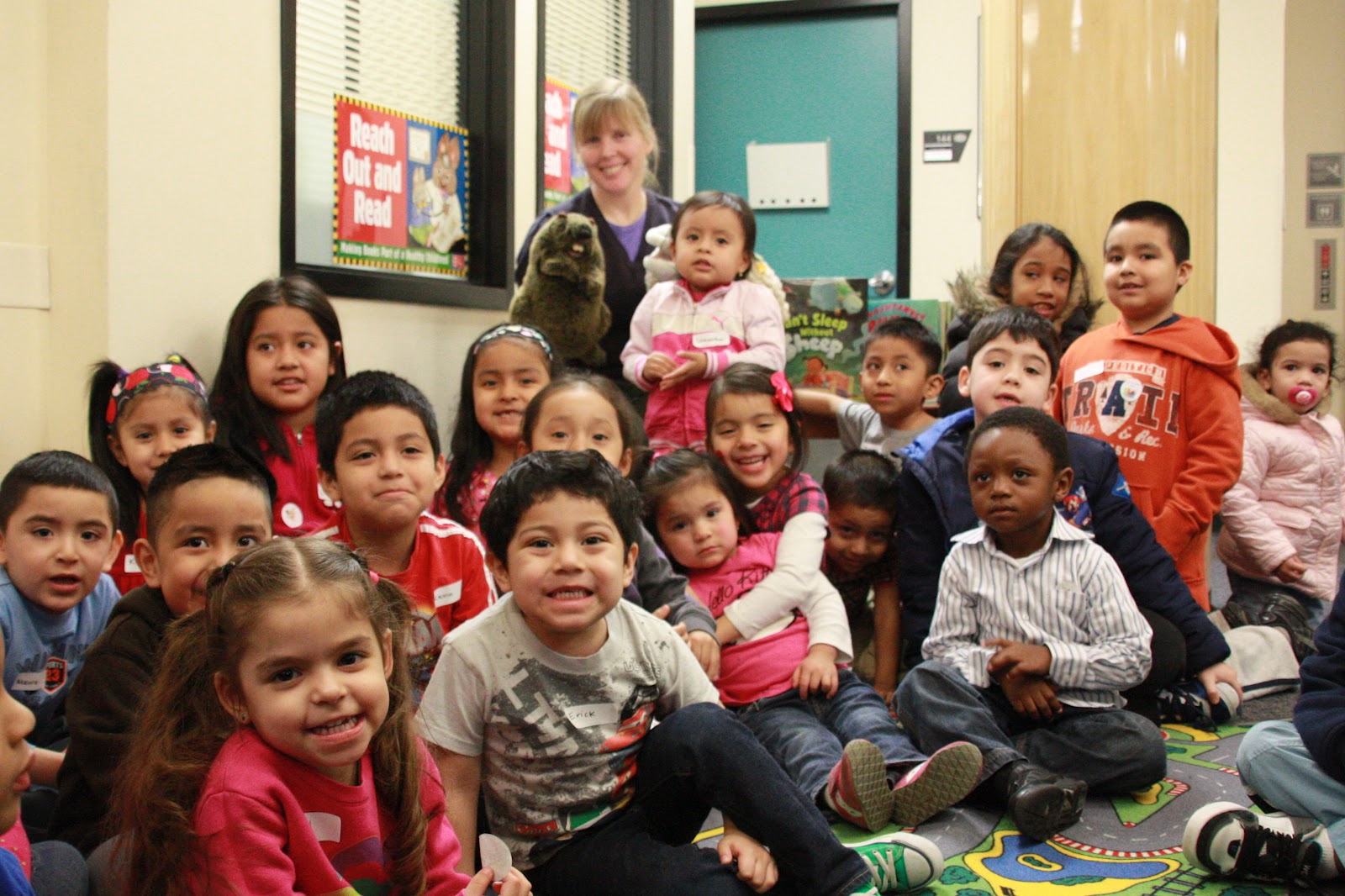
Happy Monday, Everyone!  It’s an Oh Susanna day!  But first, I’d like to give you a teensy report on the Reach Out And Read Event I did last week.

Reach Out And Read is a terrific program that seeks to put books in the homes and hands of children who would otherwise not own a book, and to educate their parents on the importance of reading to children.

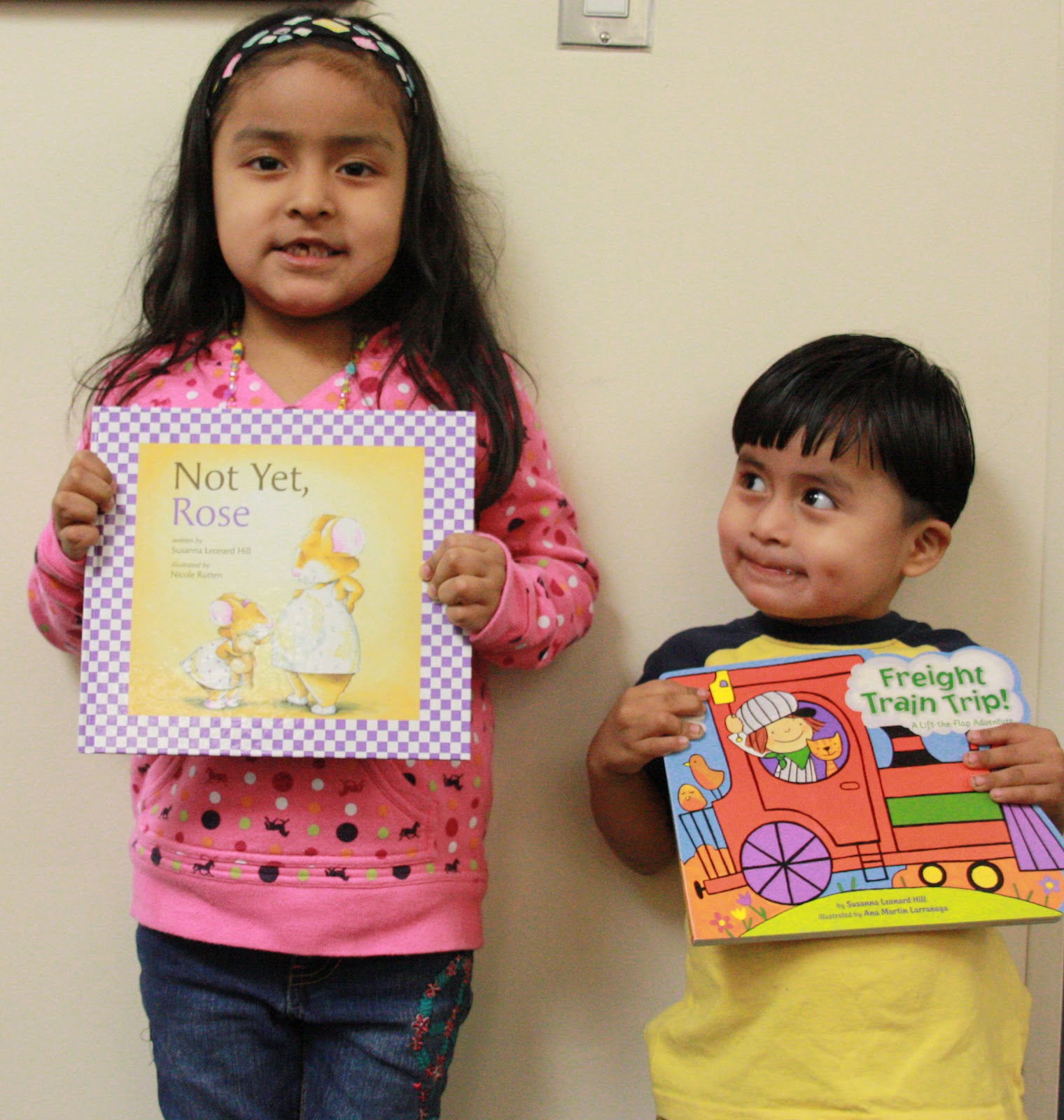
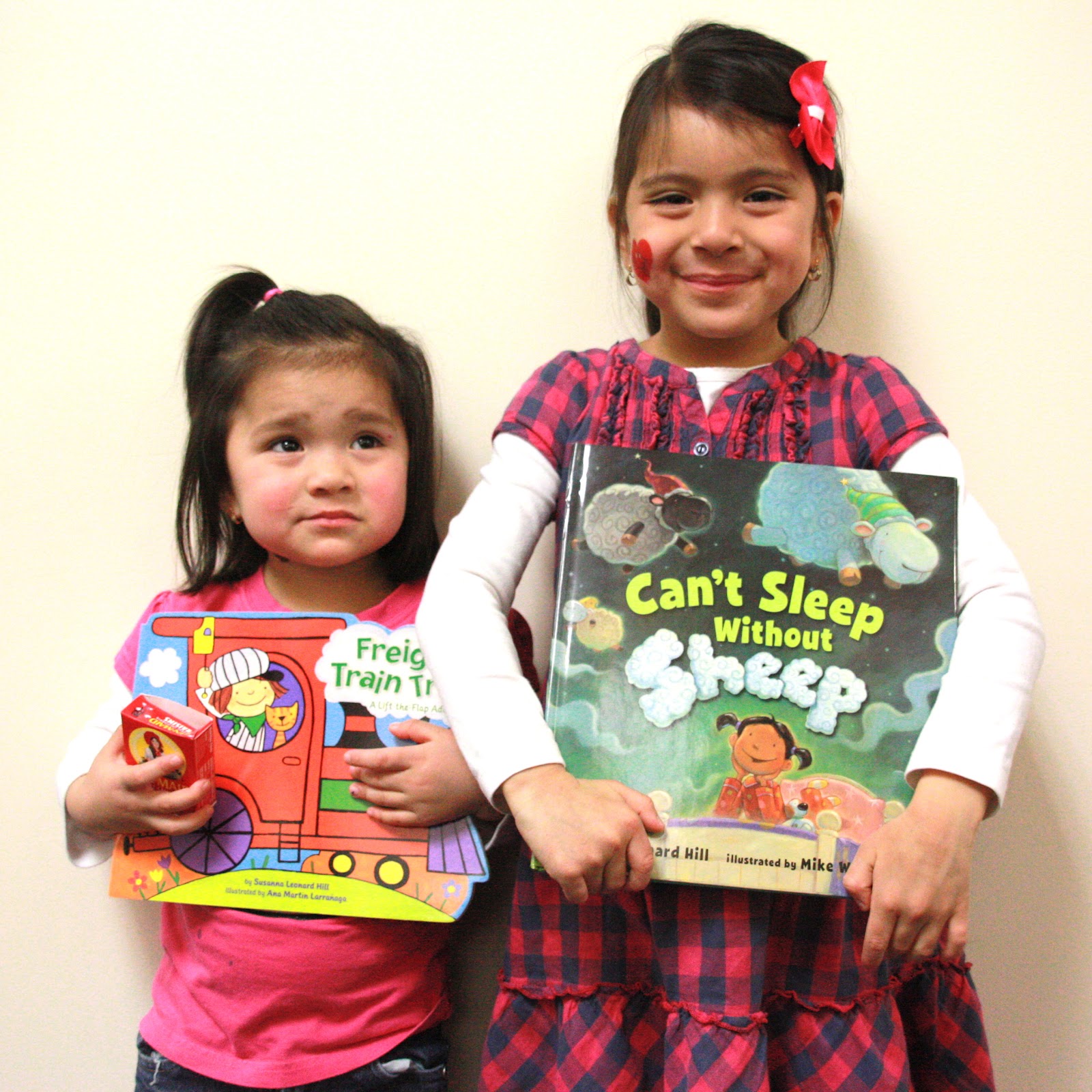
We had a great crowd at the Ossining Open Door Clinic for the event.  So many eager listeners gathered on the rug to hear Can’t Sleep Without Sheep and Punxsutawney Phyllis.

Photo by Ana-Maria Cabreira

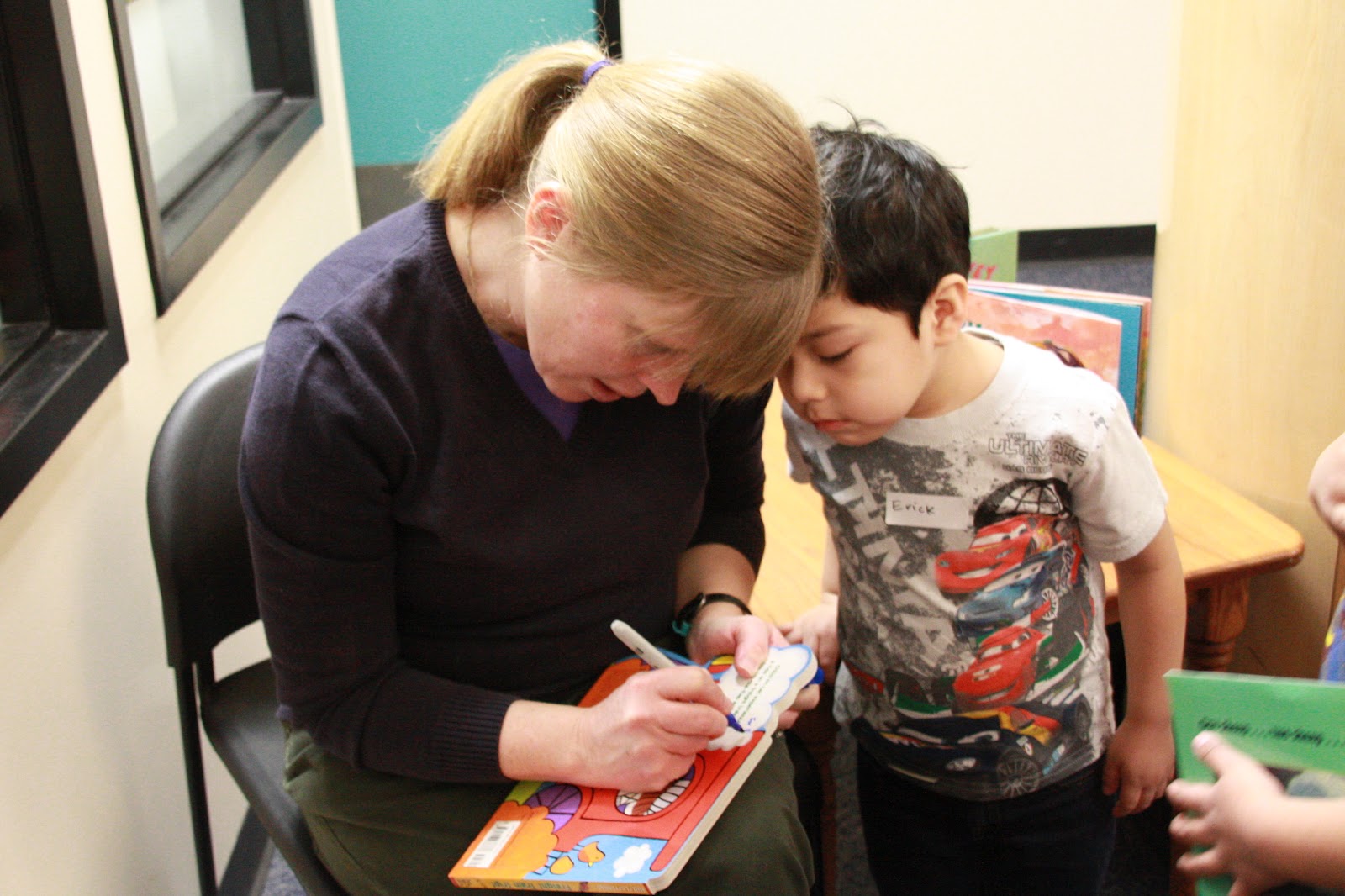
Afterwards, many asked to have their books signed, and/or to have their photo taken with an actual author (and Phyllis and Baahb :))

Photo by Ana-Maria Cabreira

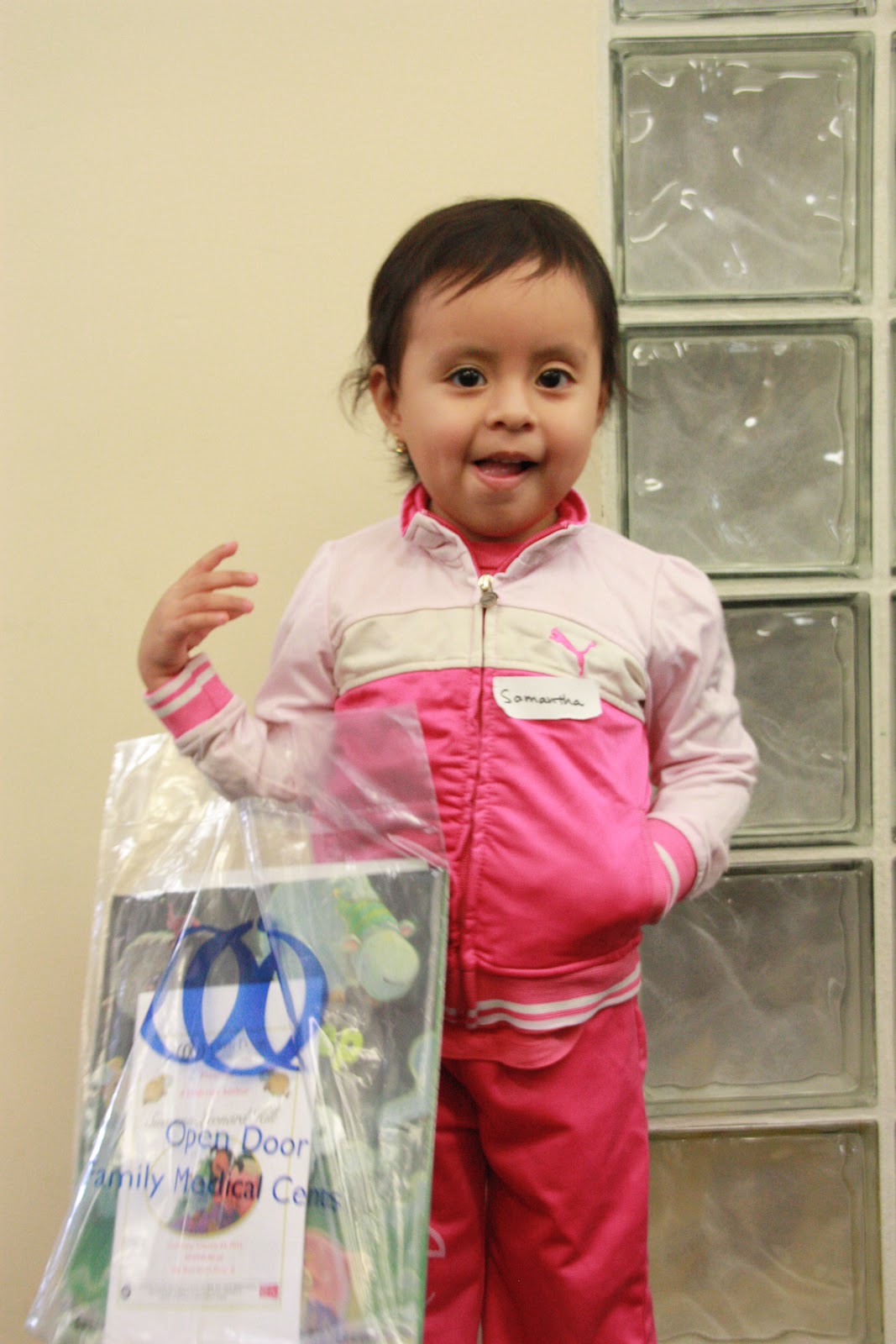
All of them went home with books of their very own, thanks to donations from you and others.  We had so many books that families who brought 3 or 4 children were able to get a different book for every child and go home with several titles.

Photo by Ana-Maria Cabreira

It was truly a wonderful day.  Thanks so very much to all of you who donated books!

And now, today’s Oh Susanna question comes to us from Eric.  He says, “I love my writer’s critique group that meets each month.  They offer great feedback — LOTS of feedback.  But, I am often overwhelmed when I get home.  Do you have tips or tricks to managing feedback to use it effectively to improve your work?

This is an excellent question.

Whenever you hand over your beloved work – product of your blood sweat and tears – even though you know logically that it probably isn’t perfect, you secretly hope that your critique readers will come back with comments like, “This is the absolute best thing I ever read!  You’re a genius!  Submit it immediately!”

So when you get the logically expected feedback, your writerly defenses automatically go up.  No matter how mature and professional you are, you can’t help it.  Nor should you.  You worked hard on this!  You need a little time to let the comments sink in before you can fairly evaluate them.

So my advice is this:  don’t decide anything right away.  Part of that overwhelmed feeling is the natural result of having your hard work picked apart – it has more to do with emotion than technique.

So take all that feedback home.  And the next day, or the day after, take it out.  Read it over.  Think it over.  Let it simmer.

Then, when the writerly defenses have lowered their swords and you’re in a place where you can realistically evaluate the feedback, go through your ms one page at a time and see what you agree with and what you don’t.

I find it easiest to start with things that I agree with and/or are very easily fixable – like typos 🙂  This way you don’t have to start by making concessions in your work.  If you fix the easy things first, it’s a little less difficult to tackle the harder stuff.

You can also organize your critiquers’ comments into categories and approach your revision one topic at a time – overall plot, character development, dialogue, language use etc. – and make your revisions accordingly.

Were there things that ALL your critique members agreed on?  Those things should be tackled early on as they have the most likelihood of really being things that should be addressed.

Other things that were only mentioned by one person, you as author have to evaluate in terms of your story intent – does your critiquer have a valid point, or did they miss the point?  And if they missed the point, was that the fault of your writing and can you fix that?

Obviously, the longer the work, the more extensive and complicated the feedback may be – it’s going to be very different for a YA novel than for a picture book.  But the basic approach remains the same:  let it simmer, tackle the easy stuff first, then go through by page or category and tackle the harder stuff.  And if there are things you feel strongly should be left alone, well, you’re the author!

I hope that at least partially answers your question, Eric.  If you have follow-up questions, or more specifics, add them in the comments and we’ll all try to help.

And now, I hope some of our devoted readers who also deal with critique group feedback will chime in with their advice on how to handle it – how do you make the best use of your feedback, and how do you keep from feeling overwhelmed?

Oh Susanna – Where To Go For Swag?

Wow!  How did it get to be Monday so fast?  The weekend just FLEW by!

Yesterday seems to have been an unusually quiet day on the internet (by which I mean I was so busy doing laundry that I was barely on my computer and hence missed whatever might have been going on :))  But seriously, I dragged Donna out for an interview and I’m not sure anyone besides Catherine, Alison and Vivian even saw it!  (Ouch for Donna! 😦 )  The extreme quietness has caused me to doubt my new policy of posting interviews on the third Sunday of the month… Perhaps it is a bad plan.  I shall have to re-examine it….  Or maybe Disqus was having issues… or maybe y’all weren’t interested in the topic under discussion…  Feel free to share below.  In any case, if you didn’t get to see Donna’s interview, please go HERE.  I think you might find some useful information, and if you have any questions, please post them to the comments of her interview post and we’ll see what we can do about getting you answers 🙂

In other news, I’m pretty excited because April Fool, Phyllis! will be available in the Scholastic SeeSaw Book Club for March!  It is titled The April Fool Treasure Hunt and has a blue cover instead of pink, but the story inside is the same.  And for real fun, it comes on CD!!!  I haven’t gotten to hear it yet – I hope it’s good 🙂

Since I haven’t gotten my copies yet, I had to swipe this cover picture off the Scholastic site 🙂

Oh, and apropos of nothing, I’m being featured on Kimberly Dana’s blog – The Blog Zone – today if anyone is interested…

Now onto today’s real business: the Oh Susanna question!  This is a good one, and I will be very interested to hear what all of you have to contribute on the topic!

Saba asks, “I’m looking to have some swag made for my blog and website.  Do you know of any companies that make stickers and bookmarks?”

Well, Saba, as a matter of fact I do!  And I’m sure our readers have experience with many more and will hopefully share what has worked well for them!

The main sites I have used are VistaPrint, GotPrint, and Zazzle.  I have made magnets, bookmarks, stickers, mugs, and pencils.  (The pencils were from another site…  Oriental Trading Company.)  What’s really great about all these sites is that you can google coupons for them and usually find a way to get a discount.

I am not artistically inclined and I have no knowledge whatsoever of how to use PhotoShopElements or Adobe Illustrator or any of those design-oriented programs.  For this reason, I have found Zazzle to be the easiest site to work with for anything involving art.  You can upload photos or scans straight out of your iPhoto file or wherever you keep your photos (as long as you have the rights or permission) and plop them right onto whatever you’re making – magnets, stickers, t-shirts, mugs, keychains, etc.  Zazzle has a lot of choices of things to make.

VistaPrint I have used for business cards and magnets.  They are pretty user-friendly too.

GotPrint is what I used for bookmarks, but I had to have help.  My daughter created the bookmark image I wanted on PhotoShopElements and uploaded it to GotPrint.  I could not have done that myself because all I know how to do is open PhotoShop Elements – I have no idea what to do next 🙂  This does not make for interesting bookmarks 🙂  Bookmarks are the thing I’ve struggled most with.  I have not found a really easy-to-work-with site that allows you to design your own without themed templates you don’t want.  Anyone with advice on this topic, please share!!!!!

The pencils are a little tricky because you can only go to 30 characters usually, and usually only one line of print.  So you have to choose your book title or your website or your name – you can’t fit them all.

I am always looking for easy-to-use sites for this kind of thing.  Also for good ideas of what to make.  Like I said, I personally have found Zazzle the easiest to work with, and they have a lot of product choices.  I might try tote bags soon 🙂

Now, all you faithful and helpful readers, what kinds of swag have you made?  What sites do you use?  What do you recommend for Saba?  Please share!

Straight From The Editor! #5 and Oh Susanna – How Do You Know When Your MS Is Ready?

Happy Monday, Everyone!  I hope you all had a wonderful weekend!

Mine was full of family, music, super bowl, and birthday cake 🙂  Not too shabby 🙂

I don’t know if you caught the half-time show, but I’ve got to say, Madonna is older than I am but looks way better.  (Also, there are those who say she sings better, but the jury’s still out on that one…:))  It may have something to do with the fact that she does dance workouts etc for about 17 hours a day whilst I sit at my computer exercising only my fingers and my passion for birthday cake 🙂  I think I need some legions of Roman soldiers to march around with… and maybe I should wear those thigh-high boots… wouldn’t they just be perfect for vacuuming and driving the kids to soccer?  I can just see myself hopping out of the car at the Cumby’s down on the corner to fill up on gas in that outfit… Or maybe strolling into Stop & Shop 🙂

google images – doesn’t that look exactly like me?

Anyhoo…

On to today’s news of interest!  First, we have Straight From The Editor.

You will recall Margaret’s pitch:

Working Title: Home Is Where The Bird Is
Age/Genre: PB
The Pitch:  Bird thought he found his perfect birdhouse – until he encountered the mouse living inside.  After a feather-raising experience house hunting on his own, Bird asks Mouse for help.  Mouse leads Bird on a hilarious tour of unconventional housing options.  As winter looms, will Bird accept anything but his perfect birdhouse?

Here are editor Erin Molta’s insightful comments:

It’s a cute premise. I would make it a tad more concise and add in some unconventional housing options. Perhaps something like this:

Bird found the perfect birdhouse, but Mouse lived inside. After a feather-raising house hunting experience, Bird asks Mouse for help. Mouse leads Bird on a tour of unconventional houses, such as XXXX and XXXX. Will Bird ever find a house that’s the perfect home for him?

I hope you all find this helpful and instructive! 🙂

Next, we have today’s Oh Susanna question!

Oh Susanna!


How long does it take for you to write a book?  What’s your process?  How many revisions?  How do you know when it’s right to submit?


Signed, 
I Don’t Know What I’m Doing

Dear I Don’t Know,

You ask excellent questions to which, I’m afraid, there is no specific or right answer 🙂  The long and the short of it is, the process varies from book to book.  (And in the following discussion, I’m sticking to picture books, since that is what I assume you’re referring to.)

But let’s see what I can tell you.  It takes me anywhere from a couple hours to a couple months to write a book, on average.  (This does not take into account the pre-writing time – the time where I’ve got part of the idea and it’s rolling around in my head but isn’t ready to be formulated into words.)

Once I’ve got enough of the idea formulated to start writing, I usually write out picture books in longhand.  I know – so last century – but there’s something about the physical act of writing, the flow of ink on the page, that facilitates my thinking.  So first drafts are most often pen and paper.

Once I’ve got a draft, I type it into the computer, and that is always the first revision.  The story never goes into the computer exactly as it’s written on the page.

The next part depends on the quality of what I’ve got at this point.  Every now and again (rarely!) I get it close to right the first time and the story doesn’t need too much revision.  But most times it needs quite a bit.  I ALWAYS come in at too high a word count, so there is always cutting to be done.   It takes a few tries to see how I can cut without losing my story – and in fact, hopefully, make it stronger.  Usually this part of the process helps me to make sure I’m actually telling the story I mean to be telling (or that I know exactly what my main theme, or the point of my story is.)  The number of revisions can vary from 1 to 20 or more.

When I’ve got it as good as I think I can make it, I PUT IT AWAY for at least a week or two.  This is a VERY important part of the process, because right when I first finish I always think this story is the best thing I’ve ever written and there’s likely to be a huge bidding war over it along with fierce fighting for movie rights 🙂  At this euphoric stage, my judgement is completely unreliable, and sending anything out in that frame of mind is a huge mistake… as I will realize when I take that story back out in a couple weeks… at which point I will wonder how I can have the unmitigated gall to call myself a writer at all and will seriously consider going to get a job at Stop & Shop bagging groceries!

Point being… always give your story a rest and then go back to it fresh.  You will usually see things you can make better.

As to when it’s ready to go out on submission, unfortunately there’s no exact answer.  Generally, you will have a gut feeling that it’s ready and there’s nothing more you can do that’s really going to improve it significantly.  (You can tweak forever, but there comes a point where you’re not really improving anything, you’re just messing around.)  But here are some things to ask yourself to see if you’re ready:  Have you told the story you want to tell?  Have you created a character we can care about, challenged him/her with something important and relevant, and resolved the problem in a satisfying way?  Is every word the best choice you can make for it?  Have you read it out loud to yourself, your toddler, your husband, your dog, and anyone else who will listen?  Have you had someone who has never seen it read it out loud to you?  (Often, especially with rhyme, this is crucial to make sure the story flows well.)  Have you had a couple beta readers or critique partners look it over?  Is the language lyrical, rhythmic, asking to be read over and over?  Does your story have re-readability (i.e. will a child want to hear it many times and will an adult be happy to oblige?)  Have you left half the job for the illustrator and given him/her plenty to work with?

If you have done all these things and feel that the story is the best you can make it, then it’s ready to go.  And sometimes the submission process itself will give you feedback.  20 form rejections in a row for the same story may mean it needs more work (or that you haven’t targeted your ms properly, but that’s a topic for another day!)  Rejections with any kind of personal feedback are a good sign and something you can learn from.  And of course, hopefully!, you will get an acceptance! 🙂

If you write a strong story that feels more like a one-time read (fun once, but unlikely to be asked for over and over) or that doesn’t have a lot of scope for illustration, you may have a magazine piece rather than a picture book.  That is great, too.  Not every story is strong enough for a picture book, but that doesn’t mean it isn’t a good story.  So make sure you have a children’s magazine market list of some type so you can target those stories too.

I hope that answers your questions at least somewhat!  I hope our esteemed readers will also chime in with their answers to your questions!

Before going off to scrub the bathroom tile grout with a tooth brush whilst wearing my Madonna boots, I just want to remind everyone about the upcoming Valentines Day Contest!!!  If you haven’t heard of it yet, click here and scroll to the bottom!!!

See you Wednesday! 🙂