
Whoa! Things are looking a little topsy-turvy today, aren’t they?
Don’t worry. It’s not Tuesday. It’s just that there are so many new authors out there who deserve to have their books shared, and so many that you all should have the opportunity to learn from in order to advance your own work, that I can’t fit them all on Tuesdays!
So, today we’re having a Friday edition of Tuesday Debut!
And for those of you interested in self-publishing, this post is full of extremely helpful details!
Our debut-ess today is offering two lovely giveaways! One lucky winner will receive any type of Zoom call though Janetha would particularly love to be able to give a classroom/ library read-aloud. Another lucky winner will receive a signed copy of the paperback of Lemony Clouds! To qualify to be in the running to be one of the two randonly selected winners, all you need to do is leave a comment on today’s post by Thursday, July 9th at 3PM Eastern. If you would also like to share the book cover or this blog post on social media, I’m sure our debut-ess would be grateful for any extra visibility 😊
Title: Lemony Clouds
Author: Dr. Janetha Edwards
Illustrator: Penny Weber
Publishing House: Alpha Green Publishing
Date of Publication: October 28, 2025
Fiction or Nonfiction: Fiction
ISBN#: 979-8992825718
Readership age range of your book: 4-9 years old
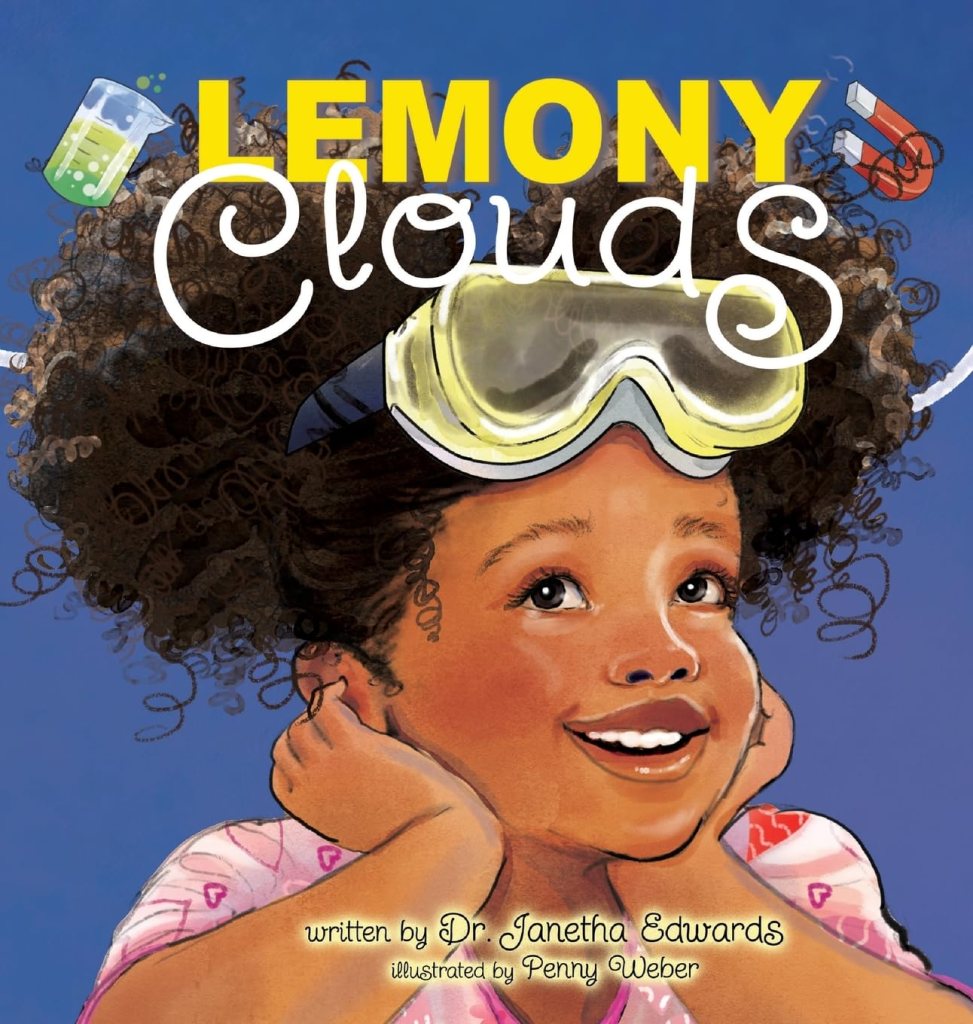
Meet Rubie, a curious third grader with big ideas and a vivid imagination. In her quest to invent the “perfect something,” she turns science lessons into a series of wild experiments. Along the way, Rubie discovers that success isn’t just about results-it’s about perseverance, creativity, and the courage to keep trying.
SUSANNA: Where did the idea for this book come from?
JANETHA: Whether I am observing student teachers or reflecting on my years as an elementary school teacher, I often think about what students need most. I always come back to the same three things: inspiration, engagement, and relevance. Many of my story ideas emerge from those needs.
The idea for Lemony Clouds developed over time. I have always loved the excitement that hands-on science lessons generate in children and the unique ways students approach problem-solving. As I reflected on those experiences, Rubie began to take shape.
I also wanted readers to meet an intellectually curious Black girl who loves science and isn’t afraid to experiment. Rubie’s tendency to jump into a project before fully reading the directions comes from my own experiences. Like Rubie, I have sometimes let my enthusiasm get ahead of me. Through her story, I hope children see that mistakes are part of learning and that perseverance matters as much as success.
SUSANNA: Wonderful things for children to take away! How long did it take you to write this book?
JANETHA: Although I have written many academic papers throughout my master’s and doctoral studies, my fiction writing process is much more visual and structured. I often use graphic organizers commonly found in elementary classrooms because there is something helpful about mapping out how a story develops.
I typically begin with Somebody, Wanted, But, So, Then (SBWBS), and then use thinking maps to generate and organize ideas before drafting. As I plan, I also pay attention to point of view, tense, and how to engage the reader’s senses.
Once these key decisions were in place, my first draft of Lemony Clouds took about one month to complete.
SUSANNA: Were there any mentor texts that helped you zero in on the direction you wanted to take your book?
JANETHA: The arc of this book was driven primarily by purpose and intent. The message feels especially relevant to what is happening in schools worldwide, particularly the continued emphasis on STEM education. I wanted to create a story that carries a sense of pride and affirmation, similar to the feeling I experienced when reading Hair Love by Matthew A. Cherry, as well as the persistent courage of the main character in Amazing Grace by Mary Hoffman.
In addition to these mentor texts, I also looked at several recent traditionally published picture books to better understand current expectations around format, style, and word count.
SUSANNA: Did you go through many revisions?
JANETHA: The revision process for Lemony Clouds was highly iterative, involving continual refinement of both language and meaning until the story communicated exactly what I intended.
For example, while working with the illustrator on one of the spreads, I noticed that the illustration conveyed a slightly different interpretation than I intended with the text. This prompted me to revise the wording and add a sentence to improve clarity and cohesion.
I went through multiple rounds of revision, refining word choice, rhythm, and clarity as I reviewed the manuscript. I also stepped away at times so I could reread it with fresh eyes before it was ready for illustrations.
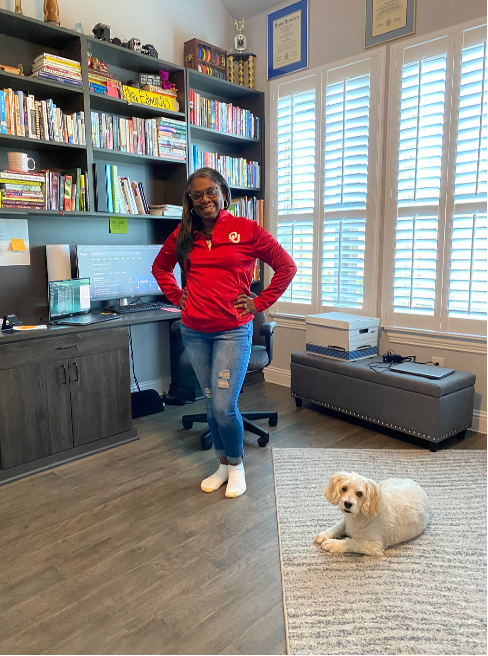
Janetha’s writing space and writing buddy 😊
SUSANNA: When did you know your manuscript was ready for publication?
JANETHA: I knew my manuscript was ready when I read the final line and I wanted to jump out of my seat and share it with young readers, including teachers and librarians. I could easily envision the classroom dialogue during a read-aloud, with students responding with curiosity and engagement and wanting to take the book home or have their own copy.
In that moment, I also felt strongly that I wanted all children to read it, especially as a meaningful story for Black girls who are often underrepresented in children’s literature. That sense of purpose helped affirm that the manuscript was ready for publication.
SUSANNA: At what point did you decide to self-publish rather than submit to traditional publishers? Did you try traditional first? Or did you have specific reasons for wanting to self-publish?
JANETHA: Shortly after submitting Lemony Clouds to a traditional publisher, I decided that I wanted full autonomy over my book. After attending an SCBWI conference over 20 years ago, I learned more about the relationship between authors and illustrators, and I wanted to ensure that my vision for the story remained intact.
I was also mindful that diverse characters are still not always the norm in children’s publishing, and I wanted my book to reflect the strength and complexity of a Black female character. In addition, I found it difficult to reconcile the lengthy response times, subjectivity, and layers of the traditional publishing process.
Self-publishing offered a sense of accessibility and creative freedom that felt both exciting and liberating, allowing me to bring the story to readers without waiting for approval from a publishing house with limited list space or acquisition priorities.
SUSANNA: How/where did you find an illustrator?
JANETHA: Initially, I paid to have samples done using Fiverr, but ultimately decided to take a different direction. As an SCBWI member, I also had access to the illustrator gallery on their website, where I spent time reviewing portfolios and contacting several illustrators whose work aligned with my vision for the book. I shortly found an illustrator whose style appealed to my aesthetic, by connecting to her websites and we met via Zoom.
Working directly with an illustrator adds depth to the writing process, as it allows you to communicate intentions and expectations throughout. For example, I wanted to ensure that the illustrations aligned with the diversity of the book and supported a broader shift in mindset for both readers and adults. I specifically requested that the teacher be a Black male and that the classroom scene reflect a diverse group of students.
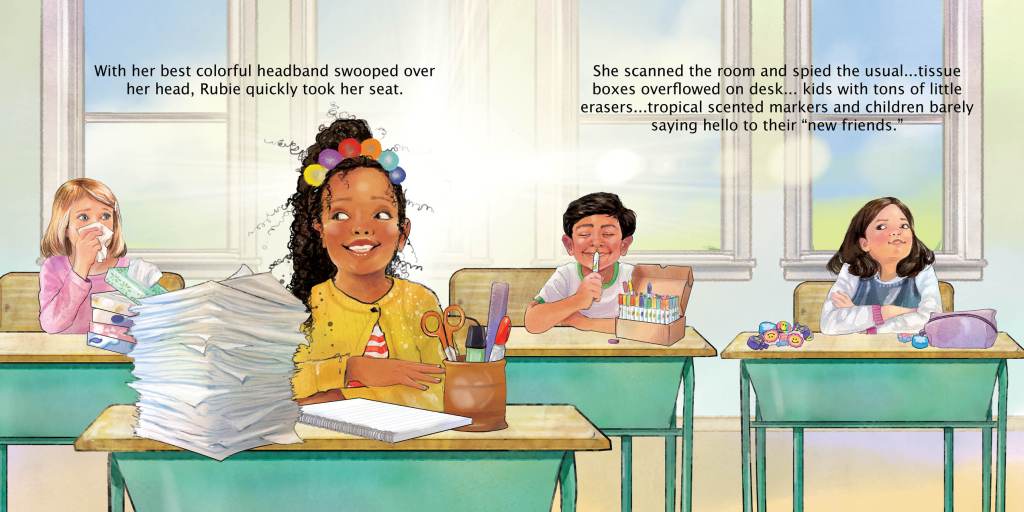
text copyright Janetha Edwards 2026, illustrations by Penny Weber, 2026, Alpha Green Publishing
SUSANNA: Did you and the illustrator have a contract of any kind? What types of items did it address?
JANETHA: My illustrator, Penny Weber, provided a standard contract that outlined rights and included terms regarding revisions, delivery of work, and other expectations. An agreed-upon delivery schedule was included because I wanted to finish within a particular timeframe that coincided with opportunities for school visits. The contract also specified the expected trim size of the book and included a payment schedule tied to phases of completion. Overall, the contract helped ensure that expectations, timelines, and responsibilities were clearly understood from the beginning.
SUSANNA: Are you able to give a ballpark figure of any kind about the cost of the illustrator?
JANETHA: I don’t mind sharing specifics. The total cost for the illustrator was approximately $4,000. This amount was divided into three payments tied to project milestones. For example, once the rough sketches were completed and color was added, the first installment was paid. Costs are typically outlined in advance and structured around agreed-upon stages of the project.
SUSANNA: What was the illustration process like since you were directing it? Any particular challenges? Anything you particularly enjoyed?
JANETHA: This process was a lot of fun, although I was also nervous each time a new spread was shared. Penny and I worked very well together, and communication was always open throughout. She was very understanding and receptive to feedback, and we collaborated closely to ensure the illustrations aligned with the intent of the story. I did not realize how many details I would want to refine during the process in order to better honor the narrative. For example, it was important to me that the mother not be dressed in generic clothing, so I made a few adjustments to better reflect that she had a professional career. I am definitely not an artist, but I found myself very attentive to small visual details, such as Rubie’s eyes, which I preferred slightly wider to enhance her childlike expression.
SUSANNA: How did you format your book for publication?
JANETHA: Penny introduced me to designer Linda Powers. Linda handled all of the formatting required for publication. She also worked directly with Penny to obtain the illustration files needed for production. Linda Powers Design cost approximately $850, which was well worth it.
SUSANNA: How did you select a printing service?
JANETHA: After Linda walked me through how various printing services worked, she prepared the book for Amazon KDP and IngramSpark. She handled the full upload process, including my manuscript, illustrations, author bio, and book summary for Author Central on KDP. She also introduced me to terms such as metadata for search engines, Thema, and BISAC, in which she set up with IngramSpark on my behalf once I determined how I wanted the book to be identified and classified. This was another layer of self-publishing that I had not previously been familiar with, but it is essential for helping a book get categorized and discovered through library systems and schools.
Through IngramSpark, the book was made available in both paperback and hardcover formats. We also worked on pricing the book for sale. I definitely could not have completed this book without my illustrator and design team.
SUSANNA: Did you do a print run so you’d have inventory, or is your book print-on-demand?
JANETHA: I used print-on-demand through IngramSpark. The book is available through online retailers, and I also order copies through Amazon when I need them more quickly.
SUSANNA: How long was the process from writing through publication of your book?
JANETHA: The process was from May to November, from working with the illustrator through to the book becoming available on Amazon.
SUSANNA: Were you able to get your book reviewed by Kirkus, SLJ, Hornbook, Booklist etc?
JANETHA: While I did not obtain formal reviews from Kirkus, SLJ, Horn Book, or Booklist, the book was read by respected classroom teachers, including a former colleague whose worked for years in sales at Scholastic Books.
SUSANNA: Can you describe any marketing/promotion you did for this book?
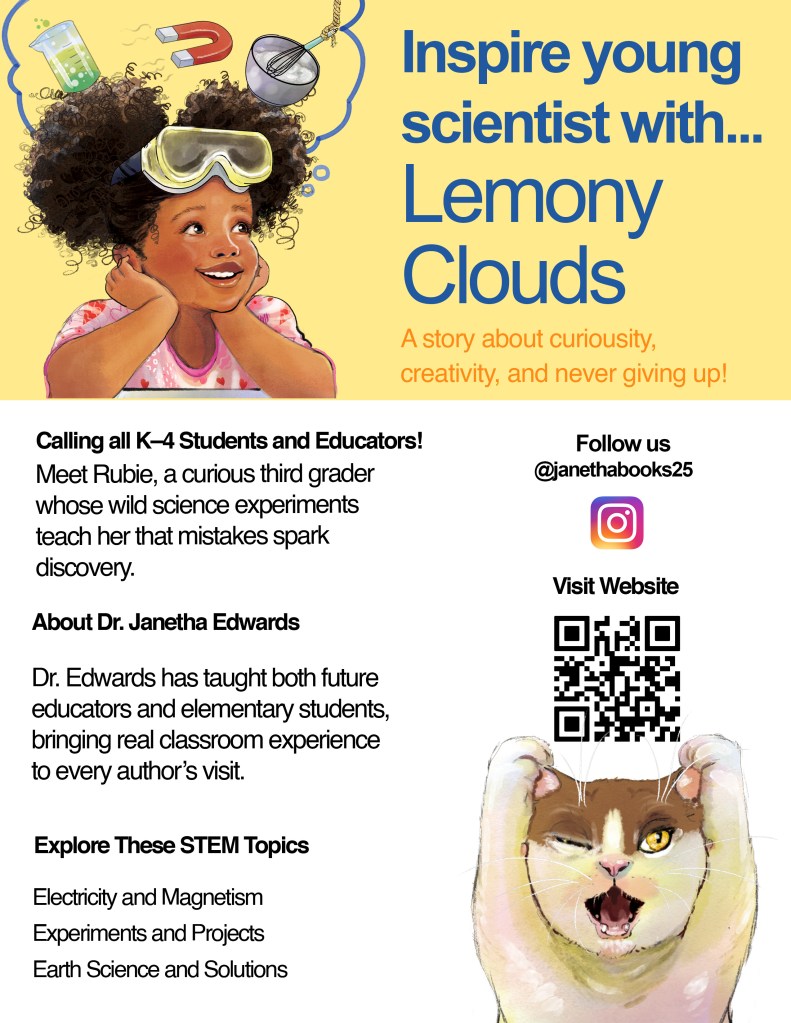
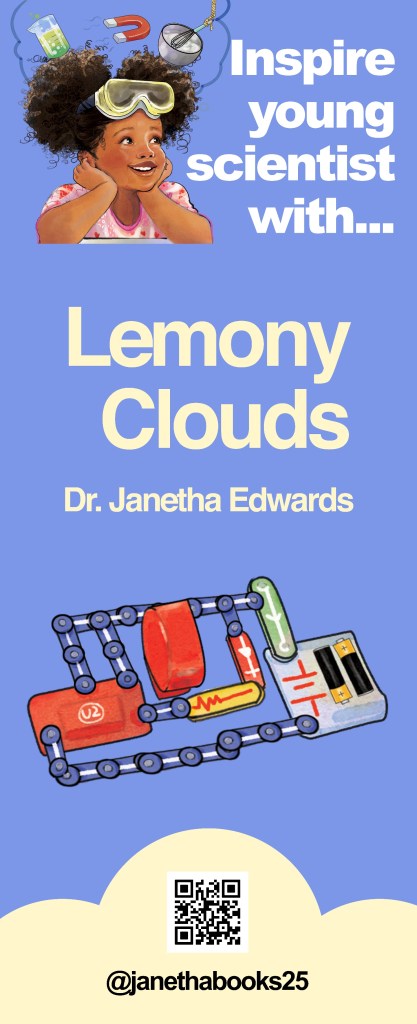
JANETHA: I have a website: www.janethasbooks.com as well as, a flyer, and bookmarks for school visits and book signings. My Instagram handle is: janethasbooks25
SUSANNA: Anything else you’d like to share about your book’s journey from inspiration to publication?
JANETHA: There is a great sense of pride in this self-publishing journey. I have learned so much and truly value the process. Creating a publishing company, securing ISBNs for present and future books, and registering copyrights has been very fulfilling. I am grateful that the publishing world has evolved in a way that has allowed me to bring this dream to life. It has been both a creative and deeply personal journey and seeing the story come to life has been especially meaningful.
SUSANNA: That is really wonderful. Thank you so much for taking the time to participate in this series and paying it forward to other writers, Janetha! We so appreciate the opportunity to learn from your knowledge and experience, and wish you all the best with this and future titles!
Readers, if you have questions for Janetha, please post them in the comments below and if she has time I’m sure she’ll respond! And remember, your comment on today’s post by Thursday July 9th at 3 PM Eastern puts you in the running to be one of the two randomly selected winners of Janetha’s generous giveaways of a signed copy of Lemony Clouds or a Zoom visit of any kind (though she’d especially love to do a school or library read-aloud)!
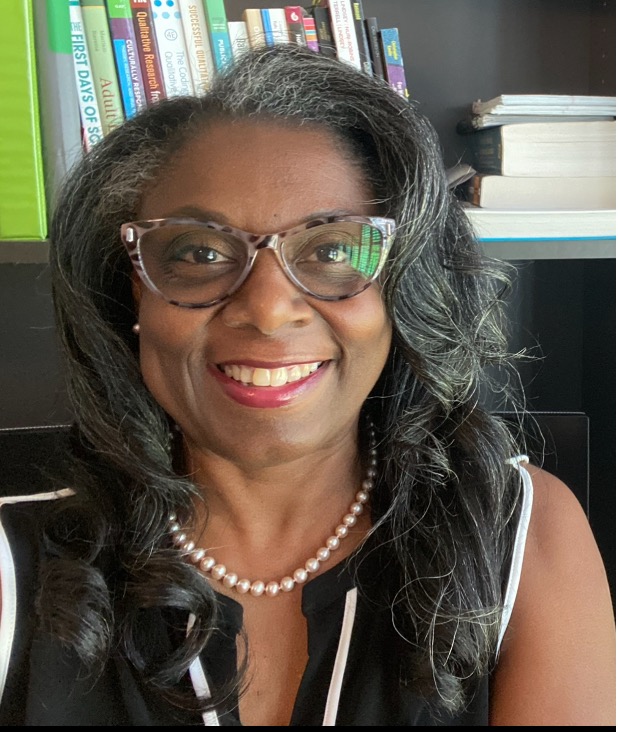
Author Janetha Edwards
You may purchase Janetha’s book at:
(all links below are book-specific)
Indiebound/Bookshop.org
Amazon
Barnes&Noble
We can help our debut authors successfully launch their careers by:
– purchasing their books
– recommending their books to friends and family
– recommending their books to our children’s teachers and librarians
– recommending their books to our local libraries and bookstores
– suggesting them as visiting authors at our children’s schools and our local libraries
– sharing their books on social media
– reviewing their books on Goodreads, Amazon, Barnes&Noble, and other sites where people go to learn about books.
Thank you all for stopping by to read today! Have a lovely, inspiration-filled Tuesday! Maybe today is the day you’ll write your debut picture book 😊
Missed any previous Tuesday Debuts? Check them out HERE!


Congratulations Dr. Janetha. I love everything about this book especially the emphasis on STEM education for underrepresented girls. I hope every teacher and librarian adds this to their curated collection of books. I also enjoyed reading about your self publishing journey. Wishing you continued success and hopefully more books about Rubie and her perseverance.
Thank you, Jeanine! These are certainly words of encouragement. I believe Lemony Clouds will certainly create dialogue and pique the interest of young readers’ towards STEM.
So glad you enjoyed hearing from and learning from Janetha, Jeanine! She had so much terrific information to share!
Congratulations, Janetha! Your cover is beautiful and I enjoyed reading about your books journey. Thanks for sharing!
It was a very interesting book journey, wasn’t it, Kim? And lots of very helpful information to learn from!
Thank you, Kim! I want others to be encouraged to pursue this accessible and rewarding path.
Congrats Janetha! I really loved hearing about the process with your illustrator. The cover is absolutely adorable.
Thank you so much! Working with the illustrator was one of my favorite parts of this whole process. I’ll be sure to pass your thoughtful words to my illustrator Penny Weber!
I thought the process with the illustrator was very interesting and enlightening, Deborah. If I ever wanted to self-publish, I think figuring out how to find a good illustrator I could afford would be the hardest part.
Thanks, Janetha, for sharing your self-publishing journey. It looks like a beautiful book that would inspire children. I hope you have much success in promoting it and sharing this story in classrooms and other venues.
Thank you, Shirley for your kind words. I am really looking forward to spending time with kids sharing my books.
I hope so, too, Shirley. It seems like a story that would do well in classrooms!
As a self-published author myself, I love reading other author’s journeys to (and through) self-publishing! Congratulations on your beautiful book, Janetha! Loved reading your story ❤
Hi Andi. Thank you! Self-publishing is truly rewarding with a range of learning aspects. Good luck to you in your continued success!
You and Janetha have both been so helpful in sharing your self-publishing journeys, Andi, and both of you have created beautiful books!
’Every voice has a story!’ I’m so glad that you’re sharing your voice and Rubie’s story with the world! Girls in STEAM are unsung heroines and Lemony Clouds helps to fill this gap, inspiring others to recognize and celebrate the genius of female scientists. Brava, Dr. Janetha Edwards!!!
Well said, Joyce, and so true!
Joyce, your words are exactly what I need to propel this story forward. Thank you so much for seeing the value in Lemony Clouds-Rubie is excited to be heard!!!
Congratulations! It’s such a challenging and rewarding experience to get a book out into the world. So many of the things you mentioned sounds familiar! Wishing you all the best!
Hello Laura, thank you! It’s so exciting to see so many of us indie authors out here achieving our dreams, goals, and vision. Wishing you the best as well!
It really is challenging and rewarding, Laura, and for many of us a lot of work in areas we might not have expected when we began writing back in the dark ages of the last millennium 🙂 I know a lot of authors who would prefer not to have to self-promote or be in the spotlight!
Ironically I am one of the few people who enjoys promoting and supporting others in promoting their projects. Spoiler alert, Susanna, you’re good at it too with your blog!
Hahaha! I have no problem promoting OTHER people! I just don’t like self-promotion! 🙂
I loved hearing about the creation of this inspirational book!
So glad you enjoyed it, Ellen!
Thank you, Ellen! It was a labor of love and purpose!
Thank you, Ellen!
Love the title! Congratulations!
It is a wonderful title, isn’t it, Susan? It sticks in your mind!
Thank you! The imagery of the title excited me for young readers. Lemony clouds are words that uses multiple senses, that I love.
Thank you! It’s a title that makes me smile!
What fun new character! I hope we see more of Ruby’s adventures.
Robin, thank you! We shall see! Rubie is a very curious and active learner!
That would be fun, wouldn’t it, Robin? Seems like she could have lots!